


Cape May Point State Park’s iconic lighthouse at golden hour, a must-see attraction.
Cape May Point State Park is a free, 244-acre nature reserve at the southern tip of New Jersey, managed by the New Jersey Division of Parks and Forestry. The park contains three color-coded hiking trails, a WWII-era bunker, beach access, and one of the most significant hawk migration corridors in North America. Gates open at 8:00 AM and close at 8:00 PM daily, with no entrance fee.
-
The park covers 244 acres and charges no admission fee. Gates open at 8:00 AM and close at 8:00 PM daily.
-
Three color-coded trails range from 0.5 miles (Red Trail, fully wheelchair accessible) to 2.0 miles (Blue Trail, partly along the beach).
-
The park is widely considered one of the best hawk migration viewing sites in North America, with peak raptor activity running September through November each year.
-
Swimming is prohibited due to underwater hazards, but surf fishing is permitted. Pets are not allowed on the beach from April 1 through September 15.
-
The adjacent 200-acre South Cape May Meadows, owned by The Nature Conservancy, connects to the park’s trails and significantly extends the hiking and birding options.
-
The Cape May Lighthouse inside the park, built in 1859 and maintained by the Mid-Atlantic Center for the Arts, charges a separate entry fee to climb.
What Is Cape May Point State Park and Why Is It Worth Visiting?
Cape May Point State Park is a protected coastal ecosystem at the southernmost tip of New Jersey, where the Atlantic Ocean meets Delaware Bay. The park sits on 244 acres of fresh water wetlands, coastal dunes, salt marsh, and beachfront, making it one of the most ecologically diverse state parks on the East Coast. Admission is completely free, and the park is open to the public year-round.
Beyond the trails, the park holds genuine historical weight. Within its boundaries you’ll find Battery 223, a surviving WWII harbor defense bunker that once housed 6-inch guns, and Fire Control Tower 23, which directed artillery fire along the coastline during the war. These structures are not reconstructions. They are original concrete installations that have stood since the early 1940s, and standing next to them while watching shorebirds overhead is one of the more quietly striking experiences Cape May offers.
At Cape del Mar, we host guests across Cape May who ask us every season where they should spend a morning that isn’t the mall or the main beach strip. This park is always our first answer. It costs nothing, rewards patience, and delivers a completely different side of the peninsula that most visitors never see.
The park’s trails also connect to the South Cape May Meadows, a 200-acre preserve owned by The Nature Conservancy. Together, these two properties form one of the most important migratory stopovers on the eastern seaboard, and the combined acreage means serious birders and casual walkers alike will find more to explore than a single visit can cover.
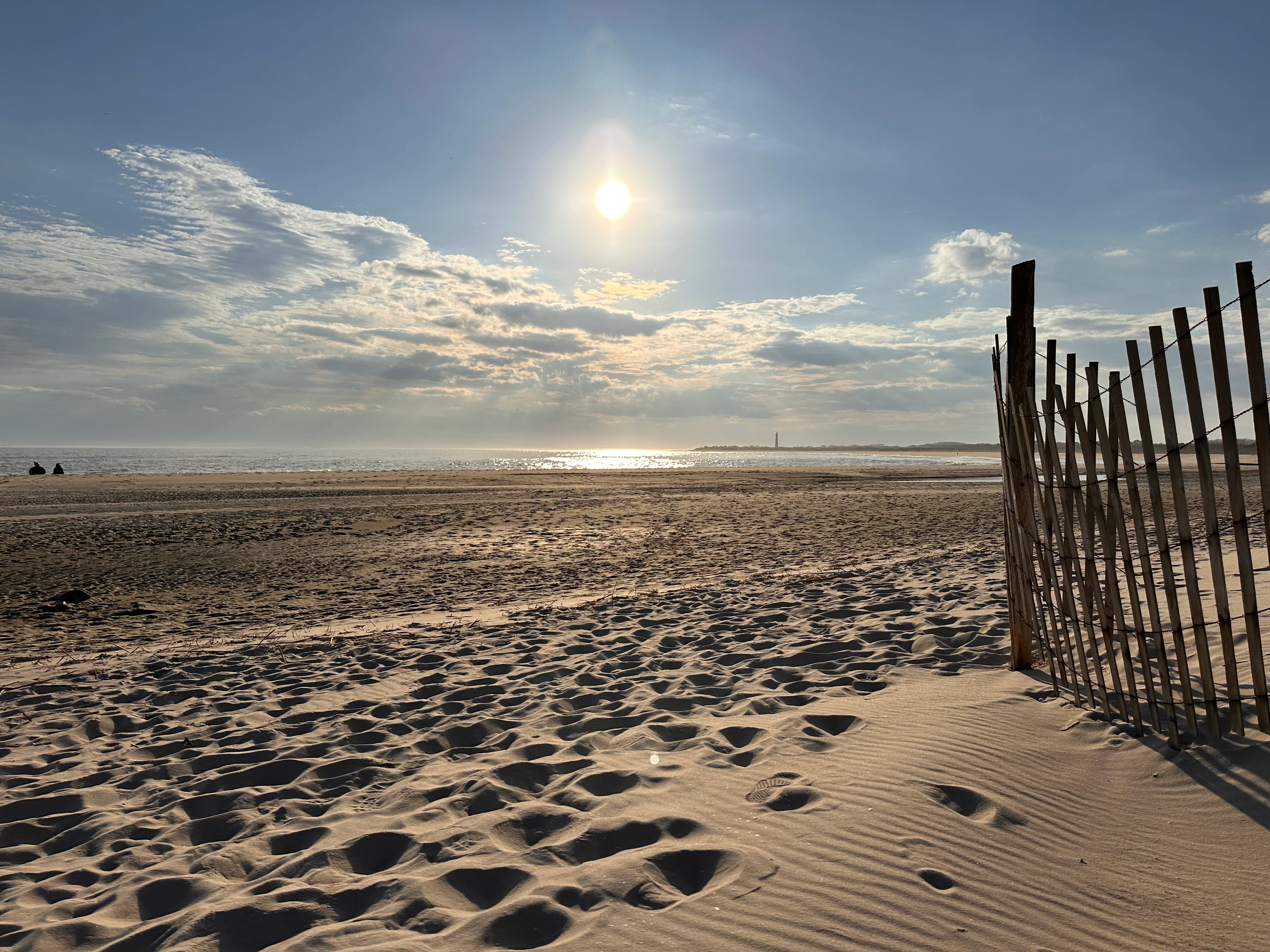
Coastal dune landscape along Cape May Point’s scenic beach preservation areas
How Much Does It Cost to Visit Cape May Point State Park?
The park has no entrance fee. Admission to the grounds, all three hiking trails, beach access, the picnic areas, and the visitor center exhibits is completely free. Parking in the main lot is also free. The New Jersey Division of Parks and Forestry operates the facility as a no-cost public resource open to all visitors.
The one exception is the Cape May Lighthouse, which sits within the park but is maintained separately by the Mid-Atlantic Center for the Arts. Climbing the lighthouse requires a paid ticket, purchased directly from the Mid-Atlantic Center for the Arts. As of 2026, that fee covers access to the 199-step climb with views stretching toward Delaware on clear days. Check the Cape May Lighthouse visitor guide for current hours and pricing before your trip, since seasonal hours shift in spring and fall.
Groups of 20 or more visitors planning to use the park’s large picnic shelters must reserve facilities at least five days in advance. The shelters accommodate up to 60 people and include restroom access. Individual visitors and smaller groups do not need reservations for any part of the park.
One practical note: while the park itself is free, parking along County Highway 629 and the surrounding streets in Cape May Point village fills up quickly on summer weekend mornings. Arriving before 9:00 AM on Saturdays and Sundays in July and August is the single most reliable way to guarantee a spot in the main lot without circling the neighborhood.
What Are the Trails Like at Cape May Point State Park?
The park has three designated hiking trails, each identified by a color marker: the Red Trail (0.5 miles), the Yellow Trail (1.5 miles), and the Blue Trail (2.0 miles). The Red Trail runs entirely on a raised boardwalk, making it the most accessible route and the best starting point for first-time visitors, families with young children, or anyone using a wheelchair or mobility aid.
Red Trail: 0.5 Miles, Boardwalk, Fully Accessible
The Red Trail is the shortest and most manageable route in the park. Its raised boardwalk surface keeps your feet dry year-round, even after heavy rain, and the trail includes dedicated observation platforms positioned for birding and wetland viewing. This is the trail to choose if you have a stroller, limited mobility, or limited time. Expect roughly 20 to 30 minutes at an easy pace.
Yellow Trail: 1.5 Miles, Mixed Surface
The Yellow Trail begins from the Red Trail and extends the experience through wooded sections and additional birding platforms. Part boardwalk and part packed dirt, the surface becomes muddy after rain. Sturdy walking shoes are a genuine recommendation here, not a formality. Budget 45 to 60 minutes for the full loop. The additional birding platform on this trail is particularly productive for songbird viewing during spring and fall migration windows.
Blue Trail: 2.0 Miles, Beach Section Included
The Blue Trail is the longest route and includes a section along the beach itself, connecting to the adjacent South Cape May Meadows preserve managed by The Nature Conservancy. This trail was closed for decades following hurricane damage in the 1960s and reopened in the 1990s. The mixed terrain, including sand, dirt, and wooded stretches, makes it the most physically varied of the three routes. Plan for 60 to 90 minutes and bring water. The Blue Trail is where you’re most likely to encounter shorebirds close to the waterline.
For a current downloadable trail map, the official NJ Parks and Forests page has the most up-to-date version.
Trail Distance Surface Accessible Estimated Time Red Trail 0.5 miles Raised boardwalk Yes, fully wheelchair accessible 20-30 min Yellow Trail 1.5 miles Boardwalk and packed dirt Partial 45-60 min Blue Trail 2.0 miles Sand, dirt, wooded sections No 60-90 min
What Is the Best Time of Year for Birdwatching at Cape May Point?
Cape May Point State Park is considered one of the best hawk migration viewing sites in North America, according to the New Jersey Audubon Society and endorsed by the Cape May Bird Observatory. The park sits at a geographic bottleneck where migrating birds of the eastern seaboard concentrate before crossing Delaware Bay, creating extraordinary viewing density that few other sites on the continent match.
Fall Migration: September Through November
Fall is the peak season for hawk watching at this reserve. September brings the first significant raptor movement, with Sharp-shinned Hawks, Cooper’s Hawks, and Ospreys appearing in substantial numbers. October is the single best month for variety, when Broad-winged Hawks, American Kestrels, Merlins, and Peregrine Falcons all pass through. November pushes Northern Harriers and Red-tailed Hawks through in impressive numbers. The dedicated hawk watch platform in the park is the focal point for organized counting, and the Cape May Bird Observatory coordinates the annual count each fall.
Spring Migration: April and May
Spring migration at the park is quieter than fall but genuinely rewarding, especially along the Yellow and Blue trails for songbirds. Warblers, vireos, and flycatchers move through in April and May. Shorebirds on the beach section of the Blue Trail are at their most active in late April and early May. Spring visits also benefit from smaller crowds compared to summer and fall weekend peaks.
Summer and Winter
Summer is the least productive season for birding specifically, though the park’s freshwater wetlands still support herons, egrets, and shorebirds throughout the warmer months. Winter visits bring a different character entirely. The crowds are minimal, the trails are uncrowded, and wintering raptors including Short-eared Owls patrol the meadows on calm days. If you are visiting Cape May in January or February and want an active outdoor experience with minimal company, a morning walk through the park delivers.

Scenic deck (Cape Wave) perfect to relax after climbing up the Cape May Lighthouse
Can You Go Into the Cape May Lighthouse?
Yes, you can climb the Cape May Lighthouse, which stands inside the park. The lighthouse was built in 1859 and is maintained by the Mid-Atlantic Center for the Arts, which operates the site and collects the entry fee. The climb involves 199 steps to the top, where the views extend over Delaware Bay, the Atlantic coastline, and on clear days toward Delaware across the water.
The lighthouse is not operated by the state park itself, so its hours and pricing are set independently by the Mid-Atlantic Center for the Arts. Seasonal hours change between summer and shoulder season, and the lighthouse occasionally closes for maintenance. Checking current hours directly before your visit avoids the disappointment of a closed gate. The surrounding grounds, including the lighthouse lawn and the park’s exhibit gallery, are accessible without a lighthouse ticket.
For historical context, the current structure is actually the third lighthouse built at Cape May Point. The first, constructed in 1823, was undermined by erosion and replaced in 1847. That second lighthouse was too short to be effective and was demolished when the current 1859 tower was completed. The surviving structure is 157 feet tall and its fresnel lens, though no longer active as a navigational aid, remains on display inside.
Combine the lighthouse visit with the exhibit gallery inside the park’s visitor center, which covers Cape May County history, coastal erosion, and the Lenni-Lenape presence on the peninsula. It takes about 15 minutes and provides genuinely useful context for the surrounding landscape you’re walking through.
What Are the WWII Structures Inside the Park?
The park contains Battery 223, a surviving World War II coastal defense bunker that was part of the Fort Miles and Cape May Military Reservation defensive network. Battery 223 originally housed two 6-inch guns on shielded mounts with an ammunition and fire control bunker positioned between them, designed to defend Delaware Bay against enemy naval vessels during the early 1940s.
The bunker is visible and accessible from the park’s trail network. It is one of three WWII gun positions that once occupied this section of coastline. Battery 25, which held four towed 155mm guns on concrete Panama mounts, and Anti-Motor Torpedo Boat battery 7, which held four 90mm guns, were both covered by a beach restoration project in 2005. Battery 223 is the only structure that remains visible today, and its physical presence is striking in a way that photographs do not fully capture. For the best photography angle, position yourself on the ocean-facing side of the bunker in the late afternoon when the low sun rakes across the poured concrete and casts the gun port openings into deep shadow: that’s when the structure’s scale and age read most powerfully in a frame.
Fire Control Tower 23 is a separate WWII structure within the park, a tall concrete observation tower used to direct artillery fire by calculating the range and bearing of incoming vessels. These towers were positioned along the New Jersey coast at regular intervals, and Cape May Point’s surviving example is one of the better-preserved specimens in the state. For readers who want deeper historical context on the military fortifications, the American Forts Network’s Cape May Military Reservation page covers the battery configurations in detail.
This is the part of the park that first-time visitors most consistently overlook. The lighthouse draws the crowds. But walking around Battery 223 with some knowledge of what it was designed to do creates a completely different kind of visit than a standard nature walk.
Can You Swim at Cape May Point Beach?
Swimming is not permitted at Cape May Point Beach due to underwater hazards. The beach within the park is accessible and worth visiting for shorebird observation, sunrise photography, and surf fishing, but it is not a designated swimming beach. Lifeguard services are not provided here. If you want to swim, head to the main Cape May city beaches along Beach Avenue, which are managed by the Cape May Beach Patrol with USLA-certified lifeguard coverage during summer season.
Surf fishing is permitted on the park’s beach. The waters off Cape May Point attract striped bass, bluefish, and weakfish depending on season, with fall generally considered the most productive window. Standard New Jersey fishing license requirements apply.
The beach is also the access point for the Blue Trail’s coastal section and the connection to South Cape May Meadows. Even without swimming, this stretch of shoreline is one of the more photogenic spots on the New Jersey coast. The combination of the lighthouse, the bunker ruins partially visible in the surf at low tide, and the wide-open Atlantic horizon makes it worth a visit purely on visual grounds.
What Are the Parking and Access Logistics?
The park offers free parking in a main lot off County Highway 629 (address: 303 County Hwy 629, Cape May, NJ 08204). The lot is the most direct arrival point for trail access, the visitor center, and the lighthouse. GPS coordinates for the park entrance are approximately 38.933N, 74.961W.
The honest parking reality is this: on summer Saturday and Sunday mornings between late June and Labor Day, the main lot fills by 9:00 AM. There is no secondary overflow lot within the park. Street parking is available in the surrounding Cape May Point village, but it is limited and adds a short walk. The most reliable strategy is arriving before 8:30 AM on peak weekends. Weekday visits in summer and any visits in shoulder season (May, early June, September, October) are significantly easier for parking.
The park is also accessible by bicycle from Cape May city, a flat ride of roughly 3 to 4 miles along the coastline. Bike rental shops in Cape May can set you up for the day, and the ride itself along Beach Avenue and Sunset Boulevard is one of the better ways to approach the park. You can also walk the beach south from Cape May’s main beach area if you’re willing to cover the distance on sand.
If you’re staying close to the Washington Street Mall area, Cape Wave’s rooftop deck is a five-minute walk to the beach and a comfortable bike ride from the park. For guests who want to be even closer to the park’s coastal access, the Cape Whale condo at the Baronet Mansion sits directly across Beach Avenue from the ocean and puts the park within easy cycling distance.
Is Cape May Point State Park Accessible for Visitors with Disabilities?
The park is partially ADA accessible, with the Red Trail specifically designed for wheelchair users and visitors with mobility limitations. The Red Trail’s fully raised boardwalk surface is stable, smooth, and navigable by wheelchair, and the trail’s two observation platforms are built to accommodate accessible viewing. This makes the Red Trail one of the more genuinely useful accessible nature experiences on the New Jersey coast.
The Yellow and Blue trails are not suitable for wheelchairs or mobility aids due to their mixed dirt and sand surfaces, which become soft and uneven, particularly after rainfall. The visitor center and exhibit gallery are accessible, as are the picnic areas and main parking lot. The lighthouse climb, at 199 steps on a spiral staircase, is not accessible for visitors who cannot manage stairs.
For visitors planning an accessible beach visit in the broader Cape May area, the Cape May County Beach Access Brochure (PDF) provides detailed information on surf chair availability, accessible parking accommodations, and beach mat installations across county beaches. Cape Oar, one of the Cape del Mar properties in the Victorian historic district, is listed as wheelchair accessible and sits one block from the Washington Street Mall, which makes it a practical base for visitors with mobility considerations.
What Should You Bring and When Is the Best Season to Visit?
The best season to visit depends entirely on what you want to see. Fall, specifically September through November, is the optimal window for hawk migration, with October delivering the highest species diversity. Spring, from April through May, is best for songbirds and shorebirds with smaller crowds. Summer is the most crowded period but offers the warmest weather and reliable access to all trails.
What to Bring by Season
Spring and Fall: Layered clothing is essential, since coastal temperatures at Cape May Point swing significantly between morning and midday. Binoculars are worth packing even if you’re not a dedicated birder. The hawk watch platform in fall draws knowledgeable observers who are genuinely helpful to curious newcomers. Sturdy shoes with ankle support are recommended for the Yellow and Blue trails, which can hold mud well after rain even when the rest of the park has dried out.
Summer: Sunscreen, water, and insect repellent are non-negotiable. The freshwater wetlands in the park produce mosquitoes in June and July. The boardwalk trails provide some protection, but if you plan to walk the Blue Trail’s wooded sections, covering exposed skin is practical advice, not excessive caution. The park does not have water fountains along the trails, so carry sufficient water for your route.
Winter: The park is open year-round, but winter visits require preparation for cold, wind, and occasional coastal storms. The upside is solitude. A January morning on the Red Trail boardwalk with frost on the marsh grass and the lighthouse in the background is a genuinely quiet experience that July simply cannot offer.
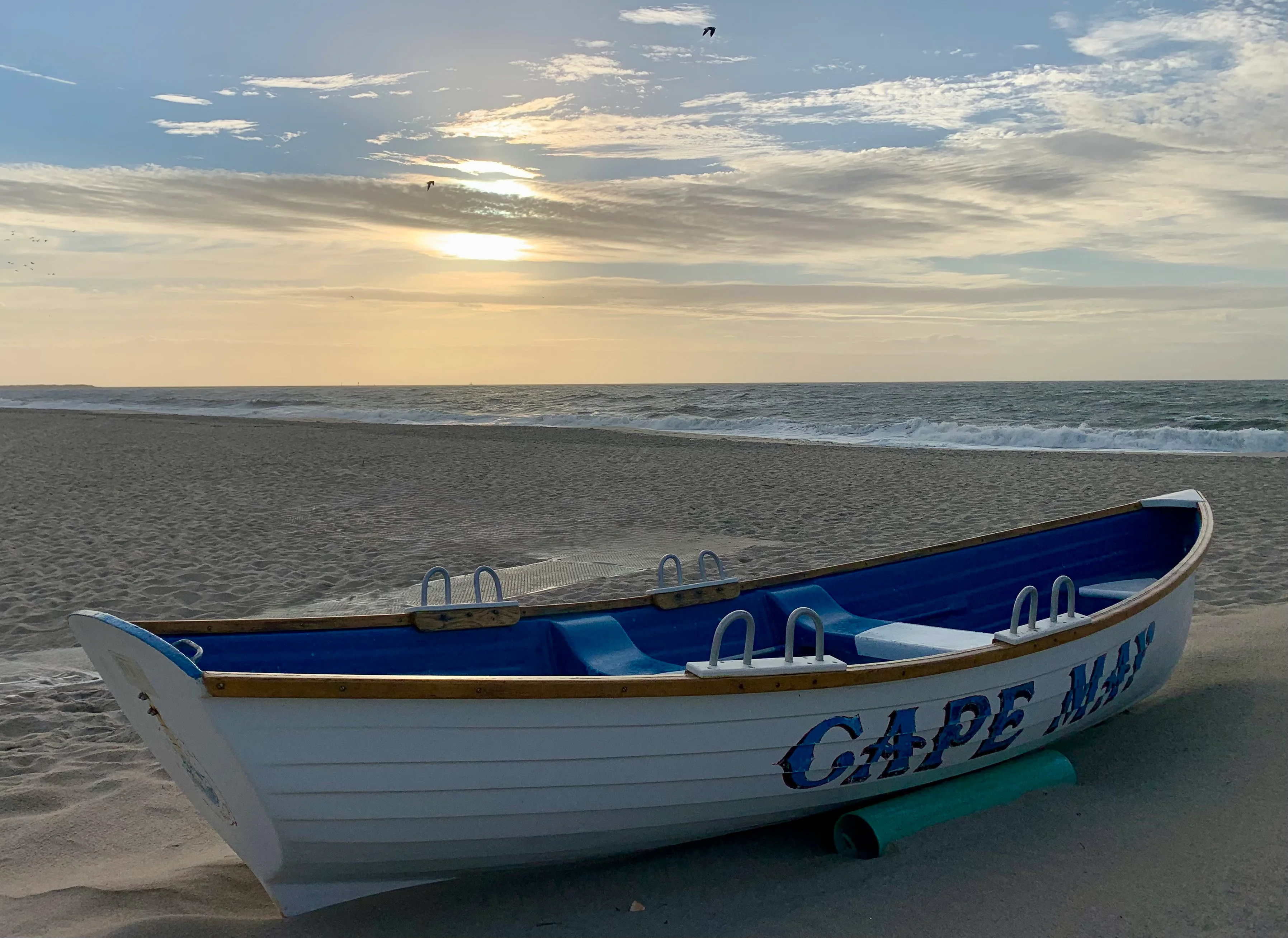
Classic Cape May beach scene offering direct access to coastal attractions and waterfront adventures
What Amenities and Rules Should You Know Before You Go?
The park includes a ranger office, an exhibit gallery with displays covering coastal erosion, Lenni-Lenape history, Cape May County natural history, and a small saltwater aquarium that makes the visitor center worth a stop, especially for children. Restrooms are available at the visitor center and at the group picnic facilities. There are no food vendors or concessions within the park, so plan to eat before you arrive or bring a packed lunch.
Key rules that catch first-time visitors off guard:
-
No swimming. The beach is accessible but swimming is prohibited due to underwater hazards.
-
No alcohol. State park rules prohibit alcohol throughout the grounds.
-
No smoking or vaping anywhere in the park.
-
Dogs must be on a leash at all times. Pets are not permitted on the beach between April 1 and September 15 to protect nesting shorebirds. Pets are never permitted on the nature trails, regardless of season.
-
Groups of 20 or more must reserve facilities at least five days in advance. The large group picnic shelters with restrooms hold up to 60 people.
The park phone number for visitor inquiries is 609-884-2159. The park office is open 8:00 AM to 4:00 PM. For current trail conditions, particularly after storms, a quick call before you drive out saves a wasted trip if sections are temporarily flooded or closed.
What Nearby Attractions Pair Well with a Park Visit?
The park sits at the far western end of the Cape May peninsula, about 3 to 4 miles from Cape May’s main commercial center along the Washington Street Mall and Beach Avenue. The drive takes roughly 10 minutes in light traffic, making it easy to combine a morning park visit with afternoon dining, shopping, or beach time in town.
Several nearby experiences complement the park naturally. Sunset Beach, located less than a mile from the park entrance, is the western-facing shoreline where you can hunt for Cape May Diamonds (quartz pebbles polished by the surf) and watch the sun drop over Delaware Bay. For diamond hunting, arrive in the morning at low tide when the receding water exposes the most pebbles along the shoreline , the best picking is in the wet sand just below the tide line. For the informal flag ceremony and sunset, show up by 7:45 PM in midsummer (the ceremony begins at sunset, which runs from around 8:00 PM in July to around 7:00 PM in September), and bring a chair , the crowd gathers quickly along the waterline and the ceremony itself lasts only about five minutes but draws a genuinely moving crowd response.
For families spending a full day on the peninsula, the Cape May County Park and Zoo is a short drive north and features 650 animals at no admission charge, one of the more underrated free attractions in New Jersey. Combine that with the state park and you have a full family day that costs nothing beyond food and parking.
Birders visiting specifically for migration season should plan time at the Cape May Migratory Bird Refuge (adjacent to the park on the Atlantic side) and consider coordinating with the Cape May Bird Observatory, which runs educational programs and guided tours throughout the fall season. The observatory’s hawk watch count is an ongoing research project, and you are welcome to observe and ask questions at the platform.
For a full overview of what the town and peninsula offer beyond the park, our guide to things to do in Cape May, NJ covers the full range of family and couples activities across every season.
If you’re exploring Cape May’s broader hosting and rental landscape, our co-hosting services page covers how we manage properties across the peninsula, and our curated Cape May experiences page connects you with guided activities beyond the standard tourist trail. For guests weighing accommodation options, our full property services overview explains what Cape del Mar handles end-to-end for owners and travelers alike.
Frequently Asked Questions About Cape May Point State Park
Is there a parking fee at Cape May Point State Park?
No, parking at the park is free. The main lot off County Highway 629 has no charge for visitors. However, the lot fills quickly on summer weekend mornings, so arriving before 9:00 AM on Saturdays and Sundays in July and August is strongly recommended. Overflow street parking is available in Cape May Point village but is limited.
Are dogs allowed at Cape May Point State Park?
Dogs are allowed in the park but with significant restrictions. Pets must be leashed at all times throughout the park. Dogs are not permitted on the beach between April 1 and September 15 to protect nesting shorebirds. Dogs are never permitted on the nature trails regardless of season. The paved and open areas around the visitor center and picnic facilities are the most dog-accessible parts of the park.
What is the most beautiful park in New Jersey?
Cape May Point State Park consistently ranks among New Jersey’s most visually striking state parks, earning a 4.8-star rating from over 4,800 reviews, according to Google Maps data. Its combination of lighthouse, WWII bunker, freshwater wetlands, coastal dunes, and ocean beach creates a layered landscape unlike any other park in the state. That said, beauty is contextual: Palisades Interstate Park in northern New Jersey offers dramatic Hudson River cliffs, and Delaware Water Gap National Recreation Area delivers mountain scenery. This coastal reserve is peerless specifically for coastal and ecological diversity in one compact site.
How long does it take to walk all the trails at Cape May Point State Park?
Walking all three trails back to back takes approximately 2.5 to 3.5 hours at a relaxed pace, including time at the observation platforms. The Red Trail takes 20 to 30 minutes, the Yellow Trail 45 to 60 minutes, and the Blue Trail 60 to 90 minutes. Most first-time visitors walk the Red and Yellow trails together, which takes about 60 to 90 minutes total and covers the wetlands, birding platforms, and wooded sections without the beach section’s additional physical demand.
Can you camp at Cape May Point State Park?
The park does not have camping facilities on its 244-acre grounds. There are no overnight stays permitted within the park. Visitors looking for camping near Cape May should check other New Jersey state park options in the region. Those preferring a comfortable base in Cape May itself have several vacation rental options within a short drive of the park, ranging from beachfront condos to Victorian-era apartments near the Washington Street Mall.
What birds can you see at Cape May Point State Park?
The park hosts an exceptionally broad range of bird species across three distinct viewing zones: the hawk watch platform for raptors (Sharp-shinned Hawks, Cooper’s Hawks, Peregrine Falcons, American Kestrels, Ospreys, Merlins, Northern Harriers, and Broad-winged Hawks during peak fall migration), the interior trails for songbirds and warblers (particularly active in spring and fall), and the beach for shorebirds including Sanderlings, Dunlins, and Piping Plovers. The fall migration window from September through November is when species diversity peaks. The Cape May Bird Observatory coordinates the annual hawk count and provides educational resources for identifying specific species by season.
How far is Cape May Point State Park from Cape May town center?
The park is approximately 3 to 4 miles from Cape May’s main commercial area near the Washington Street Mall and Beach Avenue, a drive of roughly 10 minutes in normal traffic. The distance is also bikeable in about 20 to 25 minutes on flat terrain, following Sunset Boulevard west from town. Walking the beach from the main Cape May beach strip to the park’s beach access point is possible but covers a longer stretch of sand and takes 45 to 60 minutes on foot.
Are there educational programs or guided tours at Cape May Point State Park?
Yes, the park offers ranger-led programs and interpretive exhibits through the visitor center and exhibit gallery, which covers topics including coastal erosion, freshwater wetlands ecology, Lenni-Lenape history, and seashore wildlife. The small saltwater aquarium inside the visitor center is particularly engaging for younger visitors. The Cape May Bird Observatory also runs guided birding tours tied to the fall hawk migration season. For current program schedules, the NJ DEP’s Cape May Point State Park programs page maintains updated listings.
Plan Your Visit with Confidence
Cape May Point State Park rewards visitors who come prepared. Knowing which trail matches your group’s pace, understanding that summer weekends demand an early start, and having a sense of what the WWII bunker and lighthouse each require to visit fully turns a pleasant morning walk into a genuinely memorable one. The park covers 244 acres, charges nothing to enter, and delivers a version of Cape May that the beach crowds along Beach Avenue never quite see. If there is one single reason to plan a trip to Cape May around a specific window, it is the fall hawk migration. October in particular , when Broad-winged Hawks, Peregrine Falcons, Merlins, and American Kestrels all move through simultaneously , delivers a density of raptor activity that serious birders travel across the country to witness and that casual visitors stumble into and remember for years. In 2026, with Cape May County welcoming over 12 million visitors annually according to Cape May County tourism data, finding a pocket of the peninsula that still feels unhurried is worth the short drive to the point.
At Cape del Mar, we think Cape May rewards the traveler who plans with a little intention. Whether that means timing your visit for the October hawk migration, walking the Blue Trail at low tide to catch shorebirds close to the waterline, or simply arriving before the parking lot fills on a Saturday morning, the difference between a good trip and a genuinely memorable one usually comes down to the details. When you’re ready to find your base for the visit, our properties are positioned to make the logistics easy.
Cape Belvedere is a two-bedroom, two-bathroom condo on the top floor of the Belvedere building, a 10-minute drive from the park’s gate and a short walk to the beach. The cupola with its panoramic Atlantic views is a genuinely good place to decompress after a morning on the trails. Check availability at Cape Belvedere for your visit dates.
Written by Julia & Hanno, Hosts at Cape del Mar