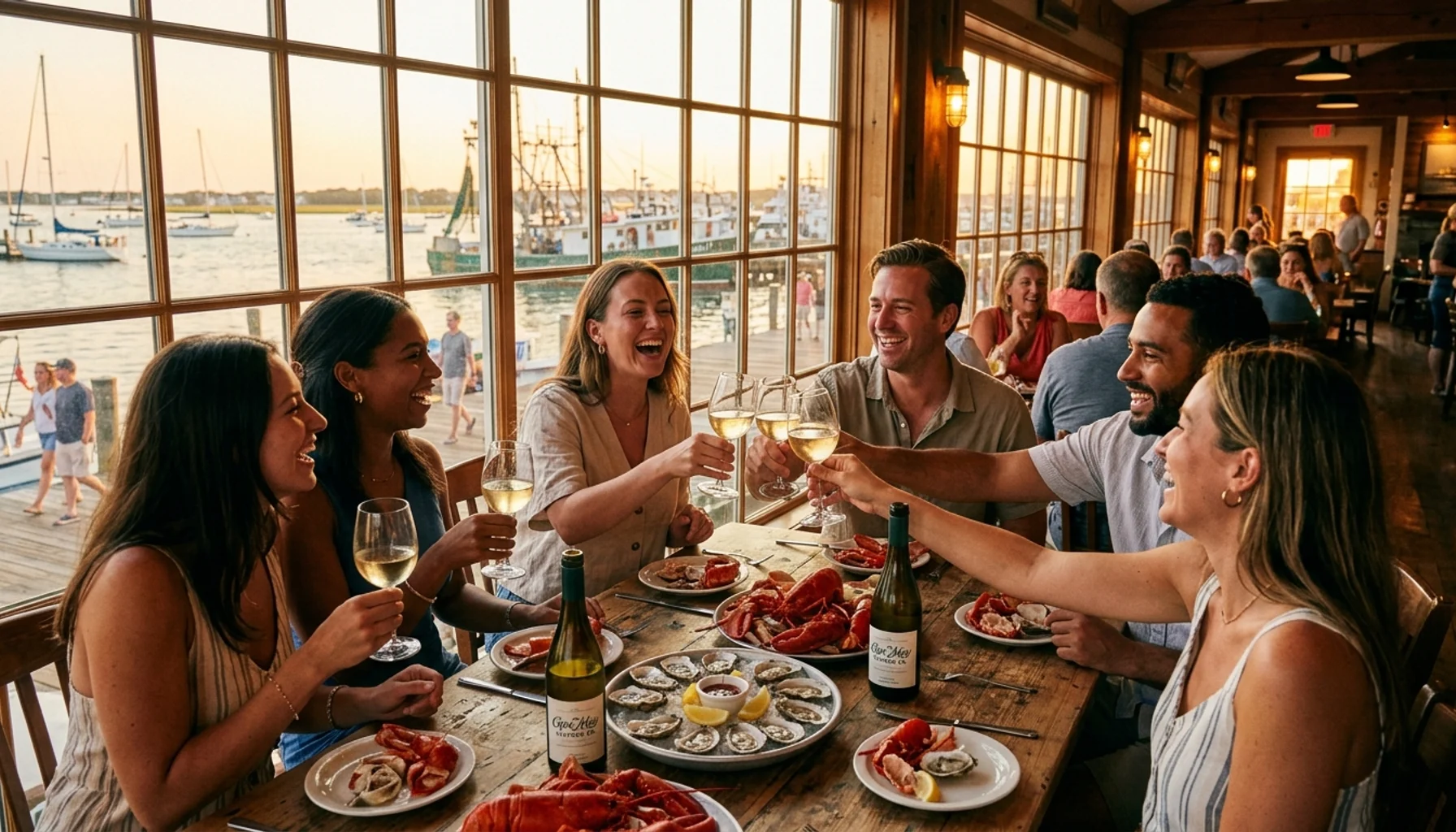
Cape May seafood restaurants are grounded in something most coastal towns only pretend to have: a working commercial fishing port that actually supplies the kitchens. The port of Cape May and Wildwood is the largest commercial fishing port in New Jersey and the second largest along the entire eastern seaboard, according to the Cape May County Chamber of Commerce. That distinction shapes every menu, every daily special, and every oyster that lands on your plate here. You are not eating trucked-in Atlantic protein dressed up for tourists. You are eating fish that was in the water yesterday.
- Cape May’s commercial fishing port is the second largest on the eastern seaboard, supplying restaurant kitchens directly and keeping menus grounded in genuine daily catch.
- The Lobster House at Cape May Harbor runs its own commercial fleet, offloading millions of pounds of seafood annually and serving it across five dining rooms, a raw bar, dockside take-out, and a 130-foot schooner cocktail lounge.
- Cape May Fish Market on Washington Street serves locally harvested Cape May “Salts” oysters from the South Bay daily, with prices ranging from $7.99 for a cup of clam chowder to $49.99 for surf and turf.
- Timing matters more than most guides admit: the busiest Cape May seafood spots fill up before 6 p.m. on summer weekends, and parking meters run from April 1 through December 31 from 10 a.m. to 10 p.m.
- Cape May County hosted 12.1 million visitors in 2026, generating $8.1 billion in direct tourism spending, which means the best restaurants here are genuinely busy and reservation strategy is not optional in peak season.
- Off-season dining offers real advantages: shorter waits, the same fresh-caught menu, and the shoulder-season atmosphere that regulars prefer over the summer rush.
Cape May, New Jersey, holds a specific distinction that separates it from every other shore town on the East Coast. Designated a National Historic Landmark on May 11, 1976, it is America’s oldest seaside resort, and its relationship with the sea predates the Victorian architecture that tourists photograph on every block. The fishing fleet has been working these waters for generations. The restaurants that do it right are not performing a coastal aesthetic. They are an extension of that economy.
This guide covers what the menu pages and Google listings do not. You will find out which dishes locals actually order, which experiences are worth the wait and which ones coast on reputation, how to handle parking without paying more than your appetizer costs, and how the seasons change both availability and atmosphere at Cape May’s top seafood spots. At Cape del Mar, we manage vacation rentals throughout Cape May’s historic district, and our guests ask us these questions constantly. Consider this the honest answer.
If you want a broader view of the dining scene before focusing on seafood, our Cape May NJ restaurant guide organized by budget, vibe, and occasion is a good companion read.
Where to Buy Fresh Seafood in Cape May?
Fresh seafood in Cape May is available both at sit-down restaurants and direct retail operations, with the best options sourced from the working harbor and local aquaculture beds in the South Bay. The two primary destinations for purchasing or eating fresh, locally harvested seafood in 2026 are The Lobster House at the harbor and Cape May Fish Market on Washington Street, each offering a distinct format that suits different trip styles.
The Lobster House operates a dockside take-out window that functions as a retail seafood counter alongside its restaurant service. Because the establishment runs its own commercial fishing fleet, the seafood arriving at the dock moves directly to the kitchen and the take-out case the same day. If you want whole fish, shrimp, or prepared seafood to cook at a rental, this is the closest thing Cape May has to a fishmonger with restaurant credentials behind it.
Cape May Fish Market at 408 Washington Street is the other anchor. The kitchen uses Cape May “Salts,” a variety of oyster harvested daily from the South Bay, and the menu reflects what is available from local sources. In-season hours run 11 a.m. to 10 p.m. daily. Off-season, the market scales back to Friday through Sunday only, so check before you make a trip specifically for it in late fall or winter.
One practical note worth knowing before you go: parking meters along Washington Street and the surrounding blocks operate from April 1 through December 31, every day, from 10 a.m. to 10 p.m. Budget for that, or walk from a centrally located rental and skip it entirely. Guests staying at Cape Oar, Cape del Mar’s 800-square-foot apartment one block from Washington Street Mall, can reach Cape May Fish Market on foot in under five minutes, which makes the parking question irrelevant.
What Are the Top-Rated Lobster Experiences in Cape May?
The top lobster dining experience in Cape May is The Lobster House at Cape May Harbor, a multi-generational family-owned institution that has operated for over four generations and remains the definitive reference point for lobster on the southern Jersey Shore. Open year-round, seven days a week for lunch and dinner, it offers five distinct dining formats under one waterfront operation, including a 130-foot authentic Grand Banks schooner moored dockside that functions as an outdoor cocktail lounge.
Specifically, The Lobster House gives you four ways to eat: the main waterfront restaurant with five dining rooms and a full bar, a dockside take-out window for casual harbor-side eating, a raw bar with its own separate indoor dining room and menu, and the Schooner American cocktail lounge aboard the docked vessel, serving a luncheon menu and specialty appetizers in the evening.
The recommendation most locals would give you: do not overlook the Raw Bar. It has its own menu distinct from the main restaurant, and the indoor bar at the raw bar section is where regulars go when they want to avoid the main dining room wait on a Saturday night. You get the same fresh-caught seafood, the same harbor view through the windows, and significantly less wait time than the primary dining rooms on summer weekends.
For lobster in a more casual format, Cape May Fish Market’s whole steamed 1.5 lb lobster at $29.99 served in shell with choice of potato and vegetable is one of the more honest value propositions on the Washington Street corridor. The lobster roll at $26.99 delivers chunks of butter-sautéed lobster on a toasted bun lightly dusted with sea salt. That detail about the sea salt matters: it is a specific preparation choice that elevates what could easily be a generic roll.
Where to Eat Dinner in Cape May? Seafood Edition
Cape May seafood restaurants for dinner fall into three distinct categories: full waterfront dining destinations, casual walk-in spots for the kind of meal you plan around a good afternoon at the beach, and raw bar experiences that work best as a pre-dinner stop rather than a main event. Knowing which category fits your evening is what separates a great Cape May dinner from one where you waited 45 minutes for something you could have planned around.
The Waterfront Destination
The Lobster House is the obvious answer for a full waterfront dinner, and the reputation is earned. The commercial fleet docked outside the dining room windows is not decorative. Those boats supply the kitchen, and the menu reflects what came off the boats that week. Go on a Tuesday or Wednesday evening in summer rather than Friday or Saturday if you want a reasonable wait. The main restaurant fills before 6 p.m. on weekends, and the walk-in reality on a Saturday at 7 p.m. is a genuine crowd.
If the main dining rooms are full, board the Schooner American. The 130-foot Grand Banks sailing vessel moored dockside serves as an outdoor cocktail lounge with a full bar and luncheon menu during the day, and specialty appetizers in the evening. It is one of the more distinctive dining experiences on the entire Jersey Shore, and it tends to have shorter waits than the restaurant itself. Order whatever the seasonal shellfish special is, find a spot along the rail, and watch the commercial fleet at work. That experience is not replicated anywhere else in Cape May.
The Casual Washington Street Option
Cape May Fish Market at 408 Washington Street works well for dinner when you want to eat well without a reservation and without the production of a full sit-down. The Fish Market Bruschetta, the house specialty, tops toasted points with freshly diced avocado, jumbo lump crab meat, and fresh herbs at $24.99. Order that as a starter while you decide. The Seafood Pasta at $42.99 includes sautéed jumbo shrimp, jumbo lump crab, clams, and scallops in red sauce, and it is generously portioned enough to share between two people who have already had appetizers.
For families with children, the kids’ menu runs from $6.99 to $14.99, with fried flounder and fried shrimp with fries at the top of that range. That is a reasonable price point for a fresh-seafood kids’ option at a waterfront-adjacent restaurant in a high-season beach town.
Budget Planning for Dinner
Budget realistically. A dinner for two at Cape May Fish Market with two appetizers, two entrees, and drinks will typically land between $100 and $130 before tip. A comparable meal at The Lobster House in the main dining room will run higher, particularly if you order the specialty shellfish. Neither is a budget-dining choice, but both represent genuine value relative to the quality of what is on the plate.
For a broader picture of Cape May dining options beyond seafood, including breakfast spots and casual bites, the full guide to what to do, where to eat, and where to stay in Cape May covers the complete landscape.
What Makes Cape May’s Seafood Scene Different from Other Shore Towns?
Cape May’s seafood restaurant scene is distinguished from other New Jersey Shore destinations by the direct, verifiable connection between the working fishing port and the restaurant kitchens. The port of Cape May and Wildwood being the second largest commercial fishing port on the eastern seaboard is not a marketing claim. It is an economic infrastructure that makes genuine daily-catch freshness possible in a way that towns without working fleets cannot replicate.
The Commercial Fleet Factor
The Lobster House’s own commercial fishing fleet is the clearest example of this infrastructure. The fleet offloads and ships millions of pounds of seafood annually, and a direct portion supplies the restaurant’s kitchen. When a server tells you the flounder is fresh, it is because the supply chain is literally docked outside the window. Most coastal restaurants source through distributors; The Lobster House is closer to a vertical operation than almost any comparable restaurant on the eastern seaboard.
Cape May County’s commercial fishing heritage also supplies the region’s growing food and beverage tourism sector. According to the Cape May County Chamber of Commerce, the county’s locally grown agricultural products and fishing heritage continue to underpin the growth of local wineries, breweries, and distilleries, which increasingly appear on seafood restaurant menus as pairing options. In 2026, that integration between the fishing economy and the broader culinary scene is more visible than it has ever been.
The South Bay Oyster Story
The Cape May “Salts” oyster deserves specific attention. These are harvested daily from Cape May’s South Bay, and Cape May Fish Market builds a signature menu item around them: oyster shooters served five to a glass in a shot glass with homemade cocktail sauce at $17.99. The South Bay’s salinity and temperature produce an oyster with a brine level that distinguishes it from Long Island or Chesapeake equivalents. If you have never had a South Bay Salt, this is the version of the classic oyster shooter worth ordering.
Seasonality and What It Means for Your Order
Cape May’s fishing seasons affect what appears on menus. Flounder, weakfish, and local shellfish have peak windows that shift through the year. Summer brings the broadest selection. Late fall and early spring narrow the catch but often improve quality on the species that are in season. If you are visiting outside peak summer, ask your server what came off the boats that week rather than defaulting to the menu standard. Any kitchen worth its salt in Cape May will have a daily catch conversation ready.
Cape May County recorded 12.1 million visitors in 2026, according to Cape May County Government data, generating $8.1 billion in direct tourism spending. That volume of visitors concentrates demand at the best-known seafood restaurants, which is worth factoring into your reservation strategy.
Insider Tips Most Cape May Seafood Guides Skip
Most Cape May seafood restaurant guides cover the names and the dishes. What they skip is the operational reality of visiting these places: when to show up, what the crowd actually looks like, how to handle parking, and which specific menu items are worth the price versus the ones that look good on paper but underdeliver. These are the details that determine whether your dinner is the highlight of the trip or a two-hour wait for something you wish you had planned differently.
Timing the Lobster House
The Lobster House’s main dining rooms fill early. On summer weekends, a 5:30 p.m. arrival will often get you seated without a significant wait; a 7 p.m. walk-in on a Friday might mean 45 to 60 minutes standing on the dock. The Raw Bar section operates as a separate venue with its own menu and typically shorter waits than the main restaurant. If your group is flexible, split the difference: start with drinks on the Schooner American, then move to the Raw Bar when a table opens. You get the full experience without the main dining room bottleneck.
Navigating the Washington Street Parking Reality
Parking meters along and near Washington Street run from April 1 through December 31, daily, from 10 a.m. to 10 p.m. A two-hour dinner can cost you $4 to $8 in meter fees depending on the block, which is a minor expense but one that surprises visitors who assume parking is free in a beach town. The practical solution is to stay somewhere central enough to walk. Cape del Mar’s Cape Wave, a two-bedroom apartment in a Victorian house from 1860, is one block from Washington Street Mall and a five-minute walk to the Fish Market. You park once and walk everywhere for the duration of the trip.
Which Dishes Are Worth It
At Cape May Fish Market, the crab cake matters. The entree version at $39.99 for two crab cakes is the better order over the sandwich at $26.99, not because the sandwich is poor but because the full entree plating lets you appreciate the preparation. The New England Clam Chowder at $7.99 for a cup is legitimately good and a reasonable way to start a meal without committing to a full appetizer at full appetizer prices.
The surf and turf at $49.99 (8 oz filet mignon and jumbo fried shrimp) is the high-water mark on the Fish Market menu. It is a fair price for Cape May in season, and the combination works because the shrimp is local rather than commodity. If you want to push it further, the version with a crab cake added runs $54.99 and is the kind of meal that earns a trip in itself.
Off-Season Advantages
Both The Lobster House and Cape May Fish Market are open outside peak summer, though Fish Market reduces to Friday through Sunday only in the off-season. Visiting in October or November means the same fresh-caught menu, no wait for a table, and a harbor atmosphere that is genuinely quieter and more local-feeling than anything possible in July. The Cape May Jazz Festival, which typically runs in November and April, gives off-season visitors a built-in reason to make the trip. A post-concert dinner at The Lobster House on a November Saturday, with the harbor lit up and the schooner moored quietly dockside, is the Cape May version of a perfect evening.
For ideas on structuring a full off-season visit around dining and activities, the 25 best things to do in Cape May for families in 2026 covers the full picture beyond just the restaurants.
How to Plan Your Cape May Seafood Dinner: Practical Logistics
Planning a Cape May seafood dinner in 2026 requires accounting for demand that has grown consistently year over year. Cape May County’s visitor return rate reached 84% in 2026, per Cape May County Government data, meaning the crowds at the best restaurants are not random tourists making one-time visits. They are repeat visitors who know exactly where they are going. That repeat-visitor density means the good spots stay consistently busy and reservation planning is not paranoia, it is practical.
Reservation Strategy by Venue
The Lobster House does not take reservations in the traditional sense for all dining formats, which is part of its appeal as a walk-in institution. The trade-off is the wait. Plan your arrival before 5:30 p.m. in peak season or accept that you will be waiting, ideally with a drink aboard the Schooner American, until a table opens. For parties of six or more, call ahead to understand the current policy for larger groups.
Cape May Fish Market operates on a more casual walk-in model appropriate to its Washington Street location. Waits are shorter than at The Lobster House on average, and the format rewards arriving early in the evening rather than late. By 8 p.m. in July, both spots are running at full capacity.
Building a Seafood-Focused Itinerary
If you want to experience multiple Cape May seafood formats in a single visit, a practical sequence is: lunch at Cape May Fish Market on Washington Street (shorter midday wait, full menu available), followed by a late afternoon drink on the Schooner American at The Lobster House, and a Raw Bar dinner at the same complex as tables open in the early evening. That three-stop approach gives you the Washington Street experience, the harbor atmosphere, and the raw bar menu without the main restaurant wait.
Walking between Cape May Fish Market on Washington Street and The Lobster House at the harbor takes roughly 10 to 15 minutes on foot. It is a pleasant walk through the historic district and genuinely preferable to moving a car between the two.
Accessibility at Cape May Seafood Restaurants
Accessibility varies meaningfully between venues. Cape May Fish Market at 408 Washington Street is at street level with standard entry. The Lobster House involves a waterfront dock environment where some areas, particularly the Schooner American boarding, have surfaces and steps that can be challenging for visitors with limited mobility. If accessibility is a priority, call The Lobster House ahead of your visit to confirm which dining formats are most readily accessible and where best to enter.
For guests with accessibility needs staying in Cape May, Cape del Mar’s Cape Oar is the portfolio’s wheelchair-accessible property, located one block from Washington Street Mall with a private patio and step-free entry via keypad.
Frequently Asked Questions About Cape May Seafood Restaurants
What is the best seafood restaurant in New Jersey?
The Lobster House in Cape May is consistently ranked among New Jersey’s top seafood destinations, backed by over four generations of family ownership, a commercial fishing fleet that supplies the kitchen directly, and five distinct dining formats including a raw bar and a 130-foot dockside schooner cocktail lounge. Cape May’s position as home to the second largest commercial fishing port on the eastern seaboard means the broader dining scene has a depth of fresh-catch access that few New Jersey towns can match.
Does The Lobster House take reservations?
The Lobster House operates primarily as a walk-in restaurant, which is a deliberate part of its identity as a casual, high-volume waterfront destination open year-round, seven days a week. The practical workaround is arriving before 5:30 p.m. on weekends in peak season, or using the Raw Bar section or Schooner American dockside lounge as a starting point while waiting for a main dining room table to open.
What should I order at Cape May Fish Market?
Start with the Fish Market Bruschetta at $24.99, a house specialty of toasted points topped with fresh avocado, jumbo lump crab meat, and herbs. The locally harvested Cape May “Salts” oyster shooters at $17.99 for five are worth ordering if you have any interest in local shellfish. For an entree, the two-crab-cake plate at $39.99 outperforms the sandwich version, and the New England Clam Chowder at $7.99 per cup is an honest value for the quality.
Is Cape May Fish Market open year-round?
Cape May Fish Market at 408 Washington Street runs full hours from 11 a.m. to 10 p.m. daily during the in-season period. In the off-season, hours reduce to Friday through Sunday only, from 11 a.m. to 8 p.m. If you are planning a visit specifically to eat there outside of peak summer, confirm current hours before making the trip.
Where can I park near Cape May seafood restaurants?
Parking meters near Washington Street and the harbor are in effect from April 1 through December 31, every day, from 10 a.m. to 10 p.m. The most practical solution for visitors planning multiple restaurant stops is to stay in central Cape May and walk, since both major seafood destinations are within a 15-minute walk of the historic district. Street parking exists but fills quickly on summer weekends by mid-afternoon.
What are Cape May “Salts” oysters?
Cape May “Salts” are locally harvested oysters from Cape May’s South Bay, pulled daily and served at Cape May Fish Market. The South Bay’s salinity and water temperature produce a distinctive brine level that differentiates these oysters from Chesapeake or Long Island varieties. Cape May Fish Market serves them as oyster shooters in a shot glass with homemade cocktail sauce, five to an order at $17.99, making them one of the most specific and verifiable expressions of Cape May’s local seafood culture.
Are Cape May seafood restaurants good for families with children?
Both major venues accommodate families. Cape May Fish Market has a children’s menu running from $6.99 for mac and cheese with fries to $14.99 for fried flounder or fried shrimp with fries. The Lobster House’s dockside take-out format is particularly family-friendly, allowing kids to eat casually while watching the commercial fishing fleet at the dock. The main dining rooms at The Lobster House work for families but can involve waits on busy summer evenings.
Planning Your Stay Near Cape May’s Best Seafood Spots
Cape May seafood restaurants reward the traveler who stays close enough to walk. When The Lobster House at the harbor and Cape May Fish Market on Washington Street are both within a 15-minute walk of your front door, the evening’s plan is flexible in a way that is simply not possible when you are parking and relocating a car between venues.
Cape del Mar’s properties in Cape May’s historic district are designed for exactly this kind of trip. Cape Belvedere, the top-floor condo in the historic Belvedere building with Atlantic ocean views, sits two minutes from Congress Hall and steps from Washington Street Mall. On a clear day the view from the cupola lounge reaches Delaware. After a dinner at one of the harbor restaurants, returning to watch the harbor lights from those panoramic windows is a reasonable definition of a good evening.
For couples who want to be directly across the street from the beach, Cape Whale and Cape Surf, both first and second floor condos in the historic Baronet Mansion on Beach Avenue, put you within easy walking distance of both major seafood destinations. Cape Surf includes two complimentary beach tags, beach chairs, and an umbrella, so the day before your seafood dinner practically plans itself.
For a full neighborhood-by-neighborhood breakdown of where to base yourself for a Cape May dining trip, the guide to where to stay in Cape May by neighborhood vibe covers the trade-offs in detail.
Cape May’s seafood restaurants are not a novelty you check off a list. They are the reason the town’s culinary reputation has outlasted every trend in American beach dining. The port is real, the catch is real, and the best meals here are the kind that become the reference point for what fresh seafood should actually taste like. In 2026, with Cape May County continuing to draw visitors at record levels, the restaurants are busier than ever. Plan around it, and the experience delivers on everything the reputation promises.
If a seafood-focused Cape May trip sounds like the right kind of getaway, Cape Belvedere puts you two minutes from Congress Hall and walking distance from both The Lobster House and Cape May Fish Market, with Atlantic ocean views from a top-floor cupola that makes coming home after dinner the best part of the evening. Browse all of Cape del Mar’s Cape May properties at capedelmar.com and book directly to skip the OTA service fees.