Vacation rental platforms like Airbnb and VRBO charge service fees that can add 20% or more to the total cost of a booking, on top of whatever nightly rate the listing advertises. These fees exist because the platforms operate as middlemen between travelers and property owners, and the fee is how they profit from every transaction. The number looks small as a percentage until you run the math on a week-long family trip: a $300/night rental suddenly becomes $380/night after service fees, cleaning charges, and taxes are stacked on at checkout. That gap between the advertised price and the real price is the core reason so many travelers feel misled by vacation rental sites.
- Vacation rental platforms add service fees of 20%+ above the advertised nightly rate, payable at checkout.
- VRBO service fees typically range from $200 to $1,000 per booking depending on the total stay cost.
- Hosts also pay fees: Airbnb charges owners roughly 3% per booking while charging guests 14: 16%, collecting from both sides.
- The 75/55 pricing rule is a host strategy that deliberately suppresses the displayed nightly rate while recovering revenue through cleaning fees and add-ons.
- Direct booking with a verified owner eliminates the platform fee entirely and typically includes better amenity transparency and direct host communication.
- Cape del Mar’s Cape May properties are available for direct booking at capedelmar.com with no OTA surcharges layered on top.
Most travelers discover the fee problem at the worst possible moment: they have found the perfect property, spent an hour reading reviews, and are ready to book. Then the checkout screen reveals a final total 25% higher than the listing suggested. In 2026, this pattern has become one of the most common complaints in the vacation rental industry, and for good reason. The fee structure is not accidental. It is by design, and understanding how it works is the first step to avoiding it.
At Cape del Mar, we manage a small portfolio of renovated, eco-friendly vacation rental properties in Cape May, New Jersey and Cape Coral, Florida. All of our properties are bookable directly at capedelmar.com, which means the price you see is the price you pay. No OTA service fee layered on top. This article explains exactly why vacation rental sites charge what they charge, what all the individual fees actually are, and how you can book smarter regardless of where you end up staying.
Why Do Vacation Rental Sites Have So Many Hidden Fees?
Vacation rental platforms charge multiple fees because they are advertising and transaction businesses, not hospitality companies. Airbnb and VRBO do not own any of the properties listed on their sites. Their revenue comes entirely from the fees they collect on every booking, which means the more transactions that occur on-platform, the more they earn. Structurally, both platforms profit by taking a percentage from guests at checkout and a separate percentage from hosts when payment is processed. The result is a system that charges both parties for the same transaction.
VRBO’s history makes this especially clear. VRBO was originally founded as “Vacation Rental By Owner,” one of the first platforms to let owners list properties for direct online bookings. After Expedia Group acquired VRBO, the model shifted. Expedia runs hotels, flights, and car rentals through the same fee-based model, and that framework was applied to vacation rentals. Service fees followed. The platform that started as a tool to connect owners and renters directly became another intermediary collecting a cut of every stay.
Airbnb operates under a similar model. The platform provides search infrastructure, payment processing, and a review system, and it charges for those services through fees applied at booking. Neither Airbnb nor VRBO provides any direct service at the property itself. Every actual guest service , the clean sheets, the stocked kitchen, the welcome message, the maintenance call at midnight , comes from the owner. The platform’s fee is for being the search layer between the two.
To protect that revenue, both platforms actively prevent hosts and guests from communicating off-platform before a booking is made. VRBO withholds contact information for both parties specifically to prevent direct transactions that would bypass the platform fee. If a host is caught even mentioning to a guest that a service fee exists, VRBO can remove the listing. The financial incentive to keep everyone on-platform is that strong.
What Types of Hidden Fees Show Up on Vacation Rental Bookings?
Hidden fees on vacation rental bookings refer to all charges added to the base nightly rate that are not prominently displayed in the initial search results. The most common categories are service fees, cleaning fees, resort or amenity fees, taxes, and late check-in surcharges. Individually, each fee sounds reasonable. Combined, they routinely push the final checkout total 20: 30% above the displayed nightly rate.
Here is a breakdown of where the charges typically come from:
| Fee Type | Who Charges It | Typical Range | Avoidable? |
|---|---|---|---|
| Guest Service Fee | Airbnb / VRBO platform | 14: 16% of subtotal | Yes: via direct booking |
| Host Service Fee | Airbnb / VRBO platform | 3% of subtotal (Airbnb) | Yes: via direct booking |
| Cleaning Fee | Property owner | $75: $300+ per stay | Partially: varies by host |
| Occupancy Tax | Local government | 6: 15% depending on jurisdiction | No: legally required |
| Amenity / Resort Fee | Property owner or platform | $15: $50/night | Yes: via direct booking |
| Late Check-In Fee | Property owner | $25: $100 | Yes: book direct and communicate |
Cleaning fees deserve particular attention. A $150 cleaning fee on a two-night stay effectively adds $75 per night to the real cost. Read the fee breakdown carefully before comparing properties by nightly rate: a listing showing $175/night with a $200 cleaning fee is more expensive for a short stay than one showing $210/night with no cleaning fee.
Taxes are the one category you cannot avoid regardless of how you book. Local occupancy taxes apply to all vacation rentals and are collected whether you book through Airbnb, VRBO, or directly with the owner. In New Jersey, for example, state and local taxes on short-term rentals are set by law and apply equally to every booking channel.
How Does the Fee Structure Work on Both Sides of a Booking?
The vacation rental fee structure works on both sides of every transaction: guests pay a service fee on top of the listed rate, and hosts pay a separate fee to the platform when the booking is confirmed. This double-dipping is the aspect of OTA pricing that most travelers never see, because the host-side fee is invisible to the guest and rarely discussed publicly.
On Airbnb, the split typically works like this. The guest pays a service fee of roughly 14, 16% of the subtotal, applied at checkout. The host simultaneously pays a 3% fee deducted from their payout. So for a $1,000 stay, Airbnb collects approximately $140, $160 from the guest and $30 from the host. The platform earns $170: $190 from a single transaction without owning or operating the property at any point.
VRBO offers hosts a choice between an annual subscription model (a flat fee per year for unlimited bookings) and a per-booking fee structure. Either way, the guest still pays a service fee at checkout, and that fee can reach up to 20% of the total rental cost. VRBO service fees can range from $200 to $1,000 per booking depending on the length and price of the stay. For a family booking a week at a $400/night property, the service fee alone can approach $400 or more before cleaning and taxes are added.
The practical effect on hosts is equally significant. A host who lists at $250/night on Airbnb and pays a 3% host fee nets approximately $242.50 per night before their own expenses. But the guest pays $285: $290 per night after the guest service fee. The gap between what the host receives and what the guest pays goes entirely to the platform. That margin is why direct booking is financially attractive to both parties: the host can lower the price or keep more revenue, and the guest pays less, because the platform fee is eliminated from the equation.
What Is the 75/55 Rule for Airbnb?
The 75/55 rule for Airbnb refers to a host pricing strategy where the advertised nightly rate is set at approximately 75% of the host’s actual revenue target, with the remaining amount recovered through cleaning fees set at roughly 55% of the nightly rate. The strategy is designed to make a listing appear competitively priced in Airbnb’s search results, which sort partly by nightly rate, while ensuring the host still meets their revenue goals through mandatory add-on fees the guest cannot opt out of.
In practice, a host who wants to net $200 per night might list the property at $150/night and add a $110 cleaning fee. For a two-night stay, the guest sees “$150/night” in search results but pays $300 (nightly) plus $110 (cleaning) plus the platform’s 14, 16% service fee: a total closer to $240, $250 per night. The listing looked $50 cheaper than it actually is.
Airbnb partially addressed this in 2023 by introducing a “total price display” mode that shows the all-in cost including fees in search results. But the setting is not the default on all platforms and devices, and many travelers still discover the full cost only at checkout. The 75/55 rule is not Airbnb’s own policy; it is a widely discussed host optimization strategy that emerged organically as hosts learned how to rank higher in search while maintaining their revenue targets.
For travelers, the practical lesson is simple: always switch to “total price” view before comparing listings, and always click through to the checkout screen before assuming a listing is within budget.
Why Are People No Longer Using Airbnb?
Traveler dissatisfaction with Airbnb has grown significantly in recent years, driven primarily by three factors: escalating service fees, aggressive cleaning fee structures, and lengthy chore lists that guests are expected to complete before checkout despite already paying a cleaning fee. In 2026, these concerns have translated into a measurable shift in behavior, with a growing segment of travelers actively seeking alternatives to the major OTA platforms.
The fee complaint is the most consistent. Travelers report discovering at checkout that a property listed at $150/night costs $220: $250 per night all-in, a gap that erodes trust in the platform’s pricing transparency. When the same property is available on a direct-booking site at $175/night with no additional service fee, the comparison is straightforward.
Cleaning fee expectations compound the frustration. Some listings charge $150: $250 cleaning fees while also requiring guests to strip beds, start a load of laundry, run the dishwasher, take out trash, and leave the property in “broom-clean condition” before departure. Travelers increasingly view this as paying for a service that does not exist.
The third driver is the erosion of the personal hosting experience that made Airbnb popular in its early years. As large property management companies and institutional investors have entered the platform in volume, many listings now operate like budget hotels with inconsistent quality control and slow response times. The direct booking movement has grown partly as a reaction: travelers who want genuine host communication and verified quality standards have found that owner-operated properties bookable directly tend to deliver a more consistent experience.
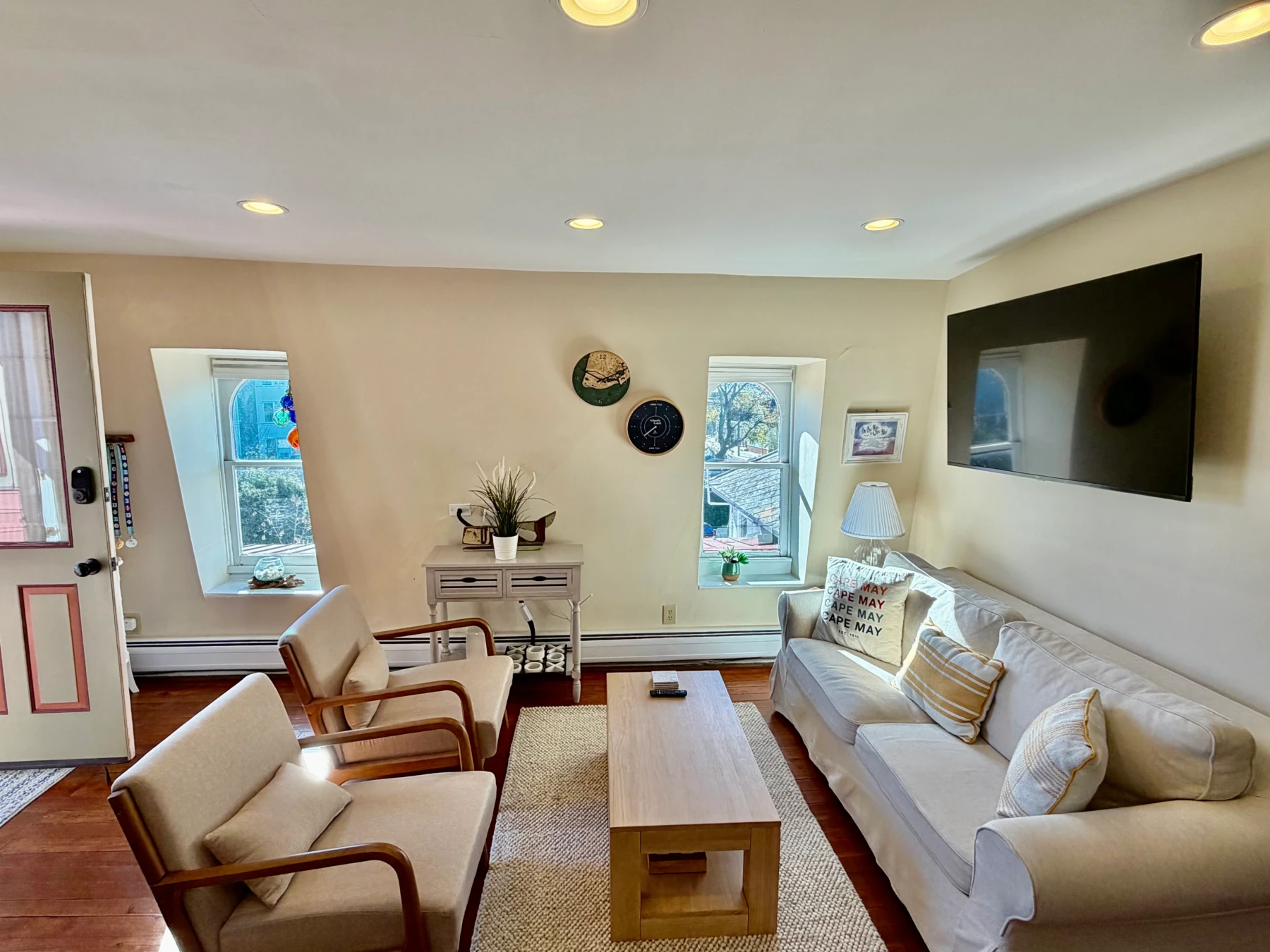
For our guests at Cape del Mar, the shift is practical. Properties like Cape Belvedere, our top-floor ocean-view condo in Cape May’s historic district, include organic toiletries, a stocked kitchen, air purifiers, water filters, and four complimentary beach passes in season: none of which require a separate fee or a platform checkout to discover. Booking directly at capedelmar.com means you know exactly what you are getting before you pay.
How to Avoid Hidden Fees on Airbnb and VRBO
Avoiding hidden fees on Airbnb and VRBO requires understanding where the fees come from and applying a few specific tactics before committing to a booking. The single most effective approach is direct booking, but there are also platform-level steps that reduce the fee impact when direct booking is not available for a specific property.
Tactic 1: Switch to total price display. On Airbnb, toggle the “Display total price” option in search settings. This shows the all-in cost including service fees and cleaning fees in the search results, so you are comparing real prices rather than base rates.
Tactic 2: Search for the property’s name off-platform. Hosts on Airbnb and VRBO often leave identifying details in their listing descriptions, such as the name of the building or a specific property name like “The Bay House” or “Waterscape C203.” A direct Google search for that name can surface the property’s own website or a direct booking profile on platforms like Houfy.com: Global Direct Vacation Rental Bookings, which lists properties worldwide with no added guest service fees.
Tactic 3: Reverse-image-search the lead photo. Right-click the main listing image and run a reverse image search on Google. If the host has a direct booking site or lists the property on other platforms, this search often surfaces it immediately.
Tactic 4: Use regional direct-booking platforms. The Direct Book Network aggregates fee-free vacation rental sites organized by U.S. state, making it easy to find direct-booking options for specific destinations. For Florida properties specifically, FlaRBO.com: Florida Rentals By Owner covers beaches, Gulf Coast, Atlantic Coast, and the Keys with no platform surcharges.
Tactic 5: Book directly when you find a verified operator. When a property owner or manager has a professional direct-booking website with clear policies, guest reviews, and a verified payment system, booking directly eliminates the 14: 16% guest service fee entirely. This is consistently the largest single saving available to vacation rental travelers.
If you are planning a Cape May trip and want to experience this firsthand, the Cape del Mar guide to vacation rentals in Cape May, New Jersey walks through all properties and what each includes: with pricing that reflects the real cost, not a teaser rate inflated at checkout.
Which Vacation Rental Company Has the Lowest Fees?
Direct booking platforms and owner-operated websites charge the lowest fees because they remove the OTA intermediary entirely. Among aggregator platforms that list properties from multiple owners, Houfy.com and the Direct Book Network both operate without guest-side service fees, making them the most cost-effective search tools for travelers who cannot locate a property’s direct booking website on their own.
For the Gulf Coast and Florida markets specifically, Emerald Coast By Owner (ECBYO.com) is a well-established regional platform focused on the Emerald Coast with no added guest fees. FlaRBO.com covers all of Florida on the same model.
Among the major OTAs, Airbnb and VRBO both charge guest service fees in the 14: 20% range depending on the total booking value. Neither platform is materially cheaper than the other for most travelers; the differences in final cost come primarily from individual host pricing decisions (cleaning fees, minimum stays, amenity fees) rather than from the platform fee structure itself.
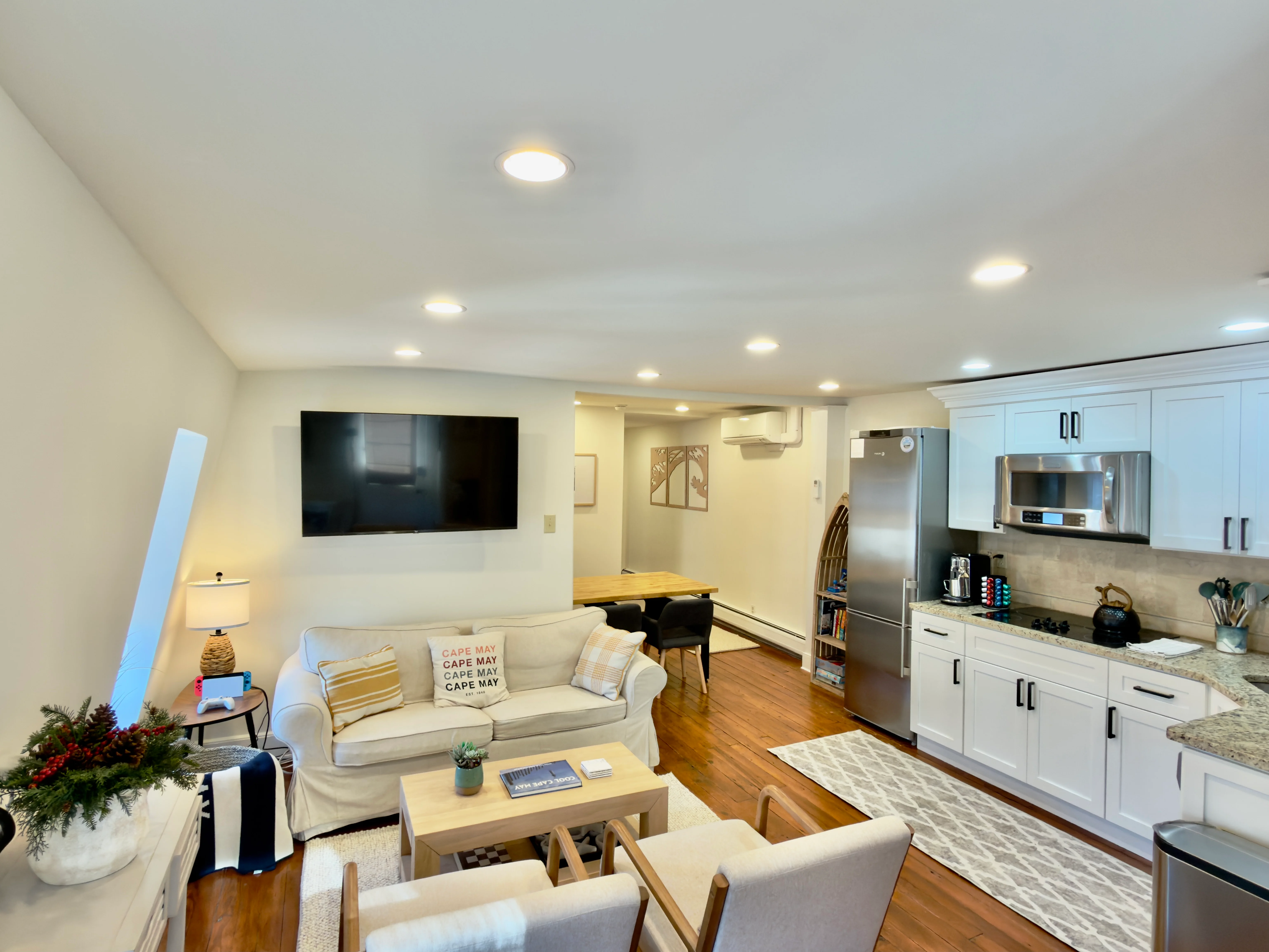
The honest answer is that no major OTA has the lowest fees, because fees are how major OTAs earn revenue. The lowest-fee option is always a direct booking relationship with a verified property owner. For Cape May stays, Cape Oar, our 800-square-foot Victorian-era apartment one block from the Washington Street Mall, is available for direct booking with no platform surcharge added to the published rate. The same is true for every property in the Cape del Mar portfolio.
How Does Direct Booking Actually Work: and Is It Safe?
Direct booking refers to reserving a vacation rental property through the owner’s own website or a direct-booking platform, bypassing Airbnb, VRBO, and other OTA intermediaries entirely. The process typically involves selecting dates, reviewing the rental agreement, and paying through a secure payment processor: without a platform service fee added to the transaction. Direct booking is safe when you work with a verified operator who provides a written agreement, a professional payment system, and transparent policies.
The most common concern travelers raise is about buyer protection. Major OTA platforms offer dispute resolution services and some form of damage guarantee that makes travelers feel protected. Those protections have real value. But they are not exclusive to OTA platforms, and reputable direct-booking hosts can replicate them in several ways.
Specifically, look for these trust signals before booking directly with any property operator:
- A professional website with specific property photos, not stock images. The property should be identifiable and described accurately.
- A written rental agreement sent before payment is required. This document should specify cancellation terms, damage deposit terms, check-in procedures, and house rules.
- Secure payment processing. Credit card payments through verified processors provide chargeback rights that protect travelers even without a platform intermediary.
- Verifiable guest reviews. Direct-booking operators often link to reviews on Google, their own site, or platforms like Houfy. Check that reviews are specific and verifiable rather than generic.
- Direct host communication before booking. A host who responds quickly, answers specific questions, and communicates through a traceable channel (email, a website contact form) is a positive trust signal.
Cape del Mar’s properties satisfy all five of these criteria. Each listing has verified photography, a clear rental agreement, direct host communication, and a secure payment process. Our FAQ page answers the most common guest questions about the direct booking process, and our team typically responds to inquiries within a few hours.
The financial case for direct booking is straightforward: eliminating a 14, 16% guest service fee on a $2,000 stay saves $280, $320 immediately. That is real money. And because the host does not lose 3% to the platform either, some of that saving gets passed back as a more competitive rate or reinvested in the property’s amenities.
For Cape May visitors planning a trip, our Cape May neighborhood guide covers walkability, beach proximity, and the historic district in detail: context that helps you evaluate any rental’s location, not just ours.
Frequently Asked Questions
Why do Airbnb and VRBO charge service fees?
Airbnb and VRBO charge service fees because they operate as advertising and transaction platforms that connect travelers with hosts. These fees fund platform operations, customer support, and payment processing. Airbnb typically charges guests 14: 16% on top of the nightly rate, while hosts pay a separate 3% fee, so the platform collects from both sides of every transaction.
How much can hidden fees add to a vacation rental booking?
Hidden fees, including service fees, cleaning fees, taxes, and amenity charges, can collectively add 20% or more to the advertised nightly rate. VRBO service fees alone typically range from $200 to $1,000 per booking depending on the total cost of the stay. On a week-long rental priced at $300/night, fees can add $600 or more before you account for local taxes.
What is the 75/55 rule for Airbnb?
The 75/55 rule refers to a host pricing strategy where the nightly rate is set at roughly 75% of the host’s revenue target, with cleaning fees set at around 55% of the nightly rate to recover the remainder. The strategy makes a listing appear cheaper in search results while ensuring the host still meets their revenue goals. Switching Airbnb to “total price” display mode is the fastest way to see through this tactic before comparing properties.
How can I avoid hidden fees on Airbnb or VRBO?
The most effective method is to book directly with the property owner, bypassing the OTA entirely. You can also reverse-image-search a listing’s lead photo to find the property on a direct-booking site, or search for the specific property name mentioned in the listing description on platforms like Houfy.com or the Direct Book Network, which aggregate fee-free listings by destination.
Is direct booking safe without the protection of a major platform?
Direct booking is safe when you work with a verified host who provides a written rental agreement, secure credit card payment processing, and traceable guest communication. Credit card chargeback rights protect travelers even without a platform intermediary. Reputable direct-booking operators like Cape del Mar provide all of these trust signals, along with verifiable guest reviews and direct host contact before booking is required.
Which vacation rental company has the lowest fees?
Direct booking platforms and owner-operated websites charge the lowest fees because they remove the OTA middleman entirely. Among aggregators, Houfy.com and the Direct Book Network connect travelers with owner-managed listings that carry no additional guest service fees. Regional platforms like FlaRBO.com cover Florida properties without platform surcharges. No major OTA , Airbnb, VRBO, or similar , competes on fee minimization because fees are their primary revenue model.
Do Cape del Mar properties charge OTA service fees?
No. Cape del Mar’s properties in Cape May, NJ and Cape Coral, FL are bookable directly at capedelmar.com without Airbnb or VRBO service fees applied on top of the published rate. The checkout price reflects the actual cost of the stay, and amenities including linens, stocked kitchens, beach tags, and eco-friendly supplies are included in the listing without separate add-on charges.
The Clearer Path: Book Direct and Pay What You See
Vacation rental sites have so many hidden fees because the platforms that built the modern short-term rental market are advertising intermediaries, not hospitality companies, and fees are their product. Once you understand that every Airbnb and VRBO booking funds two separate fee extractions , one from you as the guest, one from the owner , the economics of direct booking become obvious. The service you actually receive at the property comes from the owner. The platform charges for being the search layer in between.
In 2026, travelers have more options for finding and booking directly than at any prior point. Platforms like Houfy, the Direct Book Network, and regional directories like FlaRBO.com have made it easier to locate owner-operated properties without OTA surcharges. Reverse image searching a listing takes under 30 seconds and frequently surfaces the same property on a fee-free platform. These are not workarounds. They are the rational response to a fee structure designed to obscure the true cost of a stay.
The practical outcome is straightforward: if you find a property you love on Airbnb or VRBO, spend five minutes trying to find the same property through a direct-booking channel before paying. If you can book directly through a verified operator, do it. The savings are real and the experience is typically better.
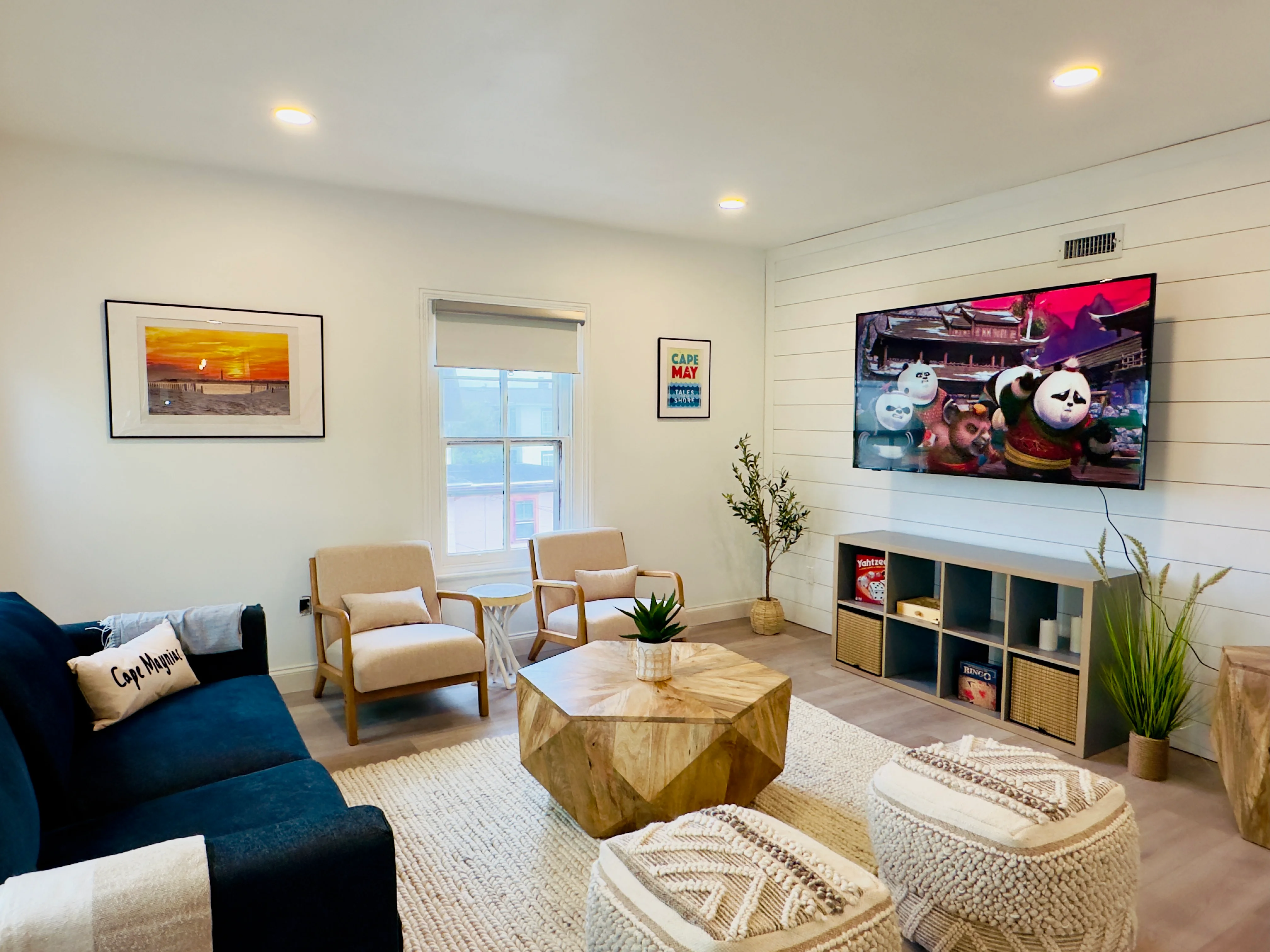
If Cape May is on your list, Cape Surf sits steps from the beach inside the historic Baronet Mansion on Beach Avenue, with complimentary beach chairs, beach tags, and a fully stocked kitchen included at the direct booking rate. No service fee stacked on at checkout. Browse all Cape del Mar properties at capedelmar.com and book the price you see.
]]>