Cape May got its name from Cornelius Jacobsen Mey, a Dutch sea captain who charted the New Jersey coastline for the Dutch West India Company in the early 1620s. Mey named the peninsula’s northern point Cape Mey after himself, and English settlers later anglicized the spelling to Cape May.
Key Takeaways
- Cape May is named for Cornelius Jacobsen Mey, a Dutch captain who explored the Delaware Bay region for the Dutch West India Company, with most sources pointing to the early 1620s.
- Mey named the bay’s north cape “Cape Mey” and the south cape “Cape Cornelius” after himself; the south cape is now known as Delaware’s Cape Henlopen.
- Sources disagree on the exact year, citing 1611-1614, 1620, 1621, and 1623 for different Mey voyages, and this article separates those claims by source.
- Before it became Cape May City in 1869, the community was legally known as Cape Island, named for Cape Island Creek, which once separated the peninsula from the mainland.
- Henry Hudson sighted the area in 1609 while sailing the Half Moon, roughly a decade before Mey’s voyages, but Hudson’s trip produced no settlement or naming.
- Historians note that Mey likely charted and named the cape without ever setting foot on it; permanent English settlement came later, in the 1630s and beyond.
If you have ever booked a beach week in Cape May, New Jersey without knowing why the town carries that particular name, you are in good company. Most visitors assume it references the month of May, a reasonable guess given the seaside, flower-box charm of the historic district. The real story runs back four centuries to a Dutch fur trader who never lived here.
At Cape del Mar, we host guests inside that same historic district, in buildings that predate the Civil War, so this question comes up constantly during check-in conversations. Guests want to know if “May” really has nothing to do with springtime, and whether the town’s older name, Cape Island, shows up anywhere on old maps they might find in an antique shop on Washington Street.
This guide untangles the conflicting dates you will find across different sources, from Henry Hudson’s early sighting to Cornelius Mey’s multiple voyages, and separates the naming of the geographic cape from the 1869 legal renaming of the city itself. As of 2026, this remains one of the most-searched history questions about the destination, and it deserves a straight answer rather than the recycled one-liner most sites repeat.
Why Do They Call It Cape May?
Cape May is called Cape May because Dutch captain Cornelius Jacobsen Mey named the peninsula’s northern cape after himself during his exploration of the Delaware Bay in the early 1620s. English-speaking settlers later anglicized his surname, Mey, to the more familiar spelling, May.
Mey worked for the Dutch West India Company, the trading enterprise responsible for much of the Dutch exploration and fur trade along the Atlantic coast in the 17th century. According to the county’s official account, Mey arrived with three ships to survey the Delaware Bay and lower New York region, and he named two capes at once: the bay’s south cape became Cape Cornelius, using his first name, while the north cape kept his surname as Cape Mey.
That naming split matters because only one side survived into modern geography. Cape Cornelius eventually became known as Delaware’s Cape Henlopen, while Cape Mey stuck to the New Jersey side and evolved into the Cape May we know today. The Cape May County Historic Sites page is the most direct government source confirming this dual naming.
Which Year Did Cornelius Mey Actually Name Cape May?
The exact year Cornelius Mey named Cape May is disputed among historical sources, with 1620, 1621, and 1623 all appearing in different accounts, likely because Mey made several voyages along the New Jersey and Delaware coast rather than a single defining trip.
The City of Cape May’s official history page cites 1621 as the year of Mey’s exploration. Meanwhile, a widely cited historical account, digitized in the History of Cape May County, New Jersey, describes Mey leading a flotilla of three ships around the cape specifically in 1623 and christening it Cape Mey at that time. Britannica also lands on 1623 as the year Mey visited the area.
Complicating things further, the Historical Society of the New York Courts traces Mey’s career back even earlier, noting he captained a ship called the Fortune along the New Jersey coast around 1614, nearly a decade before the naming most sources describe. Mey’s later career included commanding the Nieu Nederlandt in 1625, when he carried the first thirty Dutch settler families to New Netherland, and the New Netherland Institute confirms he became the first director of that Dutch colony in 1624.
So which date is right? Rather than picking a winner, the honest answer is that Mey’s coastal career spanned roughly a decade, from an early 1614 voyage past the Jersey shore to his 1623 naming expedition and his 1624-1625 colonial administration. Most tourism sources compress this into “the 1620s” for simplicity, and that framing holds up better than pinning everything to a single disputed year.
Did Cornelius Mey Ever Actually Set Foot on Cape May?
Cornelius Mey most likely never physically landed on Cape May; historical accounts describe him charting and sailing around the peninsula rather than founding a settlement or coming ashore. He named the cape from the water, as part of a broader survey of the Delaware Bay for the Dutch West India Company.
This distinction gets lost in most casual retellings, which imply Mey planted a flag on the beach. Harry Bellangy, president of the Greater Cape May Historical Society, has been quoted explaining that Mey charted and claimed the area for Dutch trading interests without clear evidence he ever landed there. The 1623 flotilla, as described in the digitized History of Cape May County text, sailed around the cape rather than anchoring and disembarking a landing party.
This is an important gap that a lot of shorter history pages skip entirely. Naming a place and settling it were two separate acts in 17th century Dutch exploration, often separated by years or decades. Mey’s job was reconnaissance and mapmaking for the Dutch West India Company’s fur trade routes, not colonization. The people who actually lived on the peninsula came later, starting in the 1630s, when settlers purchased land directly from Native inhabitants and began fishing and whaling operations.
Who Lived in Cape May Before Cornelius Mey Arrived?
The Kechemeche, a Lenni-Lenape group, were the earliest known inhabitants of the Cape May peninsula, primarily using the area for seasonal hunting before any European contact. Henry Hudson sighted the region in 1609 while sailing the Half Moon, roughly a decade before Mey’s Dutch West India Company voyages, but Hudson’s passage produced no lasting settlement.
The City of Cape May’s official history identifies the Kechemeche as the primary Native presence on the peninsula, describing their relationship with the land as centered on hunting rather than permanent year-round settlement in every season. Hudson’s 1609 voyage, undertaken for the Dutch East India Company aboard the ship Half Moon, is frequently cited alongside Mey’s later trips, and it is worth being precise about why: Hudson looked, Mey named, and English colonists eventually settled.
According to the official city account, actual land purchases from Native inhabitants began in the 1630s, roughly a decade after Mey’s naming voyage. Those early residents built fishing and whaling operations, and by the late 17th century, English colonists arriving from Connecticut and Massachusetts had expanded the whaling trade and introduced farming to the peninsula. This three-stage timeline, Hudson’s sighting, Mey’s naming, then English settlement, explains why so many history pages contradict each other: they are often describing different decades as if they were the same event.

What Was Cape May Called Before It Was Cape May?
Cape May was legally known as Cape Island during much of the 19th century, a name tied to Cape Island Creek, which once physically separated the peninsula’s tip from the mainland. The New Jersey Legislature formed the borough of Cape Island on March 8, 1848, decades after Mey’s geographic naming had already stuck to the cape itself.
This is the piece most articles get wrong by conflating two separate naming events. Cape Mey, later anglicized to Cape May, was the name of the geographic point of land, established in the 1620s. Cape Island was the name of the actual town that grew up near that cape, and it referenced a different feature entirely: the creek that made the settlement function like an island, cut off from the mainland at high water.
An 1691 map by Thomas Budd reportedly showed the Cape Island label, and a later 1850 Nunan map depicted the settlement more distinctly as development picked up. The legal history moved fast after that first borough charter. Cape Island was reincorporated as Cape Island City on March 10, 1851, and the town finally adopted its current name, becoming Cape May City, on March 9, 1869. That 1869 date, confirmed in the city’s own hazard mitigation planning document, is the point where the municipal name finally caught up to the geographic name that had already existed for roughly 250 years.
| Year | Event | Source |
|---|---|---|
| 1609 | Henry Hudson sights the area while sailing the Half Moon; no settlement follows | Cape May County Historic Sites |
| circa 1614 | Cornelius Mey reportedly captains the Fortune along the New Jersey coast | Historical Society of the New York Courts |
| 1620s (1620-1623 cited variously) | Mey names Cape Mey and Cape Cornelius during Delaware Bay survey | Cape May County; City of Cape May; Britannica |
| 1624-1625 | Mey becomes first director of New Netherland; captains the Nieu Nederlandt carrying 30 settler families | New Netherland Institute; NY Courts Historical Society |
| 1630s | First land purchases from Native inhabitants; fishing and whaling begin | City of Cape May official history |
| 1848 | Borough of Cape Island formed by act of NJ Legislature | Cape May city hazard mitigation plan |
| 1851 | Reincorporated as Cape Island City | Cape May city hazard mitigation plan |
| 1869 | Renamed Cape May City, the name still used today | City of Cape May official history |
What Famous People Live in Cape May?
Cape May has long attracted notable visitors and part-time residents drawn to its Victorian architecture and quiet beach town character, though the town’s fame rests more on its collective historic district than on any single celebrity resident. The city’s National Historic Landmark status, designated on May 11, 1976, has made it a magnet for architecture enthusiasts, preservationists, and East Coast travelers rather than a celebrity enclave in the way some Hamptons towns are.
What Cape May does have, verifiably, is a concentration of preserved 19th century architecture that draws design-minded visitors from Philadelphia, New York, and Washington, D.C. Guests staying at properties like Cape Surf, inside the historic Baronet Mansion on Beach Avenue, are literally sleeping inside a structure connected to that same 1976 landmark designation. If you are trying to plan a full trip around the town’s history and architecture, our complete first-timer’s guide to Cape May covers which blocks have the densest concentration of preserved Victorian homes.
What Movie Was Filmed in Cape May, New Jersey?
Cape May’s well-preserved Victorian streetscape has made it an appealing backdrop for film and television productions over the years, thanks to its dense concentration of gingerbread trim, wraparound porches, and gas-lamp-style street lighting that reads as authentic period detail on camera. The town’s historic district, the same one protected under 1976 landmark status, gives location scouts a ready-made period setting without the need for extensive set dressing.
Beyond film credits, the architecture itself is the real draw. Walking Washington Street and the side streets branching off it, you will pass homes dating to the 1870s and 1880s, many still functioning as private residences or bed-and-breakfast inns. This is one reason the Cape May County Historic Sites page remains a useful planning resource: it maps out which structures carry official landmark protection versus which are simply old.
What Is the Oldest House in Cape May, New Jersey?
Cape May’s oldest surviving structures date to the town’s earliest English settlement period in the 17th and 18th centuries, well before the Victorian building boom that gives the town its signature look today. The distinction matters: most of what visitors photograph on Washington Street and Congress Place dates to the 1870s-1890s resort-building era, not the original colonial settlement period tied to Mey’s naming or the Kechemeche presence that preceded it.
For visitors who want to see this layered history firsthand, Historic Cold Spring Village reconstructs an entire 19th-century farming community just outside town, giving useful context for how different Cape May’s rural interior looked compared to the resort district along the beach. If you are staying at a property like Cape Oar, itself inside a Victorian house dating to 1860, you are already experiencing one of the town’s older residential structures firsthand, even if it postdates the earliest colonial-era homes by two centuries.
How Does Cape May’s Naming Compare to Nearby Delaware Bay Landmarks?
Cape May and Cape Henlopen share a common origin story because Cornelius Mey named both capes during the same Delaware Bay survey in the 1620s, using his own name for the north point and his first name for the south point. Only the New Jersey side retained a version of Mey’s actual surname; the Delaware side lost its Cornelius Cornelius reference entirely over subsequent centuries.
This bay-wide naming pattern reflects how Dutch explorers commonly worked: naming multiple features during a single voyage rather than returning repeatedly to christen individual points of land. Specifically, Mey’s survey covered both sides of the Delaware Bay mouth in one expedition, which explains why New Jersey and Delaware share this piece of etymological history despite being in different states today. For a fuller picture of what makes the New Jersey side distinct today, our ultimate guide to Cape May breaks down the historic district, dining, and where to stay across the peninsula.
Where Should You Stay to Experience Cape May’s Historic District Firsthand?
Staying inside Cape May’s National Historic Landmark district, designated in 1976, puts you within walking distance of the same streets that carry the town’s 19th-century identity, and several Cape del Mar properties sit directly inside that boundary. Location matters here: Cape May’s historic core is compact enough that where you sleep determines how much of the architecture you experience on foot versus by car.
Cape Belvedere, a top-floor 2-bedroom, 2-bathroom condo, sits two minutes from Congress Hall and a block from Washington Street Mall, with sweeping Atlantic views from a private cupola lounge and room for up to 8 guests. It is our top pick for guests who want ocean views alongside easy access to the historic streets discussed throughout this article.

For couples or small families, Cape Whale occupies the rear addition of the historic Baronet Mansion on Beach Avenue, a building whose district status ties directly back to the 1976 landmark designation covered earlier. It is pet friendly, sleeps up to 2 guests, and sits directly across from the beach. Just upstairs in the same complex, Cape Surf offers a similar renovated layout with two complimentary beach tags and beach chairs included, also pet friendly and sleeping up to 2 guests.
Travelers who want the Victorian character without stairs to a third floor should consider Cape Oar, an 800-square-foot, wheelchair-accessible apartment inside an 1860 Victorian house one block from Washington Street Mall, sleeping up to 4 guests with a private patio. And for groups of families or friends who need more room, Cape Wave is a two-bedroom, two-bathroom loft in another 1860 Victorian home, a five-minute walk to the beach, sleeping up to 4 guests with a rooftop deck for evening views over the same streets Mey’s namesake cape overlooks. You can compare all of these against the wider neighborhood landscape in our neighborhood-by-neighborhood guide to where to stay in Cape May.
What Should You Know Before Digging Deeper Into Cape May’s History?
Before treating any single source as the final word on Cape May’s naming, recognize that competing historical accounts often describe different Mey voyages rather than contradicting each other outright. The 1609, 1614, 1620s, and 1869 dates covered in this guide each describe a distinct, verifiable event, not competing theories about the same moment.
First, separate exploration from settlement. Hudson looked in 1609; Mey named in the 1620s; English colonists settled starting in the 1630s. Second, separate the cape’s geographic name from the town’s municipal name. Cape Mey existed as a place name roughly 250 years before the town legally became Cape May City in 1869. Third, treat “did Mey ever land here” as an open historical question rather than a settled fact; the weight of evidence, including commentary from the Greater Cape May Historical Society, suggests he charted rather than landed.
As a result, the cleanest way to answer “how did Cape May get its name” for a dinner-table conversation is this: a Dutch captain named Cornelius Mey charted the cape from his ship sometime in the early 1620s, named it after himself, and English settlers later softened the Dutch spelling to May. Everything else, the exact year, whether he set foot on land, and the town’s later renaming from Cape Island, is worthwhile detail but not the core fact.
How Can You Explore Cape May’s History in Person Today?
Visitors can explore Cape May’s layered history through its protected architecture, museums, and walking routes concentrated inside the National Historic Landmark district established in 1976. The most efficient way to see this history firsthand is on foot, starting from the Washington Street Mall and working outward toward the beach and Congress Hall.
Historic Cold Spring Village reconstructs pre-Victorian rural life on 30 acres with more than 25 restored buildings, offering a useful counterpoint to the resort-era Victorian homes downtown. The Cape May MAC organization runs guided trolley and walking tours that dig into the town’s Victorian building boom and its connection to the earlier Cape Island name. If you are visiting with kids, our guide to the best things to do in Cape May with families pairs well with a historic walking tour, since several stops sit within a few blocks of each other.
Cape May County’s tourism economy has grown substantially around this history-driven appeal. According to the Cape May County Tourism Economic Impact Book, the county welcomed 12.11 million visitors in 2026, generating $8.102 billion in direct visitor spending, and the county’s own visitor survey found that 84% of visitors return, a loyalty rate that speaks to how much repeat appeal the historic district and beach combination carries.
Common Mistakes People Make When Explaining Cape May’s Name
The most common mistake is assuming Cape May was named for the month of May, when the name actually derives from the surname Mey, belonging to Dutch captain Cornelius Jacobsen Mey. A second common error is treating Cape Island and Cape May as the same name at the same time, when they actually describe two separate naming events roughly 250 years apart.
- Do not confuse Henry Hudson’s 1609 sighting with the actual naming of the cape; Hudson looked, he did not name or settle.
- Do not assume Cornelius Mey physically landed on Cape May; most historical evidence suggests he charted the area from his ships.
- Do not treat 1620, 1621, and 1623 as contradictory claims about a single event; they likely describe separate Mey voyages across his coastal career.
- Do not overlook Cape Island as the town’s legal name for over two decades, from 1848 to 1869, well after the cape itself already carried Mey’s name.
- Do not skip the Kechemeche Lenni-Lenape presence on the peninsula, which predates all European contact by generations.
Getting these distinctions right matters if you are trying to give an accurate answer rather than repeat the compressed, single-sentence version most tourism brochures use. Specifically, the compressed version is not wrong, it is just missing 250 years of context that make the fuller story more interesting.
Frequently Asked Questions
How did Cape May get its name?
Cape May is named after Cornelius Jacobsen Mey, a Dutch sea captain who explored the Delaware Bay for the Dutch West India Company in the early 1620s and named the peninsula’s northern cape after himself. English settlers later anglicized the spelling from Mey to May.
Why is Cape May called Cape May instead of something else?
The cape carries Mey’s name because he named both capes at the mouth of the Delaware Bay during his survey voyage: Cape Mey to the north (now Cape May, New Jersey) and Cape Cornelius to the south (now Delaware’s Cape Henlopen). Only the northern name survived largely intact into modern usage.
Is Cape May dog friendly?
Yes, several Cape del Mar properties in Cape May welcome pets, including Cape Whale and Cape Surf, both inside the historic Baronet Mansion. Beach access for dogs varies seasonally and by beach, so check current municipal rules, such as the City of Cape May’s promenade ordinance, before your visit.
When was Cape May founded?
Cape May’s geographic name dates to Cornelius Mey’s naming voyage in the early 1620s, though permanent English settlement did not begin until the 1630s when residents purchased land from Native inhabitants. The municipality itself was not legally chartered until 1848, as the borough of Cape Island, before finally becoming Cape May City in 1869.
Are dogs allowed on Cape May beaches?
Dog access to Cape May beaches typically follows seasonal restrictions, with many beaches limiting or prohibiting dogs during peak summer months and allowing more flexibility in the off-season. Always verify current rules with the City of Cape May’s official website before your trip, since regulations can change by beach and by season.
How far is Cape May from Philadelphia?
Cape May sits roughly 90 to 100 miles from Philadelphia, typically a drive of around 2 to 2.5 hours depending on traffic and route, making it a popular weekend escape for Northeast travelers. The Cape May-Lewes Ferry also offers an alternative route for travelers coming from the Delaware side of the bay.
Did Cornelius Mey ever actually visit Cape May in person?
Most historical evidence suggests Mey charted and named Cape May from his ships during a Delaware Bay survey rather than setting foot on land. Historians, including leadership at the Greater Cape May Historical Society, describe his role as exploration and claiming the territory for Dutch trading interests, not founding a physical settlement.
What was Cape May called before it had its current name?
The town itself was legally known as Cape Island from 1848 until 1869, a name referencing Cape Island Creek, which once separated the peninsula’s tip from the mainland. This is distinct from the geographic name Cape May, or Cape Mey, which had already existed since Cornelius Mey’s naming voyage roughly 250 years earlier.
The Short Answer, Restated
Cape May’s name traces back to Cornelius Jacobsen Mey, a Dutch captain who charted the Delaware Bay for the Dutch West India Company in the early 1620s and named the peninsula’s north cape after himself. What started as a navigational label on a Dutch survey map became, over roughly 250 years and one legal renaming from Cape Island in 1869, the Cape May that welcomed 12.11 million visitors in 2026 according to county tourism data.
Knowing this history changes how you walk the same streets Mey’s namesake cape overlooks. Whether you are staying inside the 1976-designated historic district or planning a day trip from Philadelphia, understanding the difference between the cape’s Dutch origin and the town’s 1869 renaming gives you a sharper sense of place than the average brochure offers. In 2026, that layered history is still very much visible in the architecture along Washington Street and Beach Avenue.
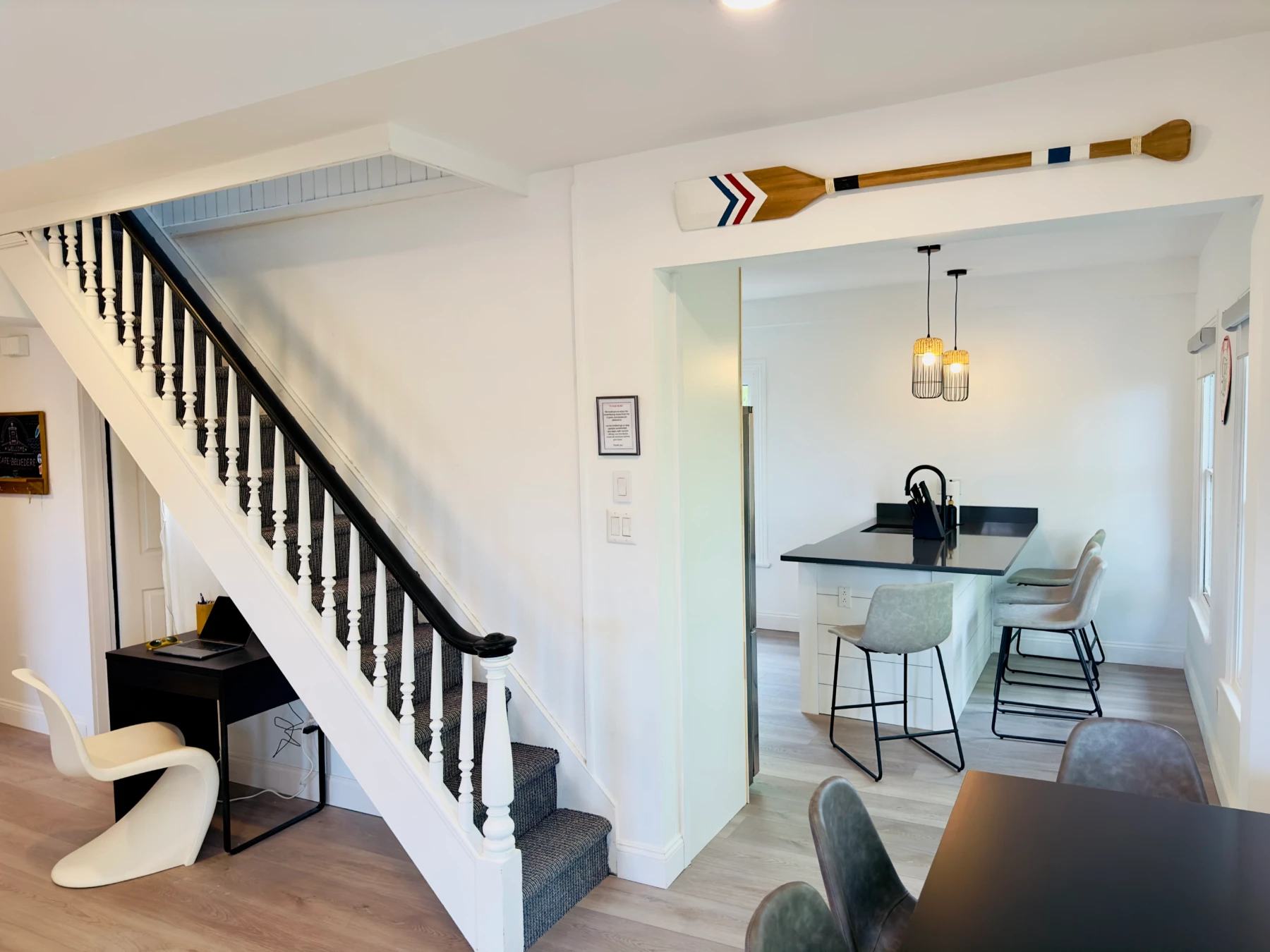
If wandering the historic district where Cornelius Mey’s namesake cape meets the Atlantic sounds like your kind of trip, Cape Belvedere puts you two minutes from Congress Hall and a block from Washington Street Mall, with a private cupola lounge for watching the same coastline Mey once charted. Check availability at Cape Belvedere here.