
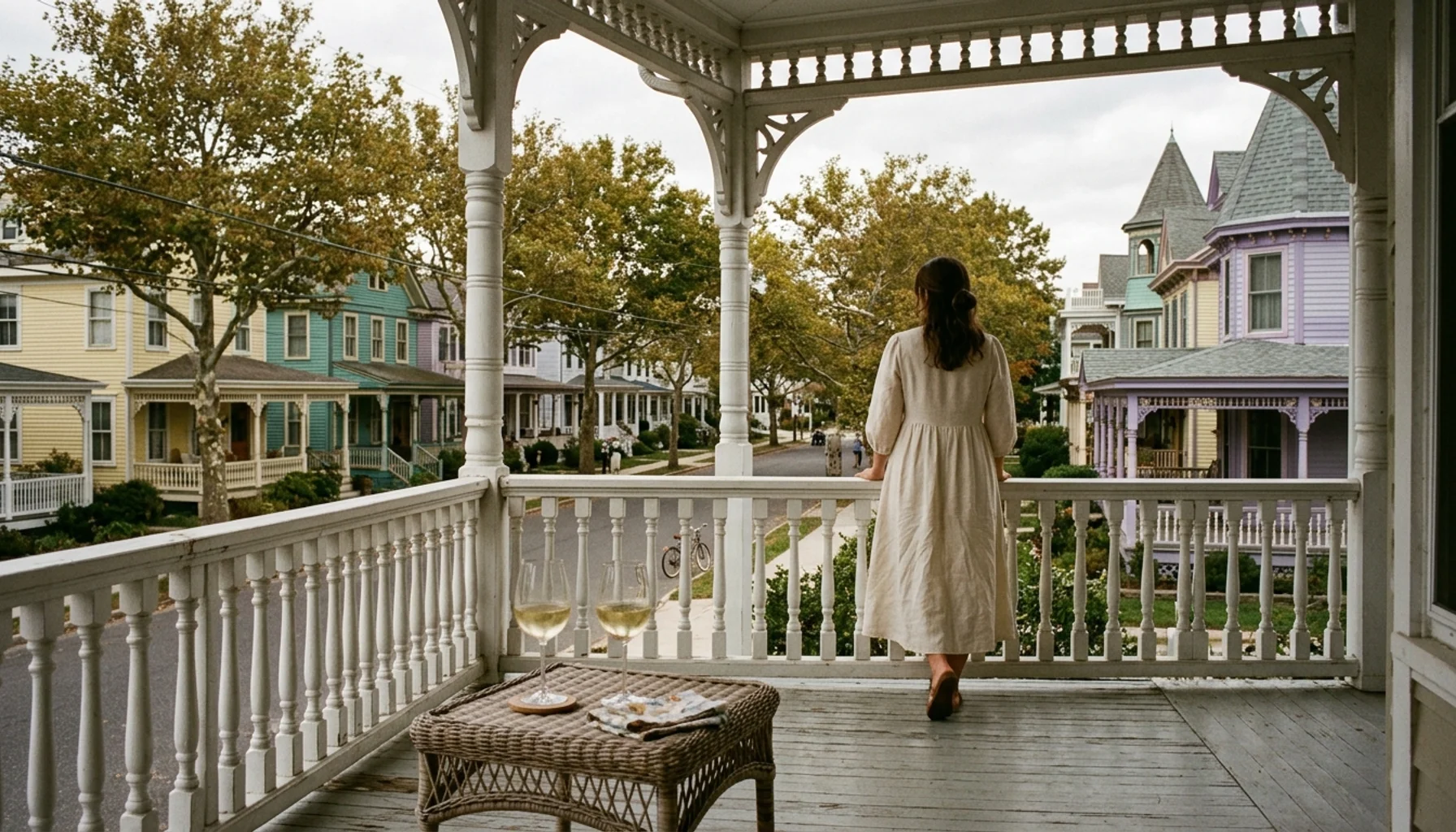
Cape May vacation homes are short-term rental properties located in one of the most historically significant coastal destinations on the East Coast. The city’s National Historic Landmark district, designated on May 11, 1976, contains over 1,200 preserved Victorian-era buildings, which means the rental housing stock here looks nothing like a typical Jersey Shore town. You are renting inside actual history, and that shapes everything from your morning walk to how close you are to the beach.
- Cape May County welcomed 12.1 million visitors in 2026, according to the Cape May County Chamber of Commerce, with overnight visitors spending an average of $365 per person per day.
- Rental options span the full spectrum from beachfront condos steps from the Atlantic to Victorian cottages in West Cape May and bayfront homes in the Villas, each with distinct trade-offs.
- Walkability is the single most important variable most renters underestimate: only a handful of streets in the historic district put you within a 5-minute walk of both the beach and Washington Street Mall.
- Peak summer weekly rates for Cape May vacation rentals can start around $1,000 for smaller units and exceed $10,500 for large Victorian homes, with shoulder-season rates significantly lower.
- Cape del Mar manages a curated portfolio of renovated, eco-friendly properties in Cape May’s historic district, all within easy walking distance of the beach and Washington Street Mall.
- 84% of Cape May County visitors plan to return, per 2026 visitor survey data, reflecting genuine repeat-guest loyalty that locals see play out every season.
At Cape del Mar, we manage a small portfolio of renovated properties across Cape May’s historic district. That walkable positioning shapes every recommendation in this guide, because we have seen firsthand what makes a rental feel like a genuine Cape May experience versus a frustrating logistics puzzle. This article covers what most rental guides skip: the neighborhood-by-neighborhood trade-offs, how to think about house versus condo, which streets are genuinely walkable without a car, and what off-season renting actually looks like in each area.
Cape May County’s tourism economy generated $8.1 billion in visitor spending in 2026, per the Cape May County Chamber report, which tells you this is not a niche destination. The demand is real and growing. But that scale also means you need specific, opinionated guidance to find the right rental rather than just the closest available one. That is what this guide delivers.
What Makes Cape May Vacation Homes Different From Other Shore Rentals?
Cape May vacation homes are distinctive because they exist inside a federally designated National Historic Landmark district, meaning the physical character of the neighborhood is legally preserved. Over 600 structures in the core historic district date to the Victorian era. Renting here is not just proximity to a beach; it is access to an architectural environment that most American coastal towns have long since bulldozed. That distinction has practical consequences for renters, including narrow streets, limited off-street parking, and a walkable scale that rewards guests who choose their block carefully.
The city itself is small by any measure. The entire walkable core, from Congress Hall to the beach end of Washington Street Mall, covers roughly six to eight blocks. That compactness is a feature. Once you park your car, you rarely need it again for a weekend stay. But it also means that a rental positioned two or three blocks outside that core feels noticeably different from one inside it. The difference between a 3-minute beach walk and a 12-minute beach walk, in July heat with beach chairs and a cooler, is significant.
Cape May also has more bed and breakfasts per capita than any other town in the United States, which shapes the rental landscape. The competition for well-located, well-appointed vacation rental space is real, and it pushes quality operators to differentiate on amenities, eco-friendliness, and direct-booking value. For renters, that means more options with genuine character, but also more variation in what you actually get for your money.
Which Cape May Neighborhoods Are Best for Vacation Rentals?
Cape May’s rental neighborhoods each serve a different type of traveler, and the choice matters more than most booking platforms make clear. The historic district proper, roughly bounded by Beach Avenue and the Washington Street Mall corridor, is where walkability peaks and character runs deepest. West Cape May offers quieter residential streets and slightly larger lots. The Villas and North Cape May give you more space and lower rates but require a car for almost every errand. Understanding these differences before you book saves real frustration on arrival.
The Historic District: The Right Choice for First-Timers
The historic district is where most first-time Cape May renters should stay, and for good reason. You can walk to the beach, the Washington Street Mall restaurants and boutiques, Congress Hall, and the Victorian architecture that defines the Cape May experience, all without moving your car. The trade-off is density. Streets like Hughes, Perry, and Columbia are narrow and lively, and parking in peak summer requires patience. But if you rent a property with dedicated off-street parking, that problem largely disappears.
Properties in the historic district command premium rates precisely because of that walkability. For couples or small families who plan to spend most of their time in town rather than driving to surrounding areas, the premium is usually worth it. For larger groups who need multiple cars or want to day-trip to Wildwood, Stone Harbor, or Cape May Point regularly, the calculus shifts.
West Cape May: The Local’s Quiet Alternative
West Cape May sits just west of the historic district boundary and gets significantly less tourist traffic on its residential streets. If you want Victorian-era housing stock, relative quiet at night, and a slightly more neighborhood feel, West Cape May delivers. The trade-off is a longer walk to the main beach: typically 15 to 20 minutes on foot, depending on your specific street. Bike rentals become genuinely useful here rather than optional.
Few rental guides explain the West Cape May lifestyle difference honestly. Mornings are quieter, the local coffee shops and produce market feel less tourist-facing, and you will see as many locals as visitors on the streets. For repeat Cape May visitors who already know the main-strip restaurants and want a calmer base, this is often the better call.
The Villas and North Cape May: Space Over Walkability
The Villas and North Cape May offer more house for your money, fenced yards, and larger groups, but they require a car for virtually everything. Delaware Bay beaches are close, typically a 5 to 10-minute walk depending on your street, but the Atlantic Ocean beaches and Cape May’s restaurant scene are a 15 to 20-minute drive. For family reunions or groups who want a private pool, outdoor space, and a self-contained base rather than a walkable town experience, these neighborhoods make financial sense. For anyone expecting to wander Cape May’s Victorian streets every evening, they do not.
House vs. Condo: Which Type of Cape May Vacation Home Works Better?
The choice between a whole house and a condo in Cape May is primarily a question of group size, daily routine, and how much you value private outdoor space. Whole Victorian houses in the historic district typically sleep 8 to 14 guests across multiple bedrooms, come with some private outdoor space, and offer the full Cape May architectural experience. Condos, particularly in historic buildings along Beach Avenue or the Washington Street Mall corridor, tend to sleep 2 to 6 guests but sit in locations that whole houses rarely match for pure proximity to the ocean.
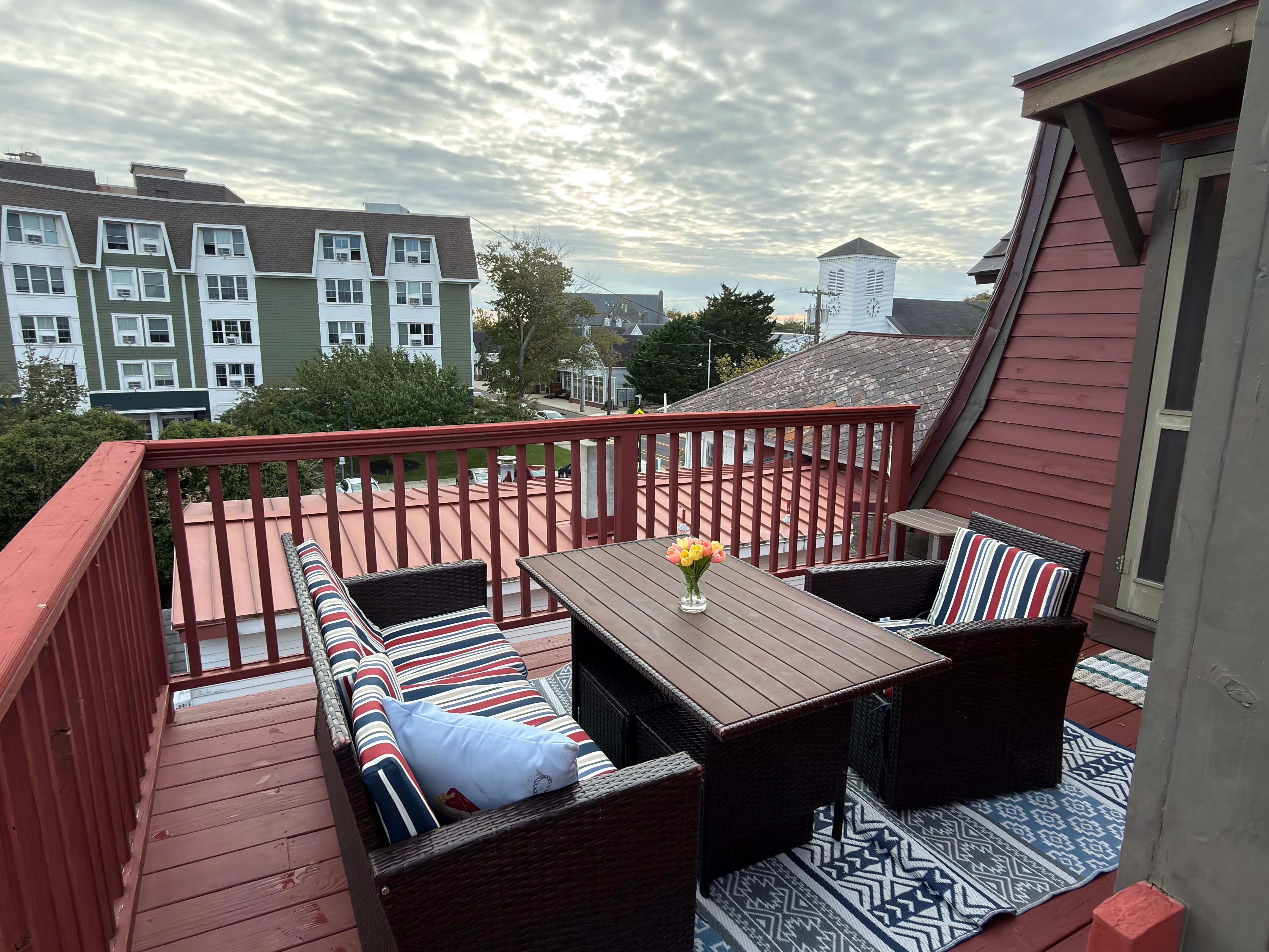
For couples and small families, condos in renovated historic buildings offer something whole houses rarely can: a top-floor or second-floor position that puts you above street-level noise, with ocean or town views that no ground-level rental can replicate. The trade-off is obvious: no private yard, shared laundry in most cases, and less space for gear, strollers, and beach equipment. If those limitations are acceptable, a well-positioned historic-district condo consistently outperforms a whole house on the experience metrics that actually matter for a 2- to 4-night stay.
For multigenerational groups of six or more, whole houses win on practicality. You get communal living space, multiple bathrooms, a real kitchen table where the whole group can eat together, and outdoor space for kids. The downside is that the best whole houses in the core historic district book months in advance for peak summer weeks, and anything within a block of the beach at house scale carries a significant price premium.
The Rental Type That Most People Get Wrong
The most common miscalculation is booking a large whole house in an outer neighborhood to save money, then discovering that the 20-minute round trip to the beach becomes a daily logistical negotiation across multiple adults with different schedules. A smaller, more expensive condo a block from the water often produces a better trip. The formula that tends to work: match the rental size to your actual group size rather than booking big for the sake of extra space that no one uses.
Which Cape May Vacation Homes Are Worth Booking Directly?
Cape May vacation homes booked directly through a property manager rather than an OTA typically eliminate the service fees that Airbnb and VRBO add on top of the base nightly rate, fees that commonly range from 14 to 20% of the total booking cost. For a week-long peak summer stay in Cape May, that difference can represent several hundred dollars. Beyond the cost, direct booking puts you in contact with the actual host before, during, and after your stay, which matters significantly when you have questions about parking, check-in logistics, or local recommendations.
Cape del Mar’s portfolio offers six properties across Cape May’s historic district and Cape Coral, Florida, all available for direct booking at capedelmar.com. Each property includes amenities that OTA listings often obscure in fine print: stocked kitchens with cooking essentials, organic shampoo and conditioner, air purifiers and water filters throughout, eco-friendly cleaning supplies, and linens and towels provided. You are not discovering these things on arrival. They are standard.
Cape Belvedere: The Best Ocean-View Option in the Portfolio
Cape Belvedere is a fully renovated top-floor condo in the historic Belvedere building with direct Atlantic Ocean views and, on clear days, sightlines stretching to Delaware. The location is genuinely exceptional: two minutes from Congress Hall, steps from Washington Street Mall, and one block from the beach. The property’s cupola lounge is the detail that separates it from every other condo in the portfolio. It is a panoramic perch with lounge chairs specifically designed for sunset and wave watching, and there is nothing quite like it in Cape May’s rental landscape at this price point.
Cape Belvedere accommodates up to 6 adults and 2 children across two bedrooms, including a master suite with an ensuite bathroom. The open-plan living area captures ocean and town views through large windows, and the 4-seat kitchen island makes mornings feel genuinely residential rather than cramped. Four complimentary beach passes and beach gear are included through mid-September. Dedicated off-street parking is provided. For couples seeking a romantic Cape May weekend or small groups who want the best views available in the historic district, Cape Belvedere sets the bar.
Cape Wave: Victorian Character With Two Bedrooms
Cape Wave occupies the top floor of a Victorian house dating to 1860, offering approximately 700 square feet of renovated living space with two bedrooms, two full bathrooms including an ensuite, and a rooftop deck that is genuinely rare for a central Cape May rental at this size. The location puts you a 5-minute walk from the beach and one block from Washington Street Mall. For families or two-couple groups who want genuine Victorian character without sacrificing modern comfort, Cape Wave is the right fit. The private keypad entrance and open-concept layout make it feel like a proper home rather than a partitioned apartment.
Cape Whale and Cape Surf: Beachfront Without the Compromise
Cape Whale and Cape Surf are both located in the historic Baronet Mansion on Beach Avenue, across the street from the ocean. Both are 1-bedroom, 1-bathroom condos best suited to couples or couples with one young child. Cape Whale sits on the first floor with a king bed, fully equipped kitchen, walk-in closet, and pet-friendly policy (well-behaved pets welcome, off furniture). Cape Surf is on the second floor and includes two complimentary beach chairs, a beach umbrella, and two beach tags, so you arrive ready to go without needing to source any gear.
The Baronet Mansion’s Beach Avenue position is the most direct ocean-access location in the Cape del Mar portfolio. You cross one street to reach the sand. For couples whose primary goal is maximum beach time with minimum walking, these two condos are the honest answer. Both include beach tags, organic toiletries, high-speed WiFi, and stocked kitchens with coffee.
Cape Oar: The Walkable Choice for Small Families
Cape Oar is an 800-square-foot renovated apartment inside an 1860 Victorian building, one block from the Washington Street Mall and a short walk from the beach. The private patio is a genuine rarity for a centrally located Cape May rental and gives the property a quality that apartment-style units in the historic district almost never offer. Cape Oar is also wheelchair accessible, which very few Cape May vacation homes in the core historic district can claim. Two complimentary beach passes are included seasonally, and the gourmet kitchen with a 4-seat island is stocked with cooking essentials including olive oil, salt, and pepper. It sleeps up to 2 adults and 2 children comfortably.

How Do You Navigate Cape May Without a Car When Renting in the Historic District?
Navigating Cape May without a car is genuinely practical when your rental sits inside the historic district, specifically within a 5-minute walk of Washington Street Mall. The entire core of Cape May, covering restaurants, the main beach sections, Congress Hall, the Cape May MAC trolley stop, boutique shopping, and most evening entertainment, fits within a compact walkable radius. Guests who stay in this zone can reasonably leave their car parked for an entire weekend stay and never feel limited.
The practical daily routine for carless Cape May renters usually looks like this: walk to the beach in the morning, stop at one of the coffee spots on Washington Street Mall, return to the rental for midday, walk back for evening dining, and explore the Victorian streetscape before and after dinner. Bike rentals from several shops near the historic district extend your range to Cape May Point, the lighthouse, and Sunset Beach without requiring a car. Several rental shops deliver bikes directly to your rental on check-in day, which removes the logistics of pickup entirely.
The situation changes meaningfully if you rent outside the historic district core. West Cape May is bikeable to the main beach (15 to 20 minutes on flat roads) but not comfortably walkable with kids and gear. The Villas requires a car for the beach and for dining. North Cape May is a 15 to 20-minute drive from Cape May’s restaurant scene. These distinctions matter because many booking platform listings describe a rental as being in Cape May without specifying whether that means a block from the beach or a 20-minute drive from it.
For trip planning purposes, our Cape May neighborhood guide breaks down each area’s walkability score and daily-life implications in more detail, including which specific streets offer the best combination of quiet and access.
When Is the Best Time to Book a Cape May Vacation Home?
The best time to book a Cape May vacation home depends on your priorities: peak summer offers the warmest water and the most events, but also the highest rates, the most crowded beaches, and the tightest availability for well-located properties. Shoulder seasons, specifically late May through mid-June and September through early November, offer a genuinely different Cape May experience that many repeat visitors consider superior for anything other than pure beach immersion.
Peak Summer: July and August
July and August in Cape May mean crowded beaches by mid-morning, restaurant waits of 45 to 90 minutes at popular spots without a reservation, and weekly rental rates at their absolute ceiling. For families with school-age children who have no scheduling flexibility, this is simply the window you work with. Book 3 to 4 months in advance for well-located historic-district properties. The most in-demand condos along Beach Avenue and in the Washington Street Mall corridor fill significantly faster than that.
Beach tags are required for Cape May’s guarded beaches from Memorial Day through Labor Day, typically priced by the day, week, or season. Cape del Mar properties include complimentary seasonal passes with bookings, which removes that recurring cost. The Cape May Tourism Official Website publishes updated daily and seasonal tag rates each year.
Fall: September and October as the Real Local Secret
September is the month Cape May locals genuinely prefer, and it is worth understanding why. Water temperatures remain warm through mid-September, typically reaching the mid-60s Fahrenheit, which is comfortable for swimming. Crowds thin noticeably after Labor Day. Restaurant reservations that were impossible in August become available with a day or two of notice. Rates drop. The Cape May Jazz Festival, historically held each November and April, bookends the fall shoulder season with programming that draws a different, less beach-focused crowd and genuinely rewards a long-weekend trip built around music and dining.
For couples especially, a September or October Cape May trip in a well-positioned rental like Cape Belvedere or Cape Wave consistently outperforms a peak-summer visit on almost every experiential metric except ocean swimming temperature. Our comprehensive Cape May travel guide covers shoulder-season programming, what restaurants stay open, and which attractions are worth planning around in fall.
Off-Season: November Through April
Off-season Cape May is a genuinely different destination. Many restaurants close or shift to weekend-only hours. Some beach-facing condos lack the insulation that makes winter stays comfortable. But the Cape May you encounter in March or early April, with almost no tourist traffic and the Victorian architecture free of summer crowds, has a specific appeal that a growing number of Northeast escape seekers have discovered. Rates can drop substantially from peak, and the birding in Cape May Point State Park during spring migration is internationally recognized. Cape May Point State Park is free to enter year-round and draws serious birders from across North America during peak migration windows in April and May.
If you want to understand what actually stays open and what closes by area in the off-season, the neighborhood breakdown matters. The historic district retains more year-round life than the Villas or North Cape May, where much of the local commercial activity is summer-dependent.

What Amenities Should You Expect in Cape May Vacation Homes?
Cape May vacation home amenities vary considerably depending on the property age, management quality, and rental category. At a baseline level, well-managed historic-district rentals should provide dedicated off-street parking (a genuine premium in a town with narrow streets), reliable high-speed WiFi, air conditioning and heating, and complete kitchen equipment. Beyond that baseline, the differentiators that separate a memorable rental from a functional one include stocked kitchens, eco-friendly supplies, included beach gear, and the kind of practical details that only experienced hosts think to provide.
What Cape del Mar Properties Include as Standard
Cape del Mar properties are equipped with air purifiers and water filters throughout, organic shampoo, conditioner, and body wash, eco-friendly cleaning products, linens and towels provided so you are not sourcing those separately, kitchens stocked with olive oil, salt, pepper, and coffee, and high-end appliances including coffee makers that you would actually choose to use. These are not premium add-ons. They are baseline standards applied across the portfolio because they reflect how a quality rental should operate in 2026.
Beach passes deserve specific mention. Cape Whale, Cape Surf, Cape Oar, Cape Belvedere, and Cape Wave all include complimentary seasonal beach tags, which matters because Cape May’s beach tag system is a genuine daily cost for families without them. Cape Surf specifically includes beach chairs and an umbrella in addition to tags, so you arrive with everything you need for a beach day without sourcing gear.
Pet-Friendly Amenities in the Portfolio
Pet-friendly options in Cape May’s rental market are thinner than the category volume suggests. Many listings technically allow pets while burying restrictions that make a dog’s stay impractical. Cape Whale welcomes well-behaved pets with one clear courtesy guideline: pets stay off the furniture. Cape Surf also accepts pets. Both properties are in the historic district, across the street from the beach on Beach Avenue. For dog owners, this means morning and evening beach access without a car, which is the Cape May pet-friendly experience that actually works.
If you are traveling with a dog and want more detail on dog-friendly beaches, seasonal restrictions, and off-leash areas near Cape May vacation homes, our complete pet-friendly Cape May guide covers the specific rules by beach and season.
What Should You Do and Eat Near Cape May Vacation Homes?
Cape May vacation homes are best used as a walkable base for a combination of beach time, Victorian district exploration, and serious dining. The restaurant scene here is genuinely strong for a town of this size, with several options that would hold their own in Philadelphia or New York. But the scene is also uneven, and some of the busiest spots on Washington Street Mall coast on foot traffic more than on food quality. Knowing which is which is the actual local advantage.
Dining Worth the Walk
For a serious dinner, Peter Shields Inn on Beach Avenue is the consistent answer for special-occasion dining in Cape May. The Zagat-rated restaurant occupies a 1907 Georgian Revival mansion and serves coastal American fare in a setting that justifies the price. Reserve well in advance for peak summer and fall weekends.
The Washington Inn is another long-standing dining institution worth a special-occasion reservation. The building dates to 1848 and the wine cellar is genuinely impressive. Order the New Jersey seafood rather than the red-meat options; the kitchen’s strengths align clearly with what the coast provides.
For a more casual evening that still delivers on quality, Ugly Mug on Washington Street is the honest local choice. It is not a hidden gem (every visitor finds it eventually), but locals still go because the bar is genuinely good, the vibe is consistent, and it does not take itself too seriously. The menu skews pub food done competently rather than ambitious. Go for a drink and late-night snack rather than building a dinner around it.
Mad Batter on Jackson Street is the strongest breakfast option in the walkable historic district. It is award-winning, year-round, and worth the wait on summer weekends. Order the lemon ricotta pancakes. Skip the eggs Benedict, which is fine but not the reason the place has a following.
Things to Do Beyond the Beach
The Cape May Lighthouse at Cape May Point State Park is the kind of attraction that earns its tourism reputation honestly. The 157-foot cast-iron tower, built in 1859, offers genuine panoramic views from the top after 199 steps. Visit early on summer mornings to avoid the midday crowd. The surrounding state park is free to enter and excellent for birding, particularly during spring and fall migration. National Geographic has named the Cape May area one of the top 10 bird-watching destinations worldwide, a designation that reflects real ecological significance rather than marketing.
Dolphin and whale watching from Cape May Whale Watcher at Miss Chris Marina is a reliable half-day activity with genuine wildlife sightings rather than guaranteed-or-your-money-back tourism theater. Morning departures tend to see calmer water and more active dolphin pods. Book ahead for summer weekends.
For a full activity list organized by audience and season, our guide to 25 things to do in Cape May covers everything from the Emlen Physick Estate tours to the sunset flag ceremony at Sunset Beach, with honest assessments of what is worth your time at each.
How Do Cape May Vacation Home Costs Compare Across Neighborhoods?
Cape May vacation home pricing follows a clear location premium structure: the closer to the beach and Washington Street Mall, the higher the rate, regardless of property size. A 1-bedroom condo directly across from the ocean on Beach Avenue commands a rate comparable to a 3-bedroom whole house four blocks inland. Understanding this price architecture before you search prevents the frustration of discovering that the cheapest option in a given week is cheap because of its location, not its quality.
| Neighborhood | Typical Weekly Peak Rate Range | Walkability to Beach | Car Needed? |
|---|---|---|---|
| Historic District Core | $2,000 to $10,500+ | 1 to 5 minutes on foot | No |
| West Cape May | $1,500 to $5,000 | 15 to 20 minutes on foot | Recommended |
| Villas | $1,000 to $3,500 | Bay beach: 5 to 10 min; Atlantic: drive | Yes |
| North Cape May | $1,000 to $3,000 | Drive to all beaches | Yes |
These ranges draw from publicly available listing data and represent peak summer weekly rates. Shoulder-season pricing (September through May) drops meaningfully across all neighborhoods, with the historic district seeing some of the steepest proportional discounts because peak-summer scarcity is what drives its premium. OTA service fees of 14 to 20% stack on top of base rates on platforms like Airbnb and VRBO; direct booking eliminates that layer. For a week-long stay at a mid-range Cape May vacation home, that fee difference can represent $250 to $400 in real savings.
If you want a broader look at what each Cape May neighborhood offers beyond price, our neighborhood-by-neighborhood guide covers vibe, noise level, and daily life specifics that booking platforms do not surface.
Frequently Asked Questions About Cape May Vacation Homes
Are Cape del Mar’s Cape May properties really within walking distance of the beach?
Yes, all five Cape del Mar properties in Cape May are within walking distance of the Atlantic beach. Cape Whale and Cape Surf are located in the historic Baronet Mansion on Beach Avenue, directly across the street from the ocean, making them the closest in the portfolio. Cape Belvedere is one block from the beach and two minutes from Congress Hall. Cape Oar and Cape Wave are a short walk from the beach and one block from the Washington Street Mall. None require a car to access the beach or Cape May’s main dining and shopping corridor.
What does booking directly with Cape del Mar include that an OTA listing doesn’t show?
Direct booking with Cape del Mar eliminates OTA service fees, which typically add 14 to 20% on top of the nightly rate on platforms like Airbnb and VRBO. Beyond the cost saving, direct booking gives you immediate contact with the hosts before, during, and after your stay. Properties include amenities that rarely surface clearly in OTA listings: stocked kitchens with olive oil, salt, pepper, and coffee; organic shampoo, conditioner, and body wash; air purifiers and water filters throughout; eco-friendly cleaning products; and linens and towels provided so you are not sourcing those separately.
Which Cape del Mar properties are pet-friendly?
Cape Whale and Cape Surf both welcome well-behaved pets. The courtesy guideline is that pets stay off the furniture, including beds. Both properties are located on Beach Avenue in Cape May’s historic district, across the street from the ocean, which makes morning and evening beach access practical without a car. Cape Oar, Cape Belvedere, and Cape Wave do not list pet-friendly status; confirm with the host before booking if you are traveling with an animal.
When should I book a Cape May vacation home to get the best availability?
For peak summer weeks, specifically Fourth of July week through mid-August, well-located historic-district properties in Cape May book 3 to 4 months in advance, and the most in-demand beachfront condos fill faster than that. For shoulder-season travel, specifically September and October, you typically have 4 to 6 weeks of realistic booking window before preferred properties fill. The Cape May Jazz Festival period each November and April draws advance bookings from music-focused travelers; plan 6 to 8 weeks ahead if you are organizing a trip around festival programming.
Do Cape May vacation homes include beach tags?
Cape del Mar’s Cape Whale, Cape Surf, Cape Oar, Cape Belvedere, and Cape Wave properties include complimentary beach passes during the season, generally Memorial Day through mid-September. Cape Surf additionally includes two beach chairs and a beach umbrella. Beach tags are required on Cape May’s guarded city beaches during that window; having them included eliminates a recurring daily or weekly cost. Confirm the specific tag policy with your chosen property when booking outside the main seasonal window.
Is Cape May worth visiting in the fall or spring, or is it only a summer destination?
Cape May is genuinely worth visiting in fall and spring, and many repeat visitors prefer it to peak summer. September and early October offer warm-enough ocean water for swimming, significantly reduced crowds, easier restaurant reservations, and lower rental rates. The Cape May Jazz Festival typically runs in November and April, giving both seasons a genuine events anchor. Spring birding migration at Cape May Point State Park, internationally recognized as one of North America’s top birding sites, draws a distinct and enthusiastic traveler profile. The off-season experience differs by neighborhood; the historic district retains more year-round life than the Villas or North Cape May, where many businesses operate seasonally.
What is the difference between renting a condo and a whole house in Cape May?
Cape May vacation homes split roughly between condos in renovated historic buildings (typically 1 to 2 bedrooms, 2 to 8 guests, often in premium beach-adjacent locations) and whole Victorian houses (typically 3 to 6 bedrooms, 8 to 14 guests, with private yards and more communal space but often slightly less prime location for the same budget). Condos in the historic district frequently offer better beach proximity per dollar for couples and small families. Whole houses work better for multigenerational groups who need multiple bathrooms, a communal dining table for 8 or more, and outdoor space for children. The mistake most first-time renters make is booking a large outer-neighborhood house to save money, then realizing the daily car logistics erode the value.
What dining and activities are realistically walkable from a historic-district Cape May vacation rental?
From any property inside Cape May’s historic district core, you can reach the main Atlantic beach sections, Washington Street Mall (boutiques, restaurants, and entertainment), Congress Hall, the Cape May MAC trolley stop, and the majority of the town’s best restaurants within a 5 to 10-minute walk. Peter Shields Inn on Beach Avenue, Mad Batter on Jackson Street, Ugly Mug and Washington Inn on Washington Street, and The Lobster House at Cape May Harbor are all within a practical walking or short-ride distance. The Cape May Lighthouse and Sunset Beach require either a bike ride (15 to 20 minutes on flat roads) or a short drive; bike rentals are widely available near the historic district.
Is a Cape May Vacation Home the Right Choice for Your Next Trip?
Cape May vacation homes are the right choice when the goal is a genuinely immersive experience in one of the East Coast’s most historically intact coastal towns, rather than simply a place to sleep near a beach. The city’s National Historic Landmark designation, its walkable scale, its serious restaurant scene, and its year-round programming make it a destination that rewards investment in the right rental rather than just proximity to sand. The 12.1 million visitors Cape May County drew in 2026, per the Cape May County Chamber of Commerce, confirm the demand, but demand is not the same as quality. The difference between a forgettable shore weekend and a genuinely memorable one often comes down to whether your rental puts you inside the experience or just adjacent to it.
For couples, the historic-district condos with ocean views at Cape Belvedere or the beachfront position of Cape Whale deliver that inside-the-experience quality directly. For families and small groups, Cape Wave’s two bedrooms in a Victorian house or Cape Oar’s private patio in a central 1860 building do the same. The common thread is walkability, genuine character, and a host who has thought about what makes a Cape May stay work, not just what makes a listing look complete on a booking platform.
In 2026, the Cape May rental market remains competitive for peak summer weeks and increasingly sought-after for shoulder-season trips. Book early for July and August; take your time for September through November, when the town reveals a version of itself that first-timers rarely discover. For a full dining guide to go alongside your accommodation research, our Cape May restaurant guide by budget, vibe, and occasion covers the scene honestly without pretending every stop on Washington Street Mall is worth your limited evening hours.
If a top-floor condo with direct Atlantic views, two minutes from Congress Hall, and a signature cupola lounge for sunset watching sounds like the right base, Cape Belvedere fits that brief precisely. Browse the full Cape del Mar portfolio at capedelmar.com/listing and book directly to skip the OTA service fee.