
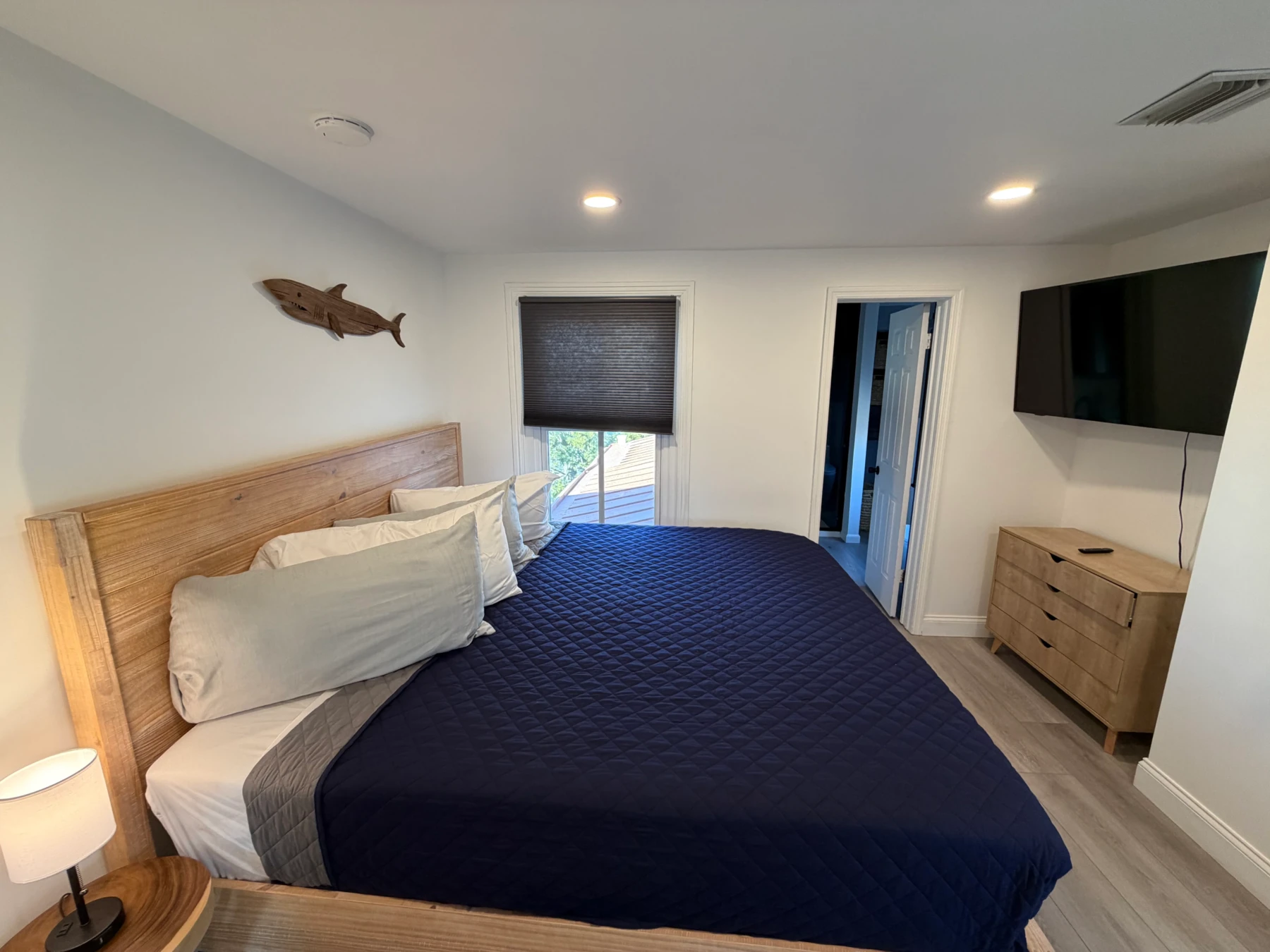
The most straightforward Airbnb alternative for travelers headed to the Jersey Shore is booking directly with a local property owner instead of routing through a third-party marketplace. In Cape May, that means six specific, verified condos and one Cape Coral villa available straight from Cape del Mar, each with its own booking page, its own pet policy, and no added guest service fee layered on top of the nightly rate.
Key Takeaways
- Direct booking with a local host eliminates the guest service fee that OTA platforms typically add, which industry sources put in the 12-16% range for Airbnb and roughly 8-12% for VRBO.
- Cape May County drew 12.11 million visitors in 2026, generating $8.1 billion in visitor spending, according to Cape May County Tourism data, so lining up lodging early matters more each season.
- Three of the six featured properties, Cape Whale, Cape Surf, and Cape Pelican, accept well-behaved pets with no blanket restriction; the others do not.
- Overnight visitors in Cape May County spent an average of $365 per person per day in 2026, compared to $110 for day trippers, per county tourism figures, underscoring why a well-equipped kitchen and living space pay off on longer stays.
- All six properties sit within walking distance of Cape May’s historic district, a National Historic Landmark designated on May 11, 1976, or in Cape Pelican’s case, a short drive from Cape Coral’s canal-front marinas.
- Alongside direct booking, platforms like Houfy, VRBO, and Booking.com offer fee structures worth comparing for other trips beyond Cape May.
If you have booked a beach week through Airbnb before, you already know the drill: a nightly rate that looks reasonable until the service fee, cleaning fee, and taxes stack up at checkout. In 2026, more travelers are shopping around before they commit, and Cape May is a good market to see why. According to Statista, Airbnb had roughly five million hosts and had logged over 2.5 billion guest arrivals globally as of 2026, so the platform is not going anywhere. But scale does not always mean the best deal for a specific weekend in a specific town.
This guide compares direct booking against Airbnb and the other major names travelers search for, then walks through six specific stays you can book right now without touching a third-party marketplace. You will also find the fee math, the pet policy breakdown, and a few platform categories worth knowing about if your next trip lands somewhere other than the Jersey Cape.
We manage these properties ourselves, so the details here (bedroom counts, pet rules, walking distances) come from firsthand knowledge rather than a scraped listing page.
What Do People Use Instead of Airbnb?
Travelers looking for Airbnb alternatives generally split into three groups: other large booking marketplaces (VRBO, Booking.com), niche platforms built around a specific travel style (Hipcamp for outdoor stays, GlampingHub for glamping), and direct booking straight through a property owner’s own site. Each category solves a different problem.
VRBO, now folded into the Expedia Group alongside Booking.com, is estimated to carry around 2 million listings worldwide, weighted toward whole-home rentals rather than shared rooms. Booking.com is larger still, listing more than 28 million properties across 227 countries and supporting over 40 languages, according to the company’s own figures cited widely in travel industry roundups. For travelers who want a defined trip type, Hipcamp covers glamping tents, treehouses, farm stays, and RV hookups, while GlampingHub specializes specifically in glamping and eco-lodging.
Direct booking with the owner, which is how Cape del Mar operates, sits in a fourth category entirely: no marketplace algorithm deciding which listing you see first, no bidding war for search placement, and a fixed nightly rate you can compare line by line against what an OTA would charge for the same unit.
Who Is Airbnb’s Biggest Competitor?
Booking.com is generally considered Airbnb’s largest direct competitor by total inventory, with more than 28 million listed properties spanning hotels, apartments, and vacation homes across 227 countries. VRBO is the closer match in terms of business model, since it focuses almost entirely on whole-home and villa rentals rather than mixing in hotel inventory.
For travelers weighing fees specifically, Houfy has built its pitch around undercutting both. Houfy lists more than 98,000 properties in over 100 countries and advertises $0 service fees for guests and $0 commission for hosts, claiming savings in the range of $150 to $300 on a typical seven-night stay compared to Airbnb’s guest fee, which commonly runs 14% or higher. Furnished Finder plays in a different lane again, built around stays of 30 or more days for traveling professionals and long-term guests, with no per-booking commission structure.
None of these platforms replace what direct booking offers, though: a real host relationship with someone who lives near, or in, the property. At Cape del Mar, that means Julia and Hanno answering questions directly rather than a message routed through a marketplace inbox.
What Is the 75-55 Rule in Airbnb?
The 75-55 rule refers to an Airbnb internal ranking guideline, not a rule guests need to follow directly, but travelers researching alternatives often encounter it while reading about why certain listings surface higher in search results. In simple terms, it is tied to response rate and acceptance rate thresholds hosts are expected to maintain to stay favorably ranked in Airbnb’s search algorithm.
For travelers, the practical takeaway is this: Airbnb’s own search results are shaped by host performance metrics, not purely by price or property quality. That is one reason two nearly identical Cape May condos can show up in very different positions on the same search page. Booking direct sidesteps that entirely. When you go straight to a specific property’s page, whether that is Cape Belvedere or Cape Wave, you see the actual availability calendar and actual nightly rate, not a result shaped by an algorithm optimizing for something other than your trip.
If you are the type of traveler who reads reviews and wants full context before committing, that transparency matters more in 2026 than it did five years ago, as OTA search results have become more crowded and harder to parse.
Why Are People No Longer Using Airbnb the Way They Used To?
Fee fatigue is the most commonly cited reason travelers have shifted some bookings away from Airbnb toward alternatives, alongside a desire for more predictable pricing before checkout. Guest service fees on Airbnb typically run 12-16% on top of the nightly rate, and that number is often not fully visible until late in the checkout flow.
Cancellation policy confusion adds to the frustration. Airbnb hosts can set individually different cancellation policies (flexible, moderate, strict, and variations of each), which means the refund terms for one Cape May listing can look completely different from the unit next door, even on the same platform. Travelers researching a multi-month digital nomad stay or a family reunion booked a year out have a real incentive to read the fine print twice.
None of this means Airbnb has become a bad option outright. With roughly 215 million bookings processed on the platform per Statista figures, it remains a dominant marketplace. But it does mean travelers increasingly comparison-shop before locking in a reservation, checking VRBO, Booking.com, and direct-booking sites like Cape del Mar side by side before deciding where their money goes.
How Do Fees Actually Compare Across Booking Platforms?
Fee structure is often the single biggest cost difference between Airbnb, its major competitors, and direct booking, and it is rarely disclosed clearly until the final checkout screen. A typical Airbnb guest service fee runs 12-16% of the subtotal, while VRBO’s guest fees generally land lower, around 8-12%. Houfy charges $0 on both sides of the transaction.
The table below lays out how these platforms compare for a hypothetical $1,000 base booking, using publicly cited fee ranges rather than invented numbers.
| Platform | Typical Guest Fee | Estimated Fee on $1,000 Booking | Best For |
|---|---|---|---|
| Airbnb | 12-16% | $120-$160 | Wide global inventory, shared and private stays |
| VRBO | 8-12% | $80-$120 | Whole-home rentals, family trips |
| Booking.com | Variable by property | Varies | International hotel and rental mix |
| Houfy | $0 guest fee | $0 | Fee-averse travelers, longer stays |
| Direct booking (Cape del Mar) | No added service fee on top of listed rate | $0 platform fee | Cape May and Cape Coral stays with a known host |
The comparison matters most on longer bookings. A family staying a full week during peak summer, when Cape May County’s lodging budget for a couple commonly runs $1,200 to $2,500 for four nights according to county tourism data, could see fee savings stack into the hundreds of dollars simply by booking a direct-host property instead of routing the same reservation through an OTA.
What Should You Check Before Booking Any Airbnb Alternative?
Before booking through any platform, travelers should verify four things: cancellation terms, pet policy, proximity to what they actually plan to do, and whether the listing fee is disclosed upfront or added late in checkout. Skipping this check is the most common mistake first-time direct bookers make when they assume every alternative works the same way.
Cancellation and refund risk
Policies vary dramatically. Some platforms let hosts set strict, non-refundable terms close to arrival, while others default to more flexible windows. Always read the specific listing’s policy rather than assuming a platform-wide standard applies.
Pet policy accuracy
Not every “pet-friendly” tag means the same thing. Some hosts charge a per-night pet fee; others cap the number of pets or breed size. At Cape del Mar, Cape Whale, Cape Surf, and Cape Pelican welcome well-behaved pets; Cape Oar, Cape Belvedere, and Cape Wave do not, so confirm before you book if you are traveling with a dog.
Real walking distance, not marketing copy
“Steps from the beach” gets used loosely across every platform. Ask for an actual block count or minute estimate, and compare it against a map before assuming.
6 Direct-Booking Airbnb Alternatives for Travelers Headed to Cape May
Each property below is a real, bookable Cape del Mar listing, not a third-party referral, which means the nightly rate you see on the booking page is the rate you pay, with no guest service fee stacked on top the way Airbnb typically adds one. All six sit in or near Cape May’s historic district, a National Historic Landmark designated May 11, 1976, known for its late-Victorian architecture.
1. Cape Belvedere: Top-Floor Ocean Views Near Congress Hall
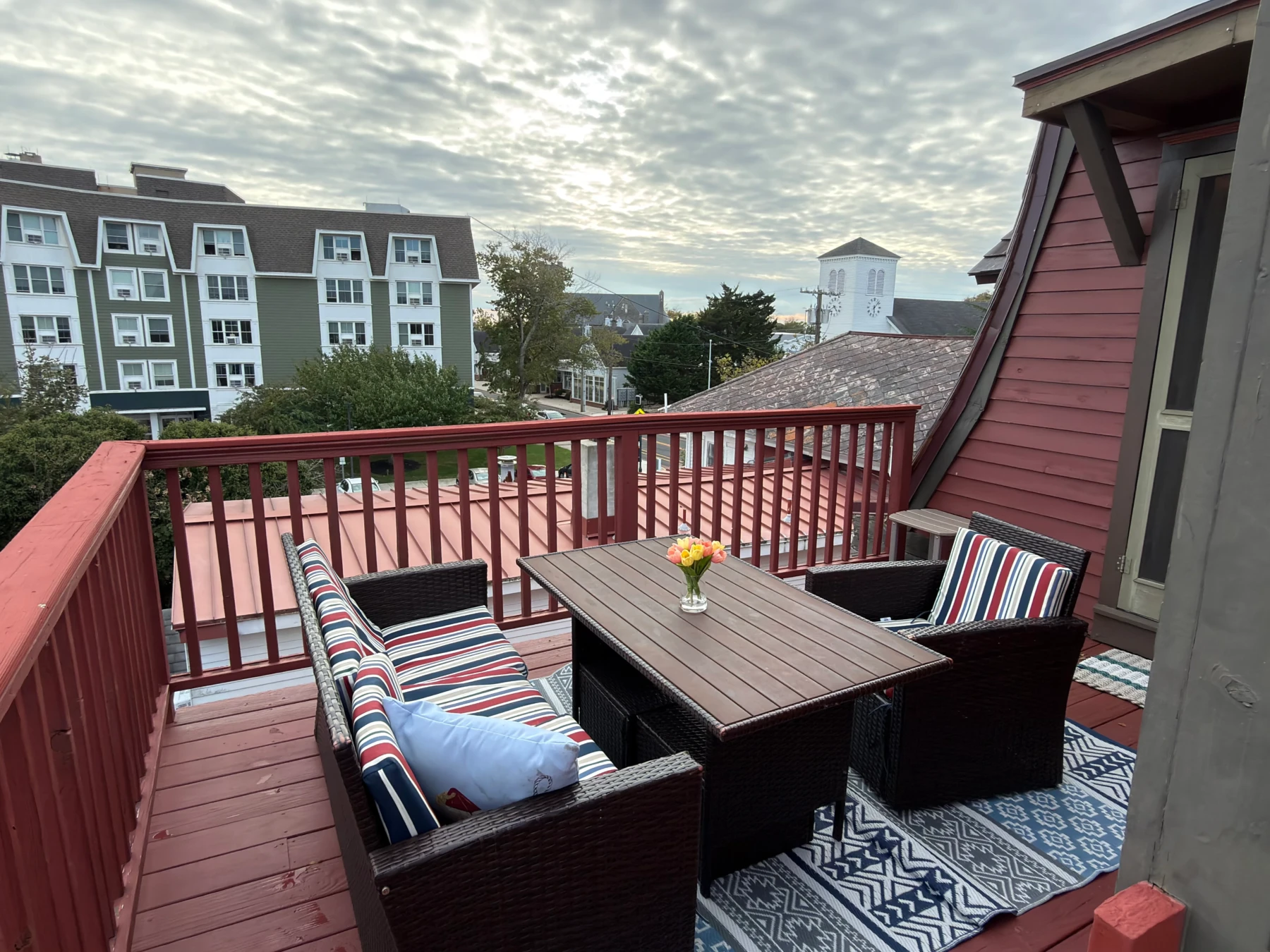
Cape Belvedere is a fully renovated 2-bedroom, 2-bathroom condo on the top floor of the Belvedere building, two minutes from Congress Hall and a block from Washington Street Mall. The unit sleeps up to 8 guests and includes a private cupola with lounge chairs, a spot built for watching the sun drop over the Atlantic. On clear days, the view stretches toward Delaware. Four complimentary seasonal beach passes come with the stay (through mid-September), along with dedicated off-street parking, a genuine convenience during peak summer when curbside spots near downtown disappear fast. This is the property to book if a romantic weekend or a small family group wants an ocean view without sacrificing walkability. Check availability at Cape Belvedere.
2. Cape Wave: Victorian Loft Steps From the Mall
Cape Wave occupies the top floor of an 1860 Victorian house, about a 5-minute walk to the beach and one block from Washington Street Mall. At roughly 700 square feet with two bedrooms (a queen plus two twins) and two bathrooms including an en-suite, it sleeps up to 4 and works well for a small family or two couples traveling together. The rooftop deck and board games make it a solid pick for a rainy afternoon between beach days. Book Cape Wave directly here.
3. Cape Surf: Pet-Friendly Beachfront Condo at the Historic Baronet
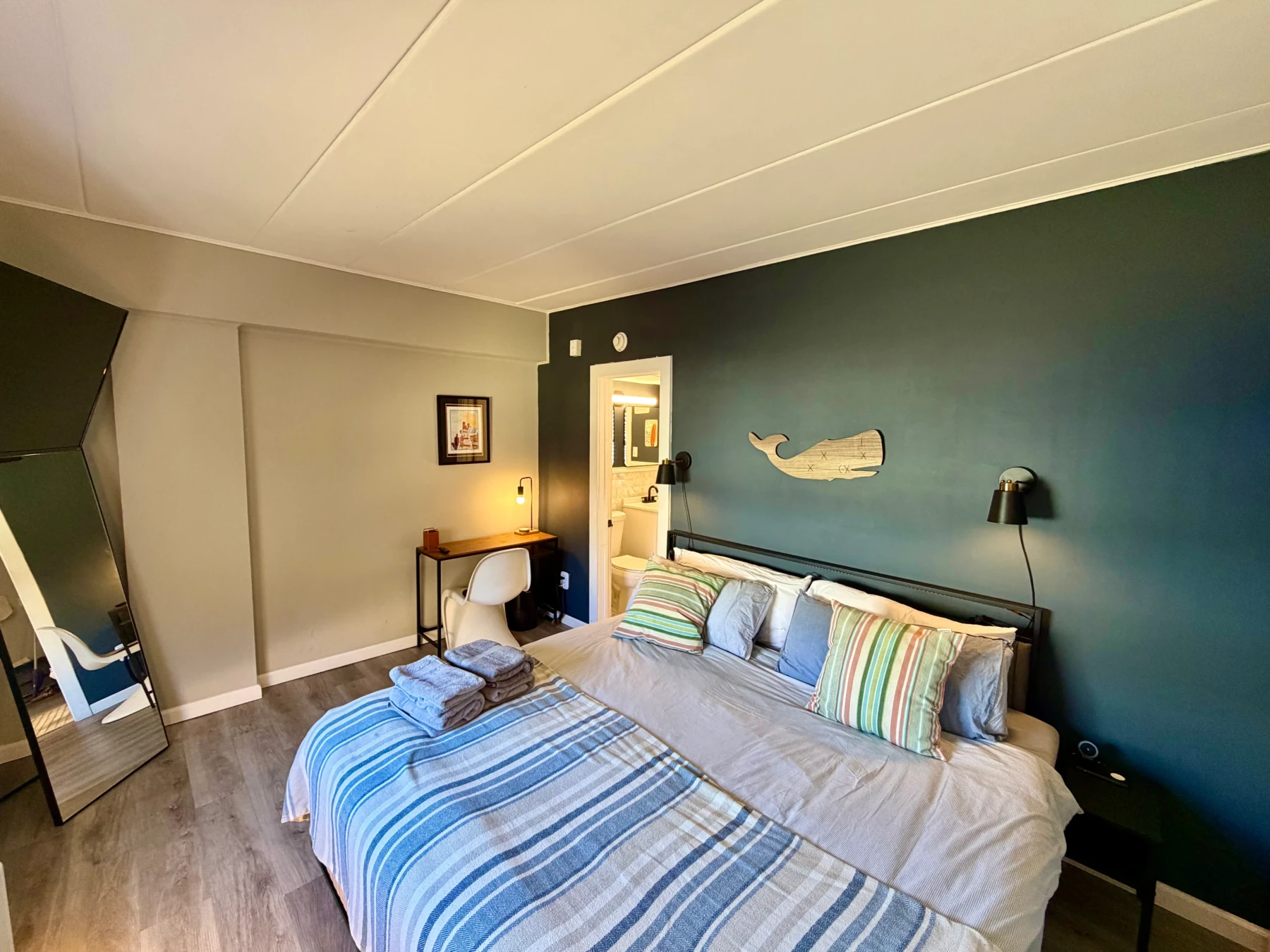
Cape Surf sits on the second floor of the addition to the historic Baronet Mansion on Beach Avenue, just steps from the sand. This 1-bedroom, 1-bathroom unit sleeps up to 2 and comes with two complimentary beach tags, beach chairs, and an umbrella, so you can walk out the door without a supply run. It is one of three Cape del Mar properties that welcomes well-behaved dogs, making it a strong option for pet-traveling beach lovers who are tired of hunting for a rental that does not tack on a pet surcharge. See pricing and availability for Cape Surf.
4. Cape Whale: Compact Condo Across From the Beach
Cape Whale is a newly remodeled 1-bedroom, 1-bathroom condo on the first floor of the historic Baronet Mansion’s rear addition, directly across the street from the beach. It sleeps up to 2 and comes with a king bed, two smart TVs, and free on-site parking. Like Cape Surf, this unit welcomes well-behaved pets, and its quieter first-floor position makes it a good fit for a couple or a small family that wants beach proximity without the busier foot traffic near the mall. Check Cape Whale’s calendar.
5. Cape Oar: Accessible Apartment One Block From Washington Street Mall
Cape Oar is an 800-square-foot renovated apartment inside a Victorian house dating to 1860, one block from Washington Street Mall. It sleeps up to 4 guests thanks to a queen sleeper sofa in addition to the one bedroom, and it is wheelchair accessible, a detail most Cape May rental guides overlook entirely despite it being a real concern for many multigenerational and older travelers. A private patio, rare for a downtown Cape May rental, rounds out the appeal. Reserve Cape Oar for your stay.
6. Cape Pelican: Cape Coral Villa With a Heated Pool
For travelers heading to Southwest Florida instead of the Jersey Cape, Cape Pelican is a 4-bedroom, 2-bathroom villa in Cape Coral with a private heated saltwater pool, a home office, and a garage game room with a pool table and ping pong. It sleeps up to 10 and sits about 5 minutes from Cape Coral Marina and roughly 10 minutes from Cape Coral’s beaches, with Sanibel Island around 40 minutes away and Fort Myers Beach about 35 minutes out. Pets are welcome here as well, and the fenced yard makes it a genuinely practical choice for multigenerational families traveling with both kids and a dog. Book Cape Pelican in Cape Coral.
What Other Airbnb Alternative Platforms Are Worth Knowing About?
Beyond direct booking, several niche and ethically-minded platforms have carved out specific use cases that fill gaps Airbnb does not fully cover. Fairbnb, co-developed in 2016 by a group of concerned European citizens as a response to unregulated short-term rental growth, allocates 50% of the guest’s payment toward community projects chosen locally at the destination, an unusual model for travelers who want their spending to have a local civic benefit.
Socialbnb lists over 400 social project-linked experiences and accommodations worldwide, connecting travelers with stays tied to community organizations rather than purely commercial hosts. Home Exchange operates differently altogether: with over 270,000 homes on its platform, members swap stays rather than pay cash, which can eliminate lodging costs entirely for the right kind of trip.
For outdoor-focused travel, Hipcamp and GlampingHub both specialize in tents, yurts, treehouses, and farm stays, appealing to travelers who want a nature-forward trip rather than a conventional condo or house. Homestay.com leans toward cultural immersion, placing guests in a host’s actual home for a more embedded experience. None of these directly overlaps with what a Cape May beach trip needs, but they are worth knowing if your next booking lands somewhere with a different travel style in mind.
How Should Families and Groups Choose Between Direct Booking and an OTA?
Choosing between a direct-booking site and an OTA platform mainly comes down to three factors: total cost after fees, how much control you want over cancellation terms, and whether you value speaking directly with the person who manages the property. Families booking a multigenerational trip, where space and kitchen capability matter more than flexibility to change plans last minute, often come out ahead with direct booking.
- Calculate the real total cost. Add the nightly rate, cleaning fee, and any service fee together for both options before comparing. A property advertised at a lower nightly rate on an OTA can end up costing more once fees are added.
- Confirm the cancellation policy in writing. Direct hosts can offer more flexible or clearer terms than a platform-wide default, but only if you ask and get it confirmed before paying a deposit.
- Check pet policy specifics, not just a checkbox. A “pet friendly” tag can still come with a $75 fee or a two-pet limit. Ask directly.
- Look at proximity to what you actually plan to do. A Washington Street Mall listing and a beachfront listing in the same town can have very different walking distances despite similar marketing language.
- Ask who answers if something goes wrong at check-in. A direct host who lives near the property, like Julia and Hanno at Cape del Mar, can typically respond faster than a support queue routed through a large marketplace.
For readers still mapping out logistics before locking anything in, our complete first-timer’s guide to planning a trip to Cape May walks through timing, parking, and neighborhood choices in more depth.
Frequently Asked Questions
Is Cape May dog friendly?
Yes, with specific rules by beach and season. Cape May allows leashed dogs in certain areas outside peak beach hours, and three Cape del Mar properties, Cape Whale, Cape Surf, and Cape Pelican, welcome well-behaved pets directly. Always check current seasonal restrictions before your trip, since rules can shift by beach and time of year.
When was Cape May founded?
Cape May traces its history as a resort town back to the early 1600s as a whaling settlement, and it is widely recognized as America’s oldest seaside resort. Its historic district earned National Historic Landmark status on May 11, 1976, protecting hundreds of Victorian-era buildings that still define the town’s character today.
How far is Cape May from Philadelphia?
Cape May is roughly a 90 to 120-minute drive from Philadelphia, depending on traffic and time of year, making it a popular short-notice weekend escape for Northeast travelers. Summer weekend traffic on the Garden State Parkway can add extra time, so building in a buffer is worth it during peak season.
Are dogs allowed on Cape May beaches?
Dogs generally are not allowed on Cape May’s main beaches during the day in peak summer season, though rules vary by specific beach and time of year. Some nearby beaches and wildlife areas have their own separate, more permissive seasonal windows, so it is worth checking the specific beach before you go if you are traveling with a pet.
What is there to do in Cape May, NJ?
Cape May offers Victorian-era architecture tours through the historic district, beach days, boutique shopping along Washington Street Mall, and activities like the Cape May Lighthouse and whale watching cruises. Our guide to things to do in Cape May covers a fuller seasonal breakdown of family and adult-focused activities.
How far is Cape Coral from the beach?
From Cape Pelican in Cape Coral, the nearest Gulf-area beach access is roughly a 10-minute drive, with Sanibel Island around 40 minutes and Fort Myers Beach about 35 minutes away. Cape Coral itself is known more for its extensive canal system than direct beachfront, so most guests treat nearby beaches as a short day-trip drive rather than a walk out the door.
Is it cheaper to book directly with Cape del Mar than through Airbnb?
In most cases, yes, because direct booking avoids the guest service fee that OTA platforms typically add, commonly 12-16% on Airbnb. The nightly rate shown on a Cape del Mar property page is what you pay, without an additional platform fee layered in at checkout.
Conclusion: Choosing the Right Airbnb Alternative for Your Cape May Trip
Direct booking remains the most reliable Airbnb alternative for travelers who want a predictable total cost and a real person to answer questions, whether that is a quick Northeast weekend escape or a full week split between beach days and Washington Street Mall. With Cape May County visitor spending reaching $8.44 billion in 2026 and demand continuing to grow into 2026, locking in the right property early, rather than scrambling through OTA search results in July, pays off in both selection and price.
Whether you need an ocean view, a pet-friendly unit, or a pool big enough for the whole family, one of these six properties covers it without a marketplace fee attached.
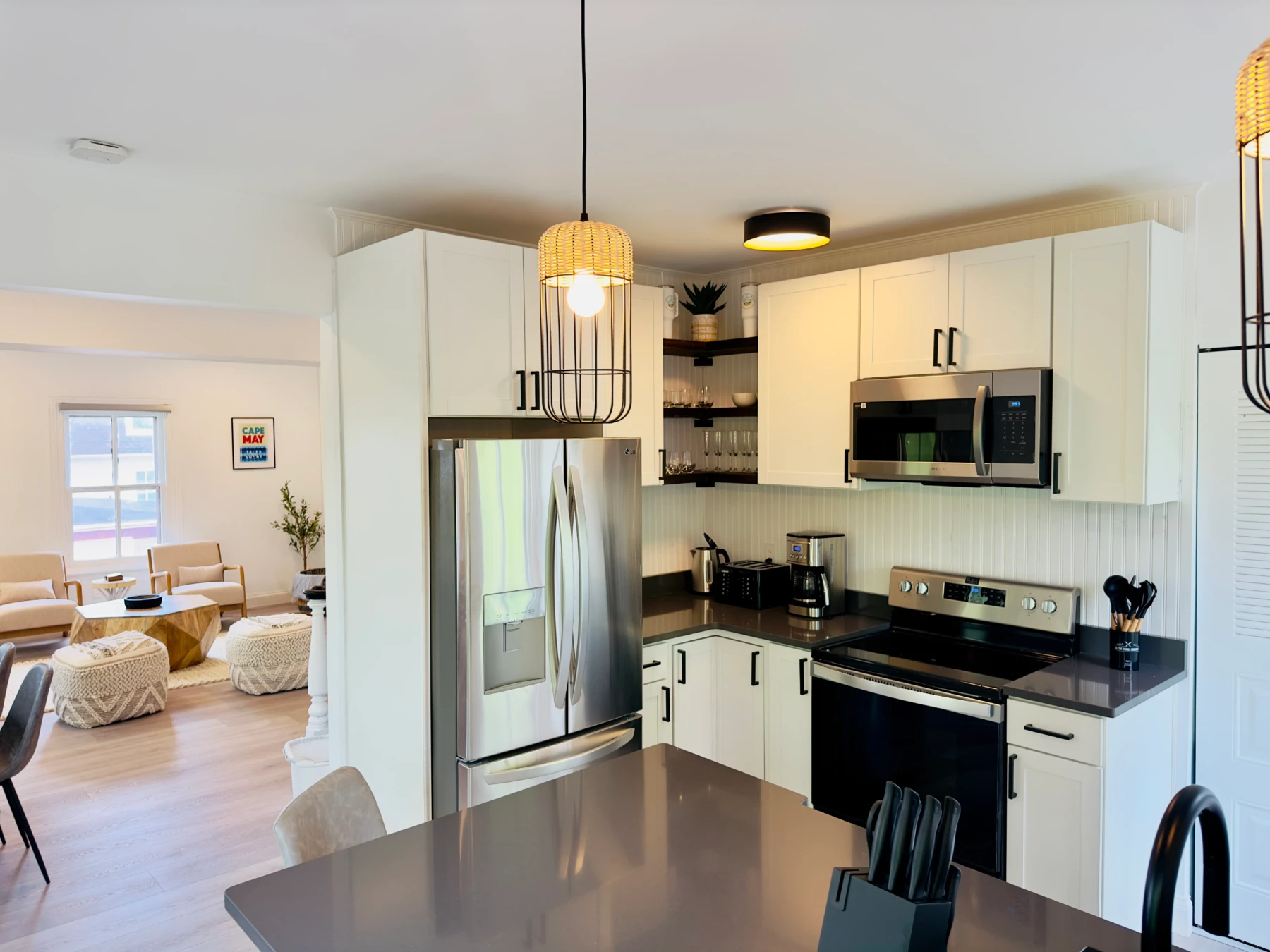
If ocean views and walkability matter most for your trip, Cape Belvedere puts you two minutes from Congress Hall with a private cupola built for sunset watching. Check availability here.