

Cape May, New Jersey is America’s oldest seaside resort, a National Historic Landmark since May 11, 1976, and one of the most walkable, character-rich destinations on the entire East Coast. But most visitors spend their whole trip within a four-block radius of Washington Street Mall, eat at the same three restaurants, and leave without realizing how much they missed. This guide is for the traveler who wants more than that.
- Cape May’s historic district was designated a National Historic Landmark on May 11, 1976, giving it more protected Victorian architecture per square mile than almost anywhere in the United States.
- Cape May County welcomed 12.1 million visitors in 2026, generating $8.1 billion in visitor spending, according to the Cape May County Chamber of Commerce.
- The best months to visit without peak crowds are May, September, and October, when weather is mild and prices ease noticeably.
- Most visitors stay 5 days on average, per the Cape May County Tourism Impacts report, but a long weekend of 3 nights is genuinely enough if you plan well.
- Cape del Mar manages six renovated, eco-friendly properties in Cape May’s historic district and Cape Coral, Florida, all bookable directly without OTA service fees.
- 66% of Cape May County visitors are return visitors, a figure that says more about this destination’s staying power than any marketing headline could.
Cape del Mar manages a portfolio of renovated properties across Cape May’s historic district, and that walkable location shapes everything we recommend to guests. Every property we offer sits within a short walk of the beach, Washington Street Mall, and a dozen genuinely worthwhile restaurants. That proximity is not accidental. Cape May rewards the traveler who moves on foot, not by car.
In 2026, Cape May continues to draw a visitor mix that skews heavily toward couples and families, with 46% of visitors traveling with a spouse and 23% with children, according to the Cape May County Tourism Impacts report. But the crowd that gets the most out of this destination is the one willing to walk two blocks past the obvious spots. This guide covers what that looks like in practice.

What Are the Best Months to Visit Cape May?
The best months to visit Cape May are May, September, and October for travelers who want pleasant weather without peak-season crowds. June through August brings the highest visitor volume and the warmest ocean temperatures, but also the longest restaurant waits, the tightest rental availability, and parking that tests anyone’s patience. The shoulder seasons offer a genuinely different experience.
September is the month locals quietly prefer. Ocean temperatures in early September still reach the low 70s Fahrenheit, beach crowds thin considerably after Labor Day, and the restaurant scene shifts from survival mode back to hospitality. You can walk into places that required a week’s notice in July. Sunsets along Beach Avenue in September hit differently, longer golden hours and fewer people fighting for the same photo angle.
October brings the Cape May Jazz Festival, Victorian Week, and birding migration season. Cape May MAC runs a full calendar of events through October and into November that most summer visitors never encounter. The Cape May Bird Observatory draws serious birders from across the country each fall, as National Geographic has ranked the Cape May area among the top 10 bird-watching destinations worldwide.
May works for similar reasons: mild temperatures, open restaurants, lower rates, and the spring version of the same quiet character. The one honest caveat about spring is that pollen counts along the Jersey Shore can be high in mid-April through mid-May, worth noting for visitors with seasonal allergies before booking early in the window.
Winter is genuinely quiet, with STR occupancy dropping to around 11% in the winter months according to Chalet’s 2026 Cape May Airbnb data. But the town does not shut down. Congress Hall stays open, several restaurants run reduced winter menus, and the off-season rate on properties like Cape Belvedere makes a two-bedroom ocean-view condo with a cupola lounge surprisingly accessible for a quiet long weekend.
How Many Days Should You Spend in Cape May, New Jersey?
Three to four nights is the sweet spot for a Cape May trip. The Cape May County Tourism Impacts report notes an average visitor stay of 5 days, but that figure includes week-long summer rentals. For travelers coming from Philadelphia, New York, or anywhere within the New York and Philadelphia corridor, three nights gives you enough time to see the Victorian district properly, eat at the places worth eating at, spend a full day at the beach, and still feel like you didn’t rush.
A two-night trip is doable if you are strategic. One full beach day, one evening exploring the restaurants beyond the main strip of Washington Street Mall, and a morning walk through the historic district before the tour groups arrive. But two nights tends to feel like you just found your rhythm when checkout arrives.
Specifically, here is what three nights allows that two nights does not: a morning at Cape May Bird Observatory, a sunset at Cape May Point State Park (the lighthouse grounds are open even when the tower is ticketed), a proper meal at a reservation-required restaurant, and enough time to rent bikes and actually use them. Cape May is a small town but it is denser with worthwhile experiences than its footprint suggests.
For families, the calculus shifts slightly. Kids under 10 do best with a week, because the pace is genuinely relaxed and repetition at the beach feels like a feature rather than a bug. Couples from the northeast can extract enormous value from a three-night Thursday-to-Sunday trip, particularly in September or October when shoulder-season rates apply.
Which Cape May Restaurants Are Actually Worth Your Time?
Cape May’s dining scene is genuinely strong, but it is not evenly distributed. Several Washington Street Mall restaurants run on tourist foot traffic and reputation alone. The places worth your time tend to sit one or two blocks off the main strip, require a reservation in peak season, and have menus that change with availability rather than ones laminated for permanence.
For a special occasion dinner, Peter Shields Inn on Beach Avenue is the honest answer. The 1907 Georgian Revival building, the white tablecloth setting, and the seafood-forward menu with a serious wine list make it the right call for anniversaries or any meal where the occasion matters as much as the food. Reservations are essential, and the restaurant fills early on weekends. Sit near the front windows if you can.
The Washington Inn, a 150-year-old colonial property at 801 Washington Street, runs a wine cellar with over 8,000 bottles and a menu that leans into classic American fine dining. It is one of the most consistent kitchens in Cape May and has been for decades, which is a harder thing to maintain than most people appreciate.
For something less formal, Ugly Mug at 426 Washington Street is the pub where locals actually drink. Exposed brick, a long bar, and a menu that does better-than-average pub food. It gets loud and crowded on summer weekends, but on a Tuesday evening in September, it is exactly the kind of place you want to stumble into. The crab bisque is worth ordering whenever it appears.
Breakfast deserves its own paragraph. Mad Batter at 19 Jackson Street has been a Cape May institution for decades and earns the wait. The eggs Benedict variations and the lemon ricotta pancakes are the right call. Arrive before 9am on weekends or expect a 30-45 minute queue. That is not a caveat, that is just the reality of a genuinely good breakfast spot in a tourist town.
One honest skip: any seafood restaurant on the main stretch of Washington Street Mall with a large outdoor sign, laminated photos on the menu, and a host standing outside flagging passersby. Cape May has excellent seafood, but it lives at places like The Lobster House at the harbor (a genuine local institution operating since the 1950s, best experienced at the raw bar schooner) and Grana BYOB, not at wherever has the longest outdoor queue on a Saturday night.
Which Is Nicer, Cape May or Wildwood?
Cape May and Wildwood are fundamentally different destinations that happen to sit about 10 miles apart on the same peninsula. Cape May is a walkable, historically protected Victorian town with upscale dining, boutique shopping, and a quieter beach experience. Wildwood is a boardwalk town with amusement rides, free beaches, high-energy nightlife, and a family-entertainment atmosphere that skews younger and louder. Neither is objectively better. They serve different travelers almost entirely.
Cape May suits couples, multigenerational families who want a cultural and culinary dimension to their beach trip, and anyone who values historic architecture, walkability, and restaurants worth a reservation. The beaches require paid tags during peak season (roughly Memorial Day through mid-September), but they are clean, well-patrolled by the Cape May Beach Patrol, and considerably less crowded than Wildwood’s famous free beaches.
Wildwood’s boardwalk is three miles long with more than 100 rides and amusements, and it genuinely delivers on that promise for families with teenagers. The beach is wide, the water is warm in summer, and the price of entry to the sand is zero. If you are traveling with a 13-year-old who wants rides and fried food on a boardwalk, Wildwood wins that specific argument clearly.
The Points Guy and several regional outlets note that Cape May rewards visitors who explore by bicycle. Specifically, the ride from Cape May to the Wildwood boardwalk covers about seven miles and takes roughly 40 minutes. You can experience both towns in a single day if you are based in Cape May, which is actually the best of both options for travelers who want the Victorian character as a home base and the boardwalk energy as a day trip.
What Movie Was Filmed in Cape May?
Cape May’s Victorian architecture and seaside character have made it a recurring location for film and television productions drawn to its preserved 19th-century streetscapes. Several productions have used Cape May’s historic district as a backdrop over the years, specifically because the density of intact Victorian homes creates a period atmosphere that is difficult to replicate elsewhere on the East Coast.
The town’s National Historic Landmark status, confirmed on May 11, 1976, is one reason that architectural preservation has been consistent enough to make Cape May useful as a filming location for stories set in the late 1800s and early 1900s. The Emlen Physick Estate, the Cape May Lighthouse at Cape May Point State Park, and Congress Hall have all featured in various regional productions and documentary segments.
For visitors interested in the filming history specifically, Cape May MAC’s trolley tours cover architectural and historical details of the landmark district in a way that standard walking maps cannot. The ghost and history tours in particular lean into the storytelling traditions associated with Victorian Cape May. They are a genuinely good evening activity for couples and curious travelers, not just a gimmick.
What Should You Actually Do Beyond the Beach in Cape May?
Cape May beyond the beach means the Cape May Lighthouse, dolphin and whale watching cruises, the Victorian historic district on foot or by bicycle, and a handful of experiences that most visitors walk past without noticing. The town’s activity depth is underestimated precisely because the beach is so good.
The Cape May Lighthouse at Cape May Point State Park stands 157 feet tall and requires climbing 199 steps. The view from the top stretches across Delaware Bay, and on clear days you can see the Delaware coast. Tickets are required to climb. The grounds and the surrounding Cape May Point State Park are free to enter and worth a full morning, especially during the fall bird migration window.
Cape May Whale Watcher runs dolphin and whale watching cruises from Miss Chris Marina. Bottlenose dolphins appear on nearly every trip in summer, and the fall season brings humpback and fin whale sightings. Book in advance for July and August cruises. Weekday morning departures tend to have smaller crowds and calmer water.
The Sunset Beach experience is worth doing once, specifically for the late-afternoon flag ceremony, which takes place daily from May through September. The Sunset Beach Flag Ceremony honors veterans with a formal lowering of a flag that flew over the U.S. Capitol, and the surrounding cape diamond hunting on the beach makes it a genuinely memorable family stop. Get there 20-30 minutes before sunset to find parking.
For a budget-friendly activity with surprising depth, the Cape May County Zoo is free to enter and open daily. It is not a novelty zoo. It houses over 550 animals across 85 acres and draws serious visitors in addition to families. Locals with kids use it year-round. For more on free and low-cost ways to fill a Cape May trip, the guide to free and low-cost Cape May activities covers the full picture.
Renting bikes is consistently the right call. Several rental shops operate near the historic district, and the flat terrain makes cycling genuinely practical for all ages. Washington Street Mall, Cape May Point, Sunset Beach, and the Victorian district are all accessible by bike. Leave the car parked. Parking in peak summer is legitimately stressful, and everything worth doing is within 15 minutes by bicycle.

How Do You Get the Most Out of Cape May’s Victorian District?
Cape May’s Victorian district is best understood by walking it early in the morning before the tour groups arrive. The highest concentration of intact Victorian architecture in the United States sits within a roughly one-mile radius of Congress Hall, and most of it is visible from public sidewalks without a ticket. The color palette, the gingerbread trim details, and the scale of these 19th-century homes make the district unlike any other stretch of the Jersey Shore.
Specifically, the blocks between Columbia Avenue, Hughes Street, and the beach contain some of the most photographed Victorian homes in Cape May. The Emlen Physick Estate at 1048 Washington Street, operated by Cape May MAC, is the most significant example of the “stick style” Victorian architecture in the region and worth the tour admission if history interests you. Tours run seasonally; check the MAC calendar before visiting.
One thing most visitors miss: the smaller side streets running north from Beach Avenue contain residential Victorian homes that are not on any formal tour route and see a fraction of the foot traffic. Morning light on these streets, particularly before 8am, is the kind of thing photographers plan entire trips around.
Washington Street Mall is the commercial spine of the historic district and is genuinely enjoyable. The outdoor pedestrian mall has independent boutiques, galleries, coffee shops, and ice cream. Margie D’s Soda Fountain inside Della’s 5 and 10 is one of the most specific and memorable stops on the mall: a working vintage soda fountain serving milkshakes and grilled cheese in an interior that looks like a prop from a 1950s film set. It is not a tourist trap. It has been operating this way for decades.
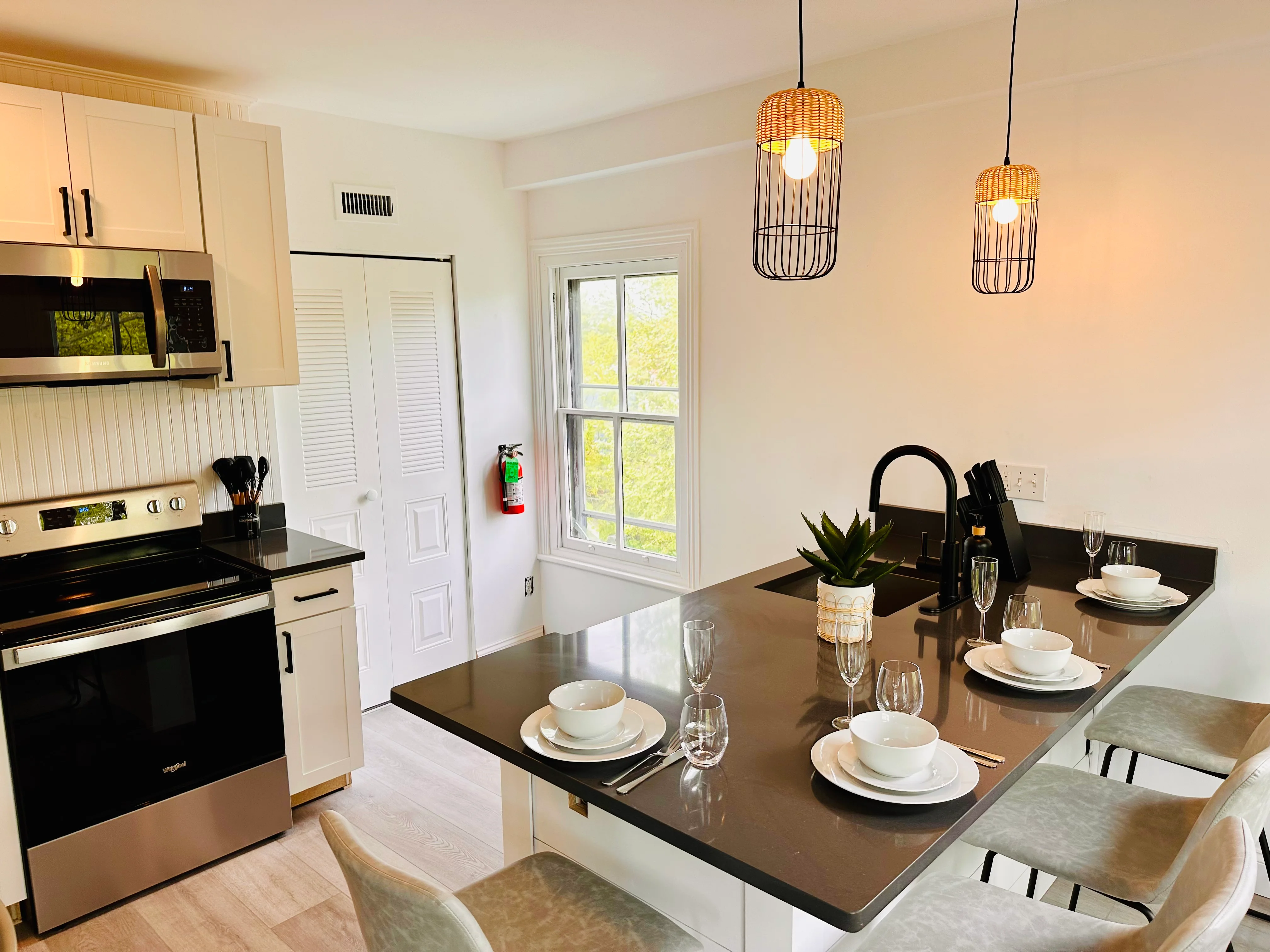
For travelers wanting a centrally located base during a Victorian district walkabout, Cape Oar is one block from the Washington Street Mall inside an 1860 Victorian building, with a private patio that is genuinely rare for the town center. The 800-square-foot apartment sleeps up to two adults and two children comfortably, and the gourmet kitchen with 4-seat island means you are not forced to eat out for every meal.
Where Should You Stay in Cape May for Walkable Access?
Where you stay in Cape May determines most of the trip’s logistics. The historic district, specifically the area within walking distance of Washington Street Mall and Beach Avenue, is the right choice for nearly every traveler. Staying outside this radius adds car dependency to a town that rewards pedestrians. Here is how the Cape del Mar properties map to different travel styles.
Best for Couples with Ocean Views: Cape Belvedere
Cape Belvedere is a fully renovated top-floor condo in the historic Belvedere building with direct Atlantic views and, on clear days, sightlines stretching to Delaware. Two minutes from Congress Hall, steps from Washington Street Mall, one block from the beach. The signature cupola lounge with panoramic views and lounge chairs is the detail that separates it from every other two-bedroom rental in Cape May. Four complimentary beach passes and beach gear are included during the season (through mid-September). It sleeps up to 6 adults and 2 children across two bedrooms with a master ensuite.
Best for Couples on the Beach: Cape Whale and Cape Surf
Cape Whale and Cape Surf both occupy the historic Baronet Mansion on Beach Avenue, directly across from the ocean. Cape Whale is a pet-friendly one-bedroom on the first floor with a king bed, fully stocked kitchen, and the kind of quiet that a couple with a dog specifically appreciates. Cape Surf is a second-floor guest-favorite with two complimentary beach chairs, an umbrella, two beach tags, and a kids pack-and-play in the closet for small families. Both include organic toiletries, air purifiers, water filters, and eco-friendly supplies throughout.
Best for Families and Small Groups: Cape Wave and Cape Oar
Cape Wave is a renovated top-floor apartment in an 1860 Victorian house, five minutes from the beach and one block from the mall, with two bedrooms, two bathrooms including an ensuite, and a rooftop deck. It sleeps up to 4 guests and suits two-couple trips or a small family wanting Victorian character without sacrificing modern comfort. Cape Oar, one block from Washington Street Mall, adds wheelchair accessibility and a private patio to the mix. Both properties include beach tags, stocked kitchens with coffee, and linens.
For a full neighborhood-by-neighborhood breakdown of Cape May accommodations, the Cape May neighborhoods and where to stay guide covers the tradeoffs in detail.
What Practical Details Do Most Cape May Guides Get Wrong?
Most Cape May travel guides cover the obvious and skip the logistics that actually shape whether a trip goes smoothly. Here are the specific details that matter and that competitor guides consistently miss.
Beach Tags
Cape May city beaches require paid beach tags from late June through Labor Day weekend. You can buy seasonal or daily tags through the Cape May Tourism website or at tag stands on the beach. Active military and veterans receive free beach tags; details are on the City of Cape May’s official information. Cape del Mar’s properties at the Baronet Mansion include beach tags as part of the stay during the season, which eliminates one logistics step entirely.
Parking Reality
Peak summer parking in Cape May is genuinely difficult. The town is small and the streets are narrow. If you are staying at a property with dedicated parking, use it and leave the car for the week. Guests at Cape Belvedere have dedicated off-street parking plus street parking adjacent. Cape Oar includes one designated off-street spot. The practical advice: arrive Thursday or Sunday rather than Friday or Saturday to avoid the worst of the parking turnover congestion.
Restaurant Reservations
For any sit-down dinner at a reservation-driven Cape May restaurant from Memorial Day through Labor Day, book at least a week in advance. Two weeks is safer for Friday and Saturday evenings at Peter Shields Inn or The Washington Inn. Walk-in spots exist at the bar or on the patio at most restaurants, but they are not guaranteed. September and October reservations are easier to secure and often available a day or two out.
Direct Booking vs. OTA
OTA service fees on platforms like Airbnb and VRBO typically add 14 to 20% on top of the base nightly rate. Booking directly through Cape del Mar’s website eliminates that markup and puts you in direct contact with the hosts. Properties are stocked with organic toiletries, air purifiers, water filters, and eco-friendly cleaning products, amenity details that OTA listings often compress or omit. The Cape May vacation rentals insider guide walks through exactly what direct booking includes and what it saves.
Frequently Asked Questions About Visiting Cape May
Is Cape May worth visiting in fall or spring instead of summer?
Fall and spring in Cape May offer a genuinely different and often better experience than peak summer. September brings warm ocean temperatures, reduced crowds, and full restaurant availability without the July reservation grind. October adds the Cape May Jazz Festival, Victorian Week, and fall birding migration. Spring from May onward offers similar quiet with lower rates. The main trade-off is cooler evening temperatures and, in spring, the potential for higher pollen counts from mid-April through mid-May.
Do Cape del Mar properties include beach tags for Cape May’s beaches?
Cape Whale, Cape Surf, Cape Oar, Cape Belvedere, and Cape Wave all include complimentary beach passes during the beach tag season, generally Memorial Day through mid-September. Tags are provided as part of the stay, which eliminates the need to queue at beach tag stands. Outside the seasonal window, no tags are required for Cape May beaches. Confirm the current season window directly with Cape del Mar when booking outside peak summer.
How far is Cape May from Philadelphia and New York City?
Cape May sits approximately 90 miles south of Philadelphia via the Garden State Parkway, a drive of roughly 1.5 to 2 hours depending on traffic and the route taken. From New York City, the drive is typically 2.5 to 3 hours. The Cape May-Lewes Ferry offers an alternative route from the Delaware coast, particularly useful for travelers coming from Maryland, Delaware, or Virginia.
Which Cape del Mar properties are pet-friendly?
Cape Whale and Cape Pelican (in Cape Coral, Florida) welcome well-behaved pets. The standard courtesy guideline at both properties is pets off furniture. Cape Pelican adds the advantage of a fenced lanai and private outdoor space. The other four Cape del Mar properties in Cape May (Cape Surf, Cape Oar, Cape Belvedere, and Cape Wave) do not currently list pet-friendly status. Confirm directly with Cape del Mar before booking with a pet.
What is the typical cost of staying in Cape May?
According to Chalet’s 2026 Cape May Airbnb data, the average daily rate across Cape May’s short-term rental market is $463 with summer months (June through August) seeing the highest demand at 71% occupancy. Shoulder-season rates from September through November and April through May are noticeably lower. Booking directly through Cape del Mar avoids the 14 to 20% OTA service fee that typically applies to Airbnb and VRBO bookings.
What activities in Cape May are free or low-cost?
The Cape May County Zoo is free to enter daily. Cape May Point State Park grounds are free to access, with the lighthouse climb ticketed separately. Walking the Victorian historic district costs nothing and rewards early risers with the best light and the fewest crowds. The Sunset Beach flag ceremony is free to attend. For a full list organized by cost and category, the free and low-cost Cape May activities guide covers the complete picture.
Is Cape May accessible for visitors with mobility needs?
Cape May has invested in beach accessibility over recent years. The Cape May Beach Patrol provides free surf chairs and beach wheelchairs for visitors with restricted mobility; details are on the Cape May Beach Patrol accessibility page. Among Cape del Mar’s properties, Cape Oar at the 1860 Victorian building is wheelchair accessible with a private entrance via keypad. Flat, walkable streets throughout the historic district also make the town more manageable than many beach destinations.
How does Cape May’s visitor volume compare across seasons in 2026?
Cape May County recorded 12.1 million visitors in 2026, with summer months generating the majority of that traffic, per the Cape May County Chamber of Commerce. In 2026, STR occupancy data from Chalet shows summer months averaging 71% occupancy for active listings, dropping to approximately 11% in winter. The 84% visitor return rate reported by the Chamber of Commerce confirms that most Cape May travelers are not first-timers, which helps explain the unusually strong dining and retail scene for a town of roughly 5,000 year-round residents.
Is Cape May Worth Planning a Trip Around in 2026?
Cape May in 2026 remains one of the most rewarding short-trip destinations on the entire East Coast, specifically because it delivers multiple types of value in a compact, walkable footprint. The beach is excellent. The dining scene is punching well above its population weight. The Victorian architecture is preserved well enough to make the historic district feel genuinely distinct rather than themed. And the shoulder seasons have emerged as the smart traveler’s first choice over peak summer.
The Cape May travel guide that actually helps you is not the one that lists every restaurant on Washington Street Mall. It is the one that tells you to arrive on a Thursday, park once, eat one block off the main strip, get to the lighthouse grounds before the first tour group, and spend a morning at the bird observatory even if you are not a birder. That version of Cape May is quietly excellent.
For a comprehensive view of what Cape May offers families, couples, and Northeast weekend travelers, the complete Cape May guide covering dining, activities, and accommodations extends everything covered here. And for a curated property recommendation based on your group size and travel style, Cape del Mar’s listings page gives you the full picture directly.

If you want a Cape May base that puts you two minutes from Congress Hall, one block from the water, and within walking distance of every restaurant worth booking, Cape Belvedere is the specific answer to that question. The top-floor cupola with Atlantic views is the kind of detail you remember long after the trip ends. Check availability and book directly to skip the OTA markup.