Booking direct instead of Airbnb or Vrbo for a vacation rental means reserving a property through the owner or manager’s own website rather than through a third-party platform. The single biggest practical difference is money: Airbnb and Vrbo each add service fees that typically range from 14% to 20% on top of the nightly rate, meaning a $2,000 week can cost you $2,280 to $2,400 before taxes even enter the picture. Direct booking eliminates that layer entirely, and most reputable owners pass those savings straight to the guest.
- Platform fees add 14-20%: Airbnb and Vrbo charge guest service fees on every reservation; booking direct removes that cost entirely.
- Direct contact matters: When you book direct, you communicate with the owner or manager, not a platform’s automated support system.
- Amenity transparency improves: Direct booking sites often surface details (stocked kitchens, eco-friendly toiletries, beach gear) that OTA listings bury or omit.
- Cape May’s rental market is strong: According to Chalet’s 2026 data, Cape May County short-term rentals hit roughly 71% occupancy in peak summer months, meaning the best properties go early.
- Coastal demand is rising: Cape May County welcomed 12.11 million visitors in 2026, up from 11.58 million in 2023, per the Cape May County Tourism Conference Snapshot.
- The savings are structural, not promotional: Direct booking savings exist on every stay, not just discounted dates, because platform fees are baked into the OTA pricing model permanently.
At Cape del Mar, we manage a small portfolio of renovated, eco-friendly vacation rentals in Cape May’s National Historic Landmark district and in Cape Coral, Florida. Every property is bookable directly on our site, without platform markups. That context shapes everything we know about this topic, and it is the reason this guide gives you a clear-eyed, honest breakdown of how the two booking paths actually compare.
The debate between direct booking and OTA platforms has sharpened in 2026 as platform fees have become more visible and travelers have grown more comfortable booking through owner-operated websites. If you have ever noticed that the nightly rate on an Airbnb listing looks reasonable until you reach the checkout screen, this article explains exactly what happens at that moment and what you can do about it. By the end, you will know precisely what you pay for on each platform, what you give up, and when direct booking is the clear choice.
Should I Book Direct or Through Vrbo?
Booking direct is the better financial decision for most vacation rental stays, specifically because Vrbo adds a guest service fee that typically ranges from 6% to 12% of the subtotal, on top of whatever the owner charges. On a $3,000 week-long stay, that fee alone adds $180 to $360 before taxes. Direct booking through the owner’s website bypasses that fee entirely. The tradeoff is that Vrbo offers a centralized dispute resolution system and a credit card purchase protection layer that direct bookings do not automatically include.
Specifically, Vrbo’s buyer protections are most valuable when you are booking a property from a host you have no prior relationship with, particularly for high-cost stays above $5,000 or properties with very few reviews. For repeat guests or properties with a well-documented direct booking history, the protections you lose are largely theoretical. Most direct-booking owners use payment processors like Stripe or Square that offer standard chargeback rights through your credit card issuer.
The question worth asking before any booking is not simply which platform you trust more. It is whether the owner’s direct booking site provides enough transparency (clear cancellation policy, verified contact information, a documented payment process) to justify the savings. For established operators like Cape del Mar with a published FAQ, a visible management history, and individual property pages with full amenity lists, the answer is almost always yes.
Cape May’s rental demand reinforces this logic. According to the Cape May County Tourism Conference Snapshot, the county generated $8.1 billion in visitor spending in 2026. Strong destinations attract established operators. Established operators almost always have direct booking infrastructure that is safe to use.
Is It Better to Book Through Airbnb or Direct?
Booking direct beats Airbnb on cost for the majority of vacation rental stays, primarily because Airbnb charges guests a service fee that commonly reaches 14% to 16% of the reservation subtotal. For a $400-per-night property rented for five nights, that fee adds $280 to $320 to the total before any local or state taxes are applied. Direct booking removes that line item completely, and many direct-booking operators also skip the cleaning fee inflation that Airbnb listings use to compensate for platform commission pressure.
Airbnb’s advantages are real but narrow. First, the platform’s AirCover guest protection policy covers rebooking costs if a host cancels last-minute, provides a 24-hour safety line, and offers listing accuracy guarantees. Second, Airbnb’s review system gives a useful snapshot of recent guest experiences. For first-time travelers to a destination who have no trusted property recommendation, those safeguards reduce booking anxiety meaningfully.
For Cape May specifically, Airbnb’s accuracy guarantee matters less than it might elsewhere because the market is filled with established, named operators, many of whom have been managing properties in the historic district for years. Cape Surf, for example, is described as a “guest favorite” at the historic Baronet Mansion, a property with a documented track record across both direct and platform bookings. When you book Cape Surf directly, you deal with the same host, the same property, and the same check-in experience. You just skip the 14% fee on the way there.
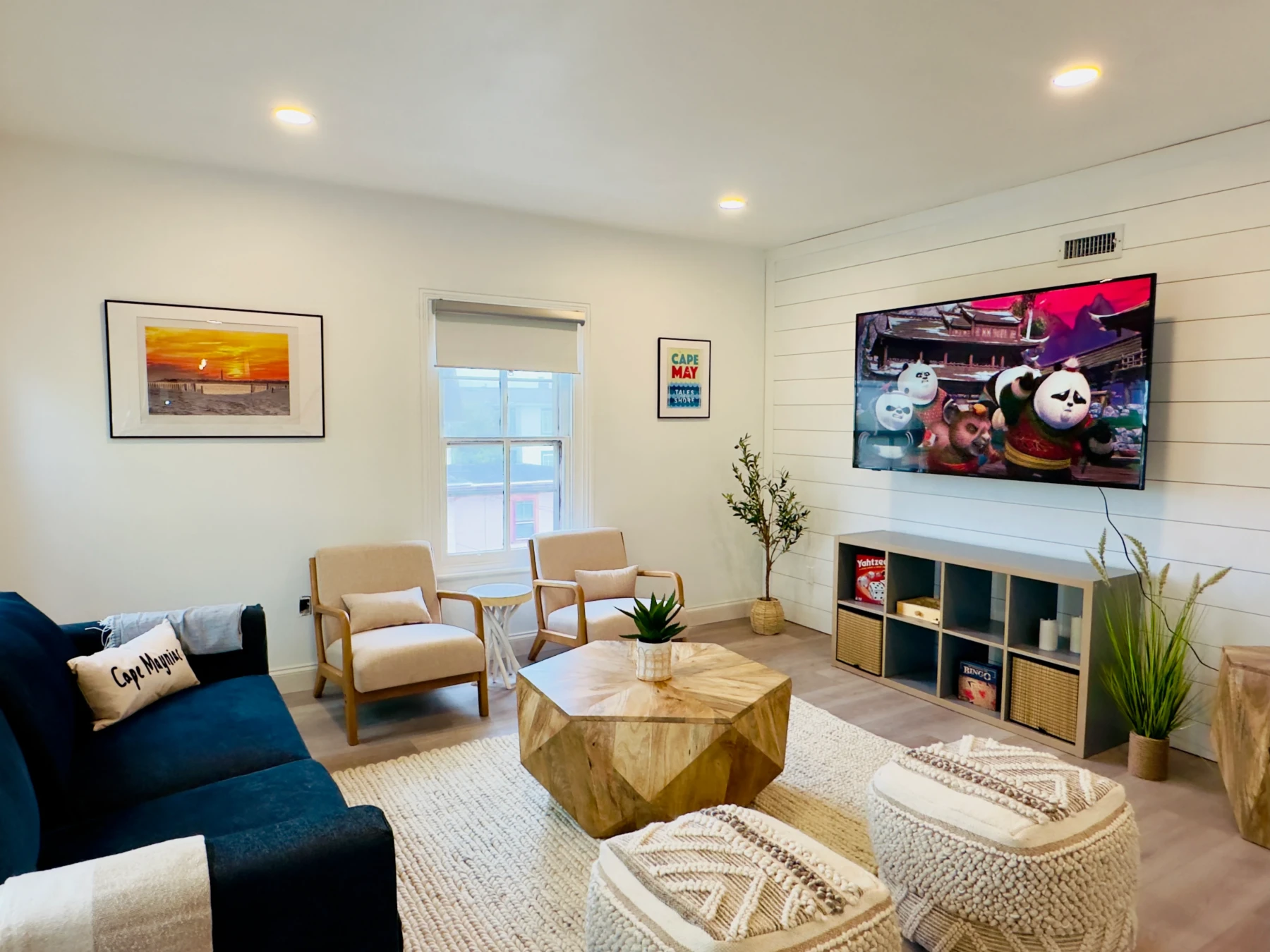
Additionally, direct booking often surfaces amenities that Airbnb listings compress or omit for space. Cape del Mar’s direct listings specify organic shampoo, conditioner, and body wash; air purifiers and water filters in every unit; fully stocked kitchens with olive oil and cooking basics; and complimentary beach tags during peak season. These are not details that fit naturally into an Airbnb listing’s amenity checklist. Direct booking gives you the full picture before you commit.

Why Do People Use Vrbo Instead of Airbnb?
Vrbo focuses exclusively on whole-property rentals, which means guests never share a space with a host or encounter a listing that is actually a single room in someone’s home. Airbnb’s inventory includes everything from spare bedrooms to shared apartments, which makes it less predictable for travelers who specifically want a private, standalone vacation rental. For families booking a beach house or couples renting a condo in Cape May’s historic district, Vrbo’s whole-property focus reduces the risk of a mismatch between expectation and reality.
Vrbo’s search filters also tend to be better calibrated for larger group stays. Specifically, Vrbo makes it easier to filter by bedroom count, pet-friendly status, and property type, which is useful when planning a multigenerational family trip to a destination like Cape May where property size matters. Airbnb’s filtering exists but historically surfaces shared spaces and private rooms alongside full rentals, which adds friction to the search process for families.
The honest answer is that many travelers use Vrbo simply because they tried it first and had a good experience. Platform loyalty is a real phenomenon in travel booking. But in 2026, as both Vrbo and Airbnb have raised fees and the direct booking ecosystem has matured, the case for defaulting to either platform has weakened. Cape May’s rental market is a good example: a property like Cape Oar, an 800-square-foot renovated apartment in an 1860 Victorian building one block from Washington Street Mall, is bookable directly with full transparency on policies, cancellation terms, and amenities. That experience is comparable to, or better than, the Vrbo booking flow on every dimension except the platform’s dispute resolution layer.
What Is the 75-55 Rule for Airbnb?
The 75-55 rule for Airbnb is an informal guideline used by experienced platform bookers, not an official Airbnb policy. The rule holds that a listing’s true cost is more accurately estimated by multiplying the displayed nightly rate by 1.75 for short stays (one to three nights, where cleaning fees dominate) and by 1.55 for longer stays (five nights or more, where the per-night cleaning fee impact dilutes). The multipliers account for Airbnb’s guest service fee, the host’s cleaning fee, and applicable taxes, which together frequently add 55% to 75% to the base nightly rate shown in search results.
For example: a Cape May listing showing $200 per night for a two-night stay might realistically cost $350 per night all-in after a $100 cleaning fee, a $60 guest service fee, and local and state occupancy taxes. That is a 75% premium over the advertised rate, exactly what the informal rule predicts. Experienced Airbnb users know to always check the total before assuming the displayed rate is what they will pay.
Direct booking eliminates the service fee component of this calculation. Cape del Mar’s properties charge a cleaning fee that covers the actual cost of professional turnover, but there is no platform commission added on top, and the full cost is displayed transparently before you commit. For a five-night Cape May summer stay, the difference between booking Cape Belvedere directly versus through a platform can represent a meaningful real dollar savings at summer ADR levels. According to Chalet’s 2026 Cape May County data, average daily rates in the county peak near $593 in summer months; a 14% service fee on a five-night peak-season stay at that rate adds roughly $415 to your total.
What Do You Actually Lose When You Book Direct Instead of a Platform?
Booking direct instead of Airbnb or Vrbo for a vacation rental means forgoing three specific platform protections: centralized dispute resolution, listing accuracy guarantees, and AirCover-style rebooking support if the host cancels. These are real benefits, and dismissing them entirely would be dishonest. The question is how likely any of these scenarios actually are with a specific, vetted operator, and whether the cost premium is worth paying as insurance against a low-probability event.
What Direct Booking Does Not Include
Direct bookings do not include Airbnb’s AirCover policy, which promises to rebook you or refund you if a host cancels within 30 days of your stay. Vrbo offers a similar book-with-confidence guarantee. These protections exist because last-minute cancellations do happen on platforms, particularly from hosts who find a higher-rate booking and cancel existing reservations to accept it. With a direct-booking operator who has a documented cancellation policy published on their site, this risk is lower, not zero.
Additionally, platforms offer a third-party mediator if you arrive and the property does not match its listing. Direct booking disputes go directly between you and the host, with your credit card chargeback rights as the fallback. Most major credit cards, particularly travel-focused cards, offer strong purchase protection that functions similarly to platform dispute resolution in practice.
What Direct Booking Actually Provides
Direct booking provides direct, immediate communication with the property owner or manager. For properties like Cape Pelican in Cape Coral, where guests traveling with children may have questions about the pool fence, the Pack ‘n’ Play, or the heated pool temperature setting, reaching the host directly rather than through a platform messaging interface is genuinely useful. Response times are typically faster, and the answers are more specific.
Direct booking also frequently surfaces amenities that platform listings compress. Cape del Mar’s full direct listings detail the organic toiletries, air purifiers, water filters, complimentary beach tags, and stocked cooking essentials that make the properties genuinely different from a standard rental. None of those details appear on a platform’s standardized amenity checklist. You learn about them because direct booking gives the owner space to tell the full story.
How Much Can You Save by Booking Direct for a Cape May Vacation Rental?
The savings from booking a Cape May vacation rental directly depend on the stay length, the season, and the platform you are avoiding. According to Chalet’s 2026 data, Cape May County short-term rentals average a daily rate near $463 annually, with peaks near $593 in summer. Airbnb guest service fees typically run 14% to 16% of the subtotal; Vrbo’s guest fee typically falls between 6% and 12%. On a four-night summer stay at $500 per night, the Airbnb service fee alone adds $280 to $320 to your total.
For context, Cape May County’s overnight visitors averaged $365 per person per day in spending in 2026, per the New Jersey Division of Travel and Tourism. A $300-plus savings on a platform fee is roughly equivalent to a full day’s spending budget for two people. That is not a rounding error. It is a dinner at Peter Shields Inn, a dolphin-watching cruise, or two nights of parking covered.
Owners who manage their own direct booking channel typically retain 70% to 80% of gross revenue versus the 65% to 70% they net after platform commissions, according to industry benchmarks for coastal short-term rental markets. Many pass a portion of that savings to direct-booking guests through lower displayed rates or by waiving certain fees. The incentive is mutual: the owner avoids the platform commission, and the guest avoids the service fee. Both sides benefit from cutting the middleman out.
Which Cape del Mar Properties Are Available to Book Directly?
Cape del Mar’s full portfolio of six vacation rentals in Cape May, New Jersey and Cape Coral, Florida is bookable directly through the individual property pages on capedelmar.com. Each listing includes the complete amenity details, cancellation policy, and pricing transparency that platform listings often summarize or truncate. Here is a breakdown of the properties by audience fit.
Cape Belvedere: Ocean Views and Congress Hall Access
Cape Belvedere is a fully renovated two-bedroom, two-bathroom top-floor condo in the historic Belvedere building, with direct Atlantic Ocean views and sightlines to Delaware on clear days. The property sleeps up to six adults and two children, sits two minutes from Congress Hall, and includes a signature cupola lounge with panoramic views for sunset watching. Four complimentary beach passes and beach gear are included through mid-September. This is Cape del Mar’s strongest option for couples or small groups who want elevated interiors and a genuine ocean view rather than a partial glimpse between buildings.
Cape Wave: Victorian Character with a Rooftop Deck
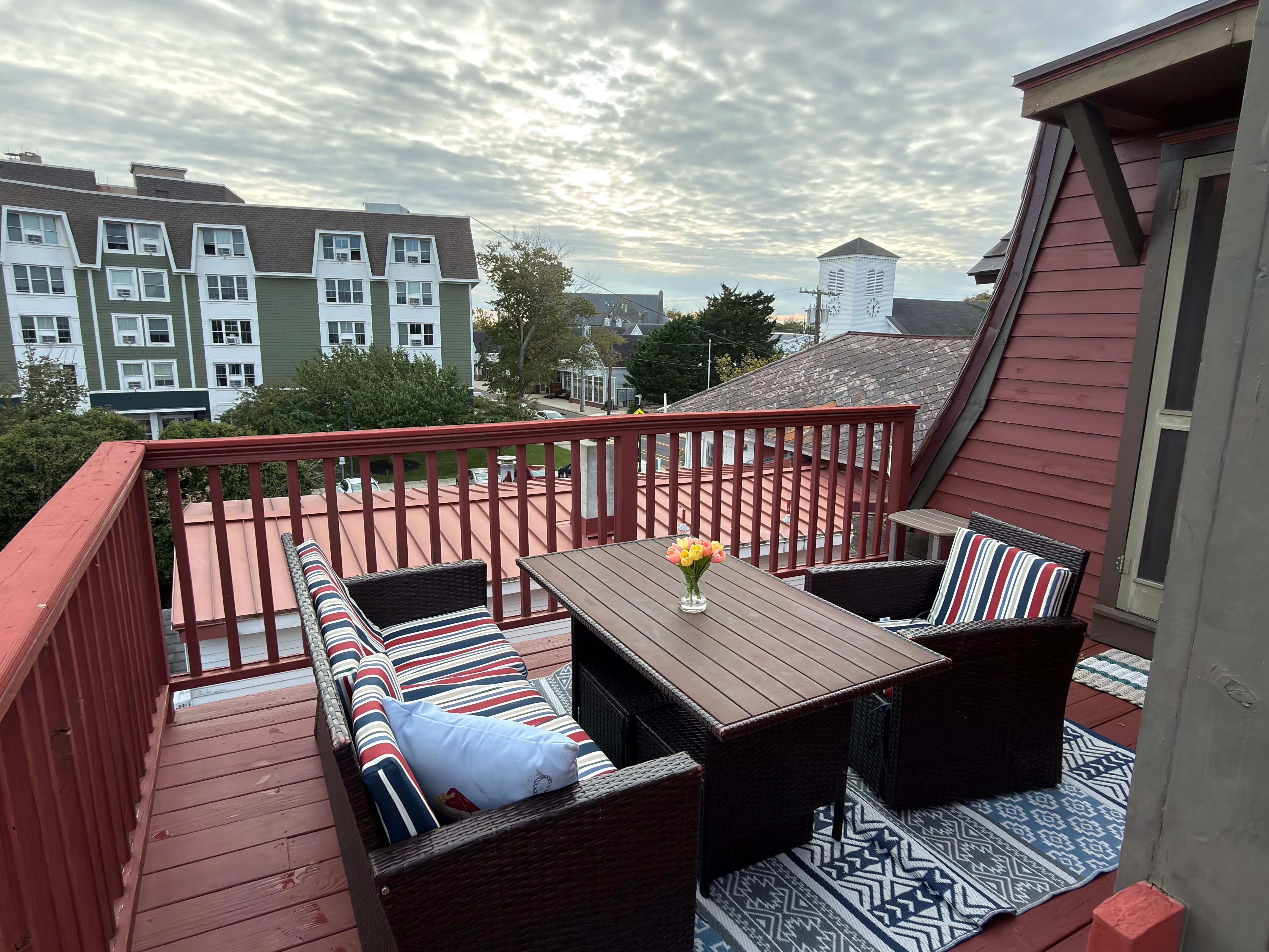
Cape Wave occupies the top floor of a Victorian house dating to 1860, offering approximately 700 square feet across two bedrooms and two bathrooms, including an ensuite. The property is a five-minute walk from the beach and one block from Washington Street Mall. Its rooftop deck is a genuine differentiator in Cape May’s historic district, where outdoor private space at this price point is rare. Beach tags, linens, and cooking basics are included. Capacity is up to four guests, making it the right fit for a couple traveling with two children or two couples on a shared trip.
Cape Surf and Cape Whale: Beachfront Couples Retreats
Cape Surf and Cape Whale are both one-bedroom, one-bathroom condos inside the historic Baronet Mansion on Beach Avenue, steps from the ocean. Cape Surf sits on the second floor and includes two complimentary beach chairs, an umbrella, and two beach tags. Cape Whale is on the first floor, pet-friendly, and includes beach tags as well. Both properties feature king beds, fully equipped kitchens stocked with cooking essentials, smart TVs, air purifiers, water filters, and organic toiletries. Neither is listed in the amenity checklist format that OTA platforms use, which is exactly why the direct booking page tells a more complete story. Both sleep a maximum of two guests, making them ideal for couples or a couple with one young child.
Cape Oar: Walkable, Accessible, and Family-Ready
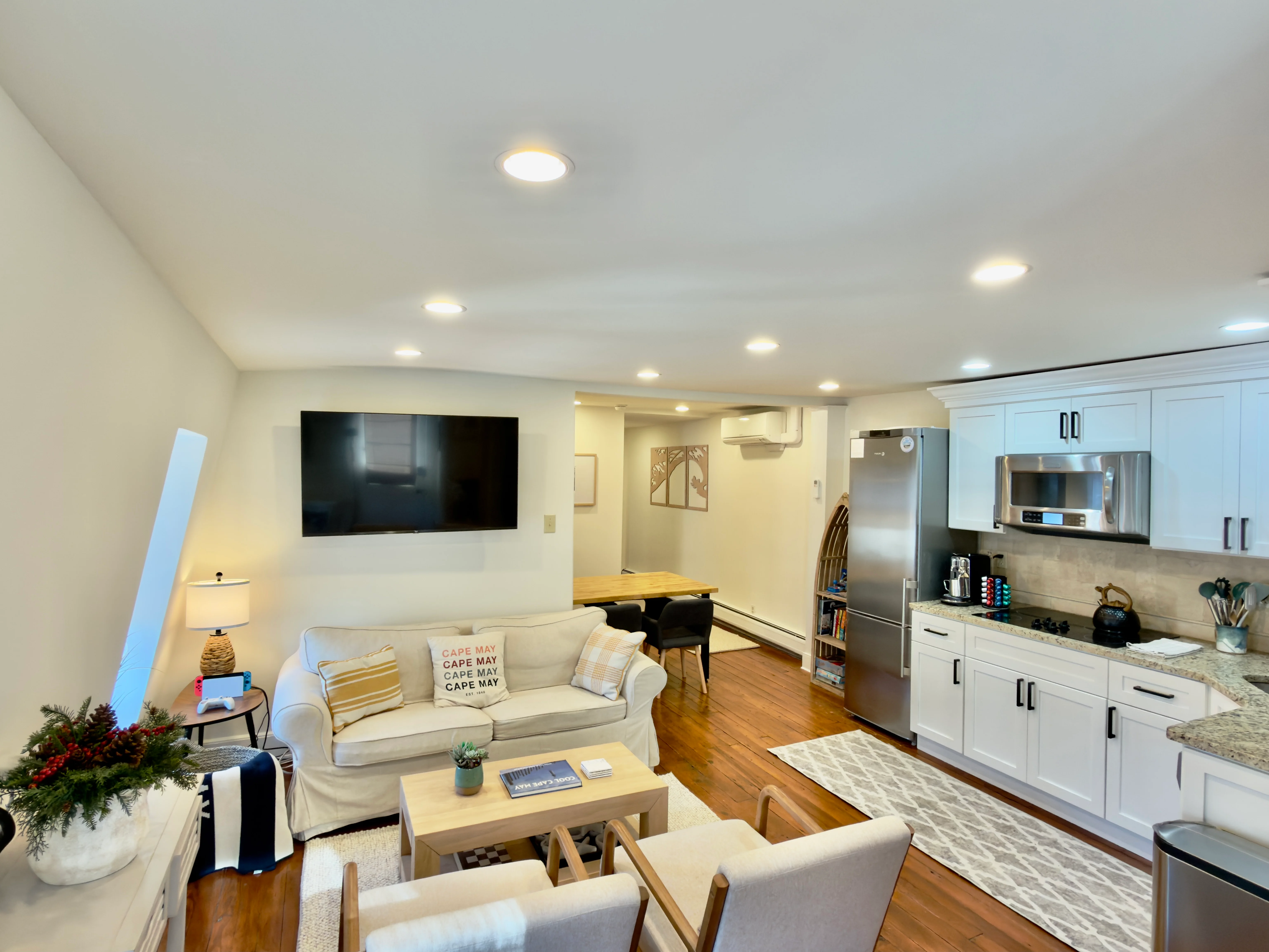
Cape Oar is an 800-square-foot renovated apartment inside an 1860 Victorian building, one block from Washington Street Mall and a short walk to the beach. It is wheelchair accessible, includes a private patio (genuinely rare for central Cape May), a gourmet kitchen with a four-seat island, a queen sleeper sofa for flexible sleeping, and two complimentary beach passes during peak season. The property accommodates up to two adults and two children comfortably. For guests who need step-free access or who want a private outdoor space in the heart of the historic district, Cape Oar is the portfolio’s most practical choice. You can read more about Cape May’s walkable neighborhoods in our neighborhood-by-neighborhood guide.
Cape Pelican: The Family Villa in Cape Coral
Cape Pelican is Cape del Mar’s largest property and its only Florida listing: a four-bedroom, two-bathroom villa in Cape Coral that sleeps up to ten guests. The sleeping configuration covers two king bedrooms, a queen bedroom, and a bunk room with a slide and pullout trundle for children. The private heated saltwater pool is enclosed by a lanai with palm trees, sun loungers, a hammock, and a wall-mounted outdoor TV. Inside, a games room with a pool table and ping pong table provides wet-weather entertainment, and a dedicated home office with a printer accommodates remote workers. Family amenities include a Pack ‘n’ Play, high chair, stroller, tricycle, and kids’ toys. Cape Pelican is five minutes from Cape Coral Marina and approximately 40 minutes from Sanibel Island. It is pet-friendly and parks four vehicles on the private driveway. No platform listing presents this level of family-specific detail the way the direct booking page does.
Frequently Asked Questions
What does it actually mean to book directly instead of using Airbnb or Vrbo?
Booking directly means reserving a vacation rental through the property owner or manager’s own website rather than through a third-party platform like Airbnb or Vrbo. You pay the owner directly, communicate with them without a platform intermediary, and avoid the guest service fee that Airbnb and Vrbo add to every reservation. Those fees typically range from 6% to 16% of the subtotal depending on the platform, stay length, and booking total. The tradeoff is that direct bookings rely on the owner’s cancellation and dispute process rather than a platform’s centralized protection system.
Are Cape del Mar properties genuinely within walking distance of the beach and Washington Street Mall?
Yes, for all five Cape May properties. Cape Whale and Cape Surf are across the street from the beach inside the historic Baronet Mansion on Beach Avenue. Cape Oar is one block from Washington Street Mall and a short walk to the beach. Cape Wave is one block from Washington Street Mall and a five-minute walk to the beach. Cape Belvedere is one block from the beach and two minutes from Congress Hall. The walkability is not marketing language; it is the primary location advantage that makes direct booking for Cape May properties especially appealing compared to renting a car-dependent property and paying OTA fees on top.
Is direct booking safe, and what happens if there is a dispute?
Direct booking is safe when you use a property owner with a verifiable website, published policies, and a documented contact history. Cape del Mar’s properties each have individual booking pages with full policy disclosures. If a dispute arises, your credit card’s purchase protection and chargeback rights provide recourse similar to what a platform’s mediation process would offer. Using a travel-focused credit card strengthens this protection further. The specific risk to assess is the owner’s cancellation policy, which should be clearly published before you book.
Do Cape del Mar properties include beach tags for Cape May beaches?
Yes. Cape Whale, Cape Surf, Cape Oar, Cape Belvedere, and Cape Wave all include complimentary beach passes during peak season, generally from Memorial Day through mid-September. Cape Belvedere includes four beach passes. Cape Surf includes two beach tags plus two beach chairs and an umbrella. Cape Oar includes two beach passes. Cape Whale and Cape Wave include beach tags as well. Beach tag inclusion is a significant practical value in Cape May, where daily beach tags represent a real per-person cost for families. Confirm current seasonal availability with the property before booking outside the summer window.
Are Cape del Mar properties genuinely eco-friendly, or is that a marketing claim?
The eco-friendly features at Cape del Mar properties are specific and verifiable, not vague marketing language. Every property includes air purifiers, water filters, organic shampoo, conditioner, and body wash, eco-friendly cleaning products, and fully stocked kitchens with cooking essentials so guests do not need to purchase single-use supplies on arrival. Linens and towels are included across the portfolio, eliminating the need for guests to bring or buy disposables. These are the same standards you would expect from a boutique eco hotel. Platform listings summarize amenities in checkboxes; the direct booking page is where these details actually appear.
How far in advance should I book a Cape May vacation rental directly?
For summer stays in Cape May, booking three to four months in advance is prudent. According to Chalet’s 2026 data, Cape May County short-term rentals reach roughly 71% occupancy during June through August, and the best-located properties in the historic district fill earlier than the countywide average. Shoulder-season stays, specifically May through early June and September through October, offer more flexibility and typically two to four weeks of booking lead time is sufficient. The Cape May Jazz Festival in November and the spring festival season in April attract dedicated audiences who book early; plan six to eight weeks ahead for those weekends.
Is Cape Pelican in Cape Coral suitable for a multigenerational family trip?
Cape Pelican accommodates up to ten guests across four bedrooms with sleeping configurations for adults, children, and toddlers, including a bunk room with a slide. The private heated saltwater pool has a baby fence installed. The games room includes a pool table and ping pong table. Family-specific gear covers a Pack ‘n’ Play, high chair, stroller, and tricycle. Cape Pelican is five minutes from Cape Coral Marina, 35 minutes from Fort Myers Beach, and approximately 40 minutes from Sanibel Island. It is Cape del Mar’s most comprehensive family option and is also pet-friendly. Book Cape Pelican directly to see full availability and policies without platform fee additions.
How to Choose Between Direct Booking and an OTA Platform
Choosing between booking direct and using Airbnb or Vrbo for a vacation rental comes down to three factors: how well you know the property, how much the fee premium costs on your specific stay, and whether the operator’s direct booking infrastructure inspires confidence. Here is a practical framework.
When a Platform Makes More Sense
Use Airbnb or Vrbo when you are booking a property you found through the platform itself and the owner has no direct booking channel, when the stay is high-cost enough that platform dispute resolution provides meaningful insurance, or when the operator has very few reviews and no visible reputation outside the platform. First-time visitors to a destination who have no trusted local recommendation often find that platform reviews provide useful signal. That is a legitimate reason to pay the service fee.
When Direct Booking Is the Clear Choice
Book direct when the operator has a verifiable website with published policies, when you have a prior relationship or trusted recommendation, or when the savings are significant relative to your total trip cost. For Cape May specifically, where a well-documented ecosystem of direct-booking rental operators exists, the platform service fee is largely optional. Cape del Mar’s properties publish full cancellation policies, amenity lists, and contact information on each listing page. The booking experience is comparable to a platform on every dimension except price, where direct booking consistently wins.
A practical step before every booking: check whether the property owner has a direct booking site, compare the total cost including all fees and taxes on both channels, and verify that the direct booking page includes a published cancellation policy. If all three conditions are met, direct booking is almost always the better financial decision for your Cape May trip.
For a deeper look at which Cape May property fits your trip profile, the ultimate Cape May travel guide covers the full picture of where to stay, what to eat, and what to do across America’s oldest seaside resort.
Making the Decision: What Direct Booking Really Means in 2026
The case for booking direct instead of Airbnb or Vrbo for a vacation rental has only strengthened in 2026. Platform fees have not decreased. Cape May’s rental market has grown: 12.11 million visitors in 2026 generating $8.1 billion in spending, according to the Cape May County Tourism Conference Snapshot, and summer occupancy for short-term rentals running near 71% according to Chalet’s 2026 data. Strong demand means good properties fill early, and paying a 14% to 20% platform premium on top of peak-season rates is a meaningful cost when a direct booking channel exists.
The honest summary is this: Airbnb and Vrbo are useful tools for discovering properties you would not otherwise find and for booking hosts with no independent web presence. For established, named operators in a well-known destination like Cape May, those discovery benefits largely disappear after your first visit. Direct booking gives you a lower total cost, a more complete picture of what the property actually includes, and a direct relationship with the person responsible for your stay. That combination is hard to argue against.
Cape May rewards visitors who plan with a bit of specificity and then relax into the destination. Whether you are looking at a romantic long weekend in a top-floor ocean-view condo near Congress Hall, a family week in a historic Victorian apartment one block from the mall, or a Florida escape with a private pool for ten people, the direct booking route gets you there for less and with fewer surprises. Browse the full Cape del Mar portfolio and check availability at capedelmar.com.
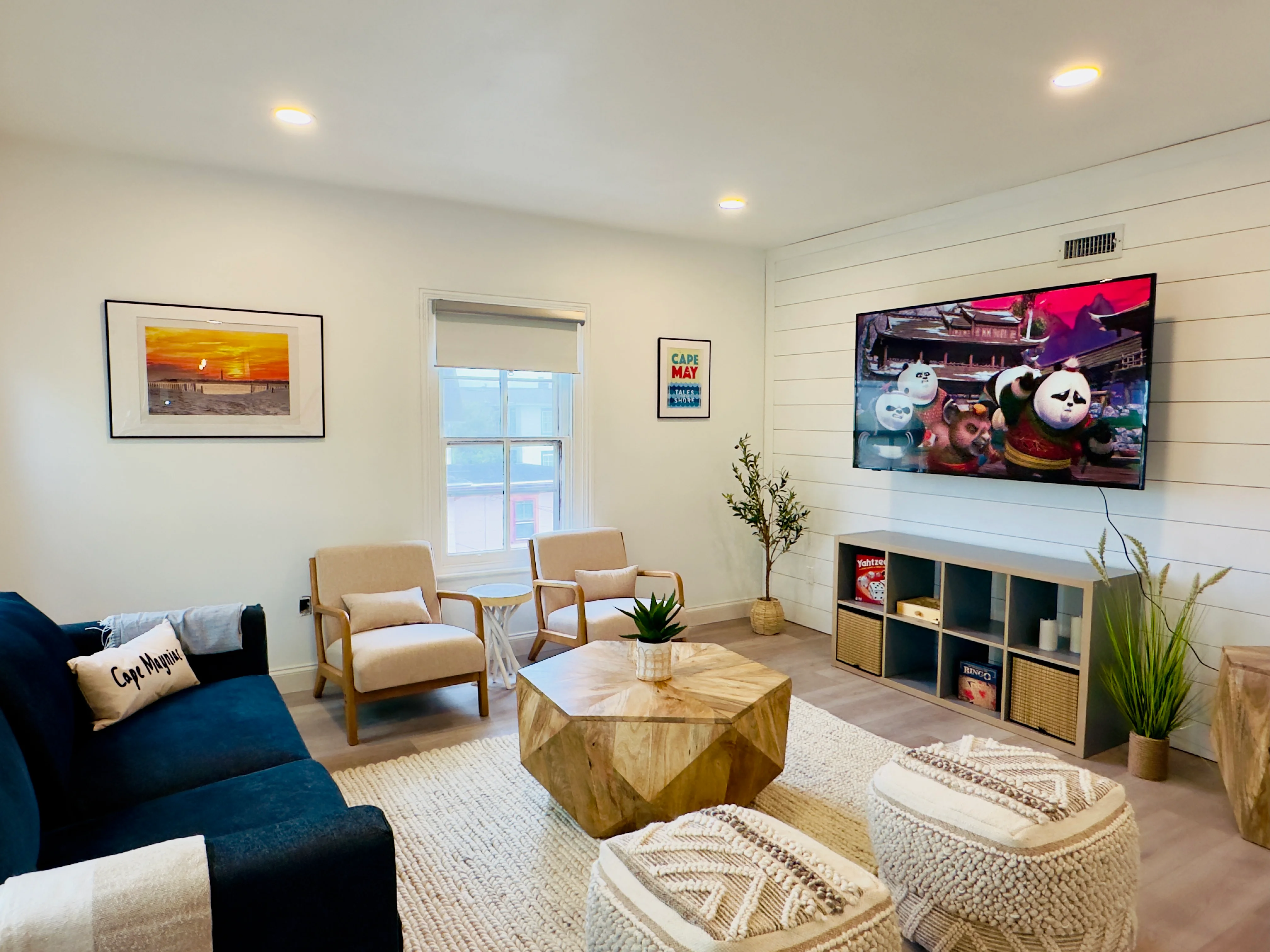
If you are planning a Cape May stay and want ocean views, a walkable location two minutes from Congress Hall, and the full amenity picture without a platform fee added on top, Cape Belvedere is worth a look. The cupola lounge alone justifies checking availability.