
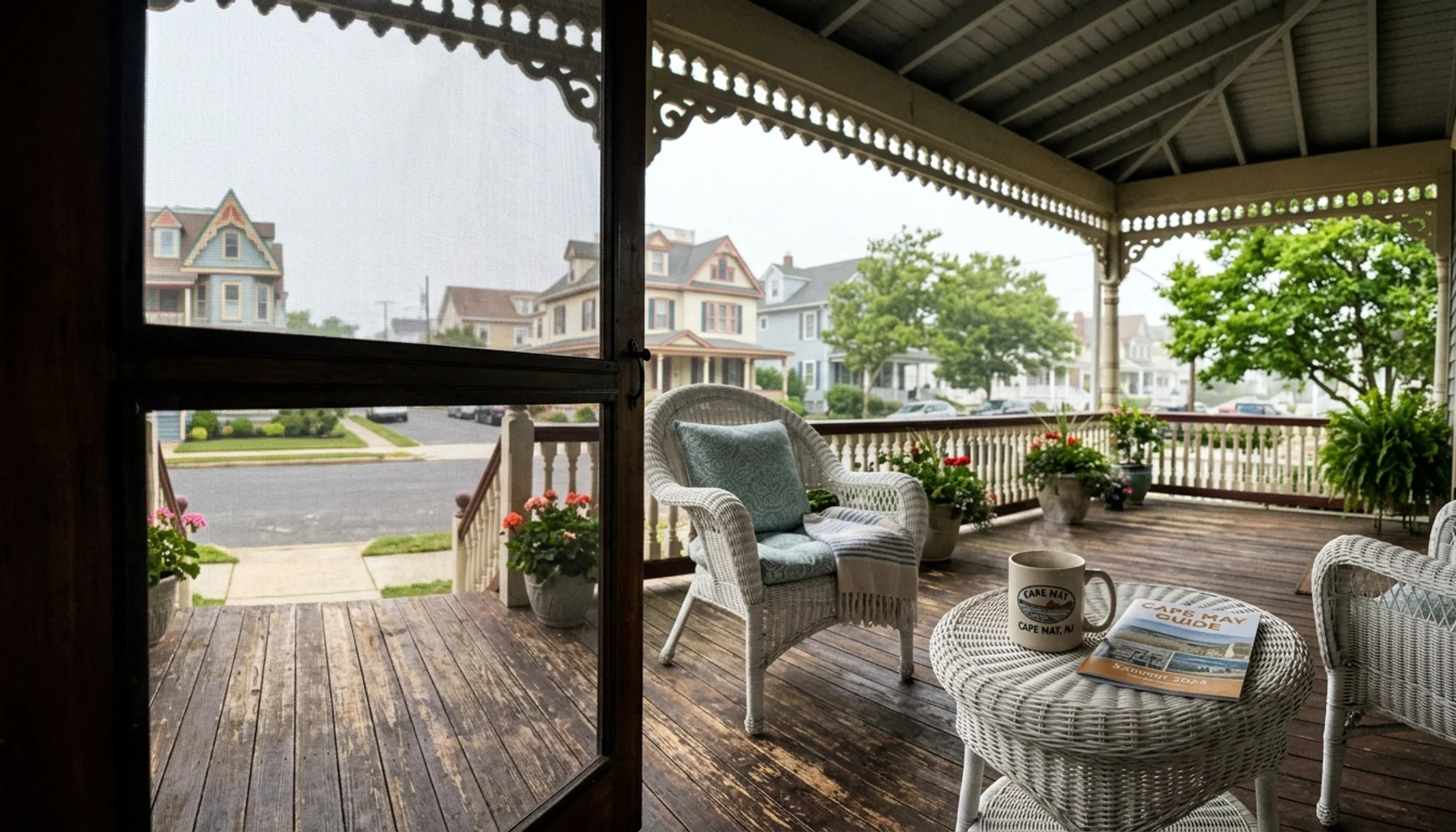
Desatnick Real Estate Cape May is the Cape May City office of DeSatnick Real Estate LLC, a boutique brokerage founded by Todd H. deSatnick that handles residential sales, vacation rentals, and investment properties across Cape May Island. The office sits at 1001 Lafayette Street, at the corner of Lafayette and Madison Avenue, and is one of four DeSatnick locations serving the Cape May County market in 2026.
- Office location: Desatnick Real Estate’s Cape May office is at 1001 Lafayette Street, Cape May, NJ 08204, reachable at 609.884.1300.
- Company footprint: DeSatnick Real Estate operates four offices, in Cape May, Lower Township, North Wildwood, and Philadelphia, with more than 110 agents across residential sales, rentals, and investment properties.
- Founder background: Todd deSatnick began investing in Cape May real estate in 1996, earned his New Jersey salesperson license in 1998, and moved into real estate full time in June 2003.
- Price range in the market: Cape May Island listings span widely, from a 2-bedroom Cape May home around $499,000 to multimillion-dollar Victorians on streets like Elmira and Hughes.
- Tourism context: Cape May County drew 12.11 million visitors and $8.102 billion in visitor spending in 2026, according to Cape May County government tourism data, a scale of demand that shapes both the sales and vacation rental sides of this market.
- What buyers should verify independently: flood zone status, short-term rental zoning, and seasonal price swings before making an offer on any Cape May property.
If you have searched “Desatnick real estate Cape May,” you are probably weighing whether this Cape May office is the right entry point for buying, selling, or renting property on the island. Cape May’s real estate market moves differently than most beach towns: it is anchored by a National Historic Landmark district, a short buying season, and a rental market that swings from empty in January to nearly full in August. DeSatnick Real Estate’s listing profile on homes.com gives a sense of current inventory, but the numbers alone do not tell you which neighborhood fits your goals or when to time an offer.
This guide walks through what the Desatnick Real Estate Cape May office actually offers, how the surrounding neighborhoods differ for buyers, what the local rental math looks like heading into 2026, and the mistakes that trip up first-time Cape May buyers most often. We will also flag where a local vacation rental operator’s perspective, ours included, adds context that a sales-focused brokerage page typically will not.
What Is Desatnick Real Estate’s Cape May Office?
Desatnick Real Estate’s Cape May office is the flagship location of DeSatnick Real Estate LLC, a residential and commercial brokerage headquartered at 1001 Lafayette Street in Cape May City. The office sits at the first traffic light entering Cape May City, at the corner of Lafayette Street and Madison Avenue, according to the Cape May County Chamber of Commerce directory listing.
Founded by Todd H. deSatnick, the brokerage describes itself as a boutique operation built around personalized service and modern marketing technology rather than a high-volume franchise model. As of 2026, the company operates from four offices: Cape May, Lower Township at 2505 Bayshore Road, North Wildwood at 901 New Jersey Avenue, and a Philadelphia office at 4747 South Broad Street. That Philadelphia location signals something specific: a meaningful share of Cape May buyers commute from or maintain a primary residence in the Philadelphia metro, roughly a 90 to 120 minute drive depending on Garden State Parkway traffic.
Beyond home sales, the Cape May office handles vacation rental placement and investment property guidance, which puts it in occasional overlap with direct-booking operators. For visitors comparing a real estate-managed rental against a small, owner-run portfolio, our guide to vacation rentals in Cape May, New Jersey breaks down what differs between the two models.
Who Is Todd deSatnick and What Is the Company’s Background?
Todd deSatnick is the founder of DeSatnick Real Estate and began investing in Cape May property in 1996, seven years before making real estate his full-time career. He earned his New Jersey real estate salesperson license in 1998 while still working in his family’s Cape May-based decorating business, according to his DeSatnick Real Estate professional profile.
The transition to real estate full time happened in June 2003, after a decade spent in the family business. That trajectory, investor first, licensee second, full-time broker third, matters for how the firm positions itself: it markets local roots and long-term familiarity with Cape May’s housing stock rather than a corporate relocation-agent model. Specifically, DeSatnick Real Estate’s growth from a single Cape May office to four locations, including one former competitor acquisition, reflects steady expansion rather than rapid franchise scaling.
One notable expansion came in November 2021, when agent Daniel Senico’s firm, Apex Realty, was sold to DeSatnick Real Estate. Senico continues working as a salesperson with the combined firm. As a result, some older Cape May listings, including a 2-bedroom property at 702 Gordon Terrace North originally priced at $599,000, trace back through that Apex Realty lineage into DeSatnick’s current portfolio. The company now counts more than 110 agents across its four offices, according to its LinkedIn company profile, specializing in residential sales, vacation rentals, buyer representation, investment properties, and second homes.
What Services Does Desatnick Real Estate Offer in Cape May?
Desatnick Real Estate’s Cape May office provides four core services: residential sales, buyer representation, vacation rental placement, and investment property guidance. Additionally, the firm handles second-home purchases for out-of-state buyers, a common scenario given Cape May’s high share of Philadelphia and New York-area owners.
On the sales side, listings range broadly. A single-family home at 551 Elmira Street lists at $3,945,000 with 4 bedrooms and 3 full plus 2 half baths, representing the high end of Cape May’s historic Victorian inventory. At 1105 Pittsburgh Avenue, a 5-bedroom, 4.5-bath single-family home lists at $3,100,000. Further down the price spectrum, an 8-bedroom, 5-bathroom home at 627 Hughes Street lists at $2,750,000, a reminder that bedroom count alone does not predict price in this market; lot size, ocean proximity, and historic designation status matter more.
On the rental side, the office maintains a dedicated rentals contact (rentals@deSatnickRealEstate.com) separate from its sales line, and its listings appear on Cape May Rentals’ Frontier platform, a common booking channel for Cape May’s real estate-managed rental inventory. That is a meaningfully different model from an owner-operated portfolio: real estate-managed rentals typically route through a property management fee structure and a shared reservation calendar across many owned or listed homes, while an independent operator manages a small number of properties directly.
How Does a Real Estate Brokerage’s Rental Arm Differ From Direct-Booking Operators?
A real estate brokerage’s rental arm typically lists dozens or hundreds of owner properties under one umbrella brand, with standardized contracts and centralized booking software. In contrast, direct-booking operators, our own Cape del Mar portfolio included, manage a small, hand-picked set of properties with the owner directly reachable for questions before and during a stay.
Neither model is inherently better for every traveler. If you want maximum inventory choice across every corner of Cape May Island, a large rental agency’s list works well. If you want a stocked kitchen with olive oil and coffee already waiting, organic toiletries, and a host who answers a text in minutes rather than routing through a call center, a smaller direct-booking property tends to deliver a more consistent experience. Our ultimate guide to what to do, where to eat, and where to stay in Cape May covers this tradeoff in more depth.
Which Cape May Neighborhood Should You Buy In: Cape May, West Cape May, or Cape May Point?
Cape May City, West Cape May, and Cape May Point are three distinct municipalities on the same small island, each with a different buyer profile. Cape May City centers on the National Historic Landmark district and Washington Street Mall, commanding the highest prices and the strongest short-term rental demand. West Cape May offers more standard residential lots at lower price points with a quieter, year-round feel. Cape May Point is the smallest and most secluded, popular with retirees and buyers who want distance from summer foot traffic.
Cape May City is where you find the Victorian mansions on streets like Hughes, Columbia, and Congress Place, the ones with wraparound porches and gingerbread trim that make the town’s postcard image. This is also where Desatnick Real Estate’s own high-end listings concentrate, including the Elmira Street and Pittsburgh Avenue properties mentioned above. Buyers here pay a premium for walkability: you can leave the car parked for a week and reach the beach, Washington Street Mall, and a dozen restaurants on foot. That same walkability is a specific reason our own Cape Belvedere condo, a top-floor 2-bedroom two minutes from Congress Hall, performs well as a rental; buyers considering an investment property in this same footprint should expect similar demand.
West Cape May, roughly a 5 to 10 minute drive or a 15 to 20 minute walk from the Cape May City beachfront, trades some walkability for lower entry prices and larger lots. It is a stronger fit for buyers who want a year-round primary residence rather than a seasonal rental property, since summer tourist density is noticeably lower here. Cape May Point, meanwhile, sits closest to Cape May Point State Park and the lighthouse, appealing to retirees and nature-focused buyers who prioritize quiet over walkable nightlife.
| Area | Best For | Distance to Beach | General Price Character |
|---|---|---|---|
| Cape May City (historic district) | Rental investors, walkability buyers | Walking distance, often under 10 minutes | Highest per-square-foot pricing on the island |
| West Cape May | Year-round residents, larger lots | 5 to 10 minute drive | Moderate, generally lower entry point than Cape May City |
| Cape May Point | Retirees, quiet-seekers, nature access | Walking distance to Point beaches | Varies widely by lot size and proximity to the state park |
DeSatnick Real Estate markets its Cape May office as the leading resource specifically for West Cape May, Cape May City, and Cape May Point listings, per its own office description. That geographic focus lines up with how most buyers actually shop: side by side across these three areas before narrowing down.
What Are Cape May Home Prices Like Across Neighborhoods and Property Types?
Cape May Island home prices in 2026 span a wide range, from roughly $499,000 for a modest 2-bedroom, 2-bathroom home to well over $3.9 million for a large historic Victorian in the core of Cape May City. Specifically, DeSatnick’s own listings illustrate this spread: a 2-bed, 2-bath property at 500 Winslow Avenue lists at $499,000, while 551 Elmira Street commands $3,945,000 for its 4-bedroom, 3-full-bath-plus-2-half-bath configuration.
As a general pattern, price per square foot climbs the closer a property sits to the beach and the historic core, and climbs further still if the home carries historic Victorian architectural detail, since that character is difficult to replicate in new construction. A duplex in North Wildwood or a starter cape in West Cape May will price meaningfully lower than an equivalent square footage Victorian two blocks from Washington Street Mall.
For context on what drives that premium, the Philadelphia Inquirer reported that the Emlen Physick Estate, one of Cape May’s signature Victorian landmarks, was built in 1879, part of the same architectural wave that shaped the residential streets buyers pay a premium for today. Buyers should also know that flood zone designation affects both price and insurance cost significantly on this barrier island; a 2026 housing market study surveying 680 licensed Florida Realtors found that sea-level rise increasingly factors into coastal property valuations, a dynamic that applies just as directly to New Jersey’s barrier island communities as it does further south.
When Is the Best Time of Year to Buy in Cape May?
The best time to buy real estate in Cape May is typically late fall through early spring, from November through March, when inventory sits longer and sellers face less competition for their attention. In contrast, listings that hit the market in May and June often generate faster offers because buyers want to close before the summer rental season begins.
Cape May’s short-term rental market is dramatically seasonal. According to AirROI’s 2026 Cape May, NJ market data, average annual occupancy sits around 42%, ranging from near 0% in January to about 92% in August. If you are buying with rental income in mind, that seasonality means your carrying costs and your rental revenue are both concentrated in a narrow window, which affects both financing decisions and how quickly you will want to close.
As a result, buyers who close in winter often get a head start furnishing and listing a property before the following summer season, while buyers who close in June miss most of that year’s peak rental months entirely. Additionally, winter buyers face less competition from vacation-focused shoppers who are touring properties during a beach visit rather than making a considered purchase decision. If your intent is a personal home rather than an investment, the calendar matters less, but sellers still tend to price more conservatively in the off-season.
What Mistakes Do First-Time Cape May Buyers Make?
First-time Cape May buyers most commonly underestimate flood zone insurance costs, misjudge short-term rental zoning restrictions, and overpay based on peak-season showings without checking off-season occupancy realities. These three issues account for the majority of buyer regret stories on the island, according to patterns visible across Cape May’s real estate forums and local agent commentary.
First, flood zone status is not always obvious from a listing photo. Cape May City sits largely within FEMA-designated flood zones given its barrier island position, and insurance premiums vary substantially by elevation certificate and flood zone letter. Get a flood zone determination and an insurance quote before you make an offer, not after.
Second, short-term rental rules differ by municipality within Cape May County. New Jersey state law requires short-term rental hosts to collect and remit state and local occupancy taxes, currently a 6.625% state sales tax plus a 5% state occupancy tax, unless the booking platform collects on the host’s behalf. Cape May County municipalities additionally require local STR permits and enforce zoning ordinances that can restrict rental density in certain residential blocks. Confirm zoning and permit requirements for the specific address, not just the general area, before assuming you can operate a short-term rental.
What Are the Biggest Financial Traps to Avoid?
Beyond flood insurance and zoning, buyers often overlook that summer showings can create a distorted sense of demand. A property that looks packed with rental potential in July may sit largely vacant from December through March. Ask any seller or agent for actual trailing-twelve-month occupancy data rather than relying on peak-season anecdotes.
Also budget realistically for noise and nuisance compliance. Cape May County enforces occupancy limits and amplified sound restrictions on short-term rentals, with fines or permit revocation possible for repeated violations. If you plan to rent to larger groups, verify the property’s permitted occupancy matches your intended use before you buy, not after your first booking complaint.
How Do Cape May Vacation Rentals Perform as an Investment in 2026?
Cape May vacation rentals in 2026 generate an average of roughly $52,884 in annual revenue per host, with an average nightly rate near $556 and a RevPAR of $224, according to AirROI’s Cape May, NJ market data. Those figures reflect a market defined by short, intense peak-season demand rather than steady year-round bookings.
Cape May County as a whole logged $8.102 billion in visitor spending in 2026, a 4.6% increase in visitor volume over 2023, according to Cape May County government tourism reporting, and 2026 pushed that figure to a record $8.44 billion, the highest total of any county in New Jersey. Overnight visitors spend an average of $365 per person per day, and the county’s 84% visitor return rate, the highest in the state, suggests the demand base is durable rather than a short-term spike.
For buyers weighing Cape May against Cape Coral, Florida, where our own Cape Pelican villa operates, the comparison is informative. Cape Coral properties post an average annual revenue near $28,631 at a 37.0% occupancy rate, per AirROI’s June 2026 to May 2026 dataset, considerably lower than Cape May’s per-property revenue but spread more evenly across a longer warm-weather season. Cape May’s higher per-night rate comes with a shorter runway; Cape Coral’s lower rate comes with a wider one. Neither market is objectively better, but the cash flow pattern differs enough that it should shape your financing plan.
Vacation rental managers in this space typically charge 20 to 25% of gross rental revenue for full-service management, a cost worth modeling against your expected occupancy before assuming a property will cash flow as advertised. Best-practice portfolios in seasonal coastal markets like Cape May aim to keep off-season occupancy at 30 to 40% just to cover fixed costs, since discounting too aggressively in January and February rarely moves the needle on demand.
How Should You Choose Between an Agent Specializing in Sales vs. Rentals vs. Investment Properties?
Choosing the right agent contact within a brokerage like Desatnick Real Estate depends on whether your primary goal is a personal residence, a managed rental, or a pure investment purchase. A sales-focused agent prioritizes comparable sales data and negotiation on your behalf; a rental-focused contact prioritizes booking calendar performance and guest turnover logistics; an investment-focused contact should be modeling cash-on-cash return and seasonality risk before you sign anything.
At DeSatnick’s Cape May office, agent Mary Hinchcliffe works from the Cape May location and can be reached directly, a useful starting point for buyers who want a single point of contact rather than navigating a general office line. When you call any Cape May brokerage, ask directly which category of buyer the agent specializes in serving day to day. An agent who mostly closes primary-residence sales may not have current, granular data on short-term rental occupancy patterns by block, and an agent who mostly handles rental placement may not be your best negotiator on a complex historic-home purchase with title issues.
If your interest leans toward the vacation rental side specifically, whether as an owner exploring management options or simply comparing what is available to book, our co-hosting services page outlines how a smaller, hands-on management approach differs from a large brokerage’s rental division.
What Should You Know About Cape May’s Historic District Before Buying There?
Cape May’s historic district was designated a National Historic Landmark on May 11, 1976, one of the most concentrated collections of late-Victorian architecture in the United States. That designation carries real implications for owners: exterior renovations within the district often require review to preserve architectural character, which protects long-term property values but can slow down cosmetic changes a new owner might want to make quickly.
Specifically, expect restrictions or guidance around exterior paint colors, window replacement, roofing materials, and any additions visible from the street. This is part of why Cape May’s Victorian streetscape looks as intact as it does nearly 50 years after landmark designation, and why homes in the core historic blocks tend to hold value even through broader market softness. Buyers drawn to a Carpenter Gothic cottage or a Second Empire mansion along Congress Place or Hughes Street should budget extra time and a specialized contractor for any exterior work, not assume it will move at the pace of a standard suburban renovation.
For a broader sense of how Cape May’s neighborhoods break down by feel rather than just price, our neighborhood-by-neighborhood guide to where to stay in Cape May covers the same geographic ground from a visitor’s perspective, which is often useful context for buyers deciding where their future guests, or their own family, will actually want to spend time.
Frequently Asked Questions
Where is Desatnick Real Estate’s Cape May office located?
Desatnick Real Estate’s Cape May office is at 1001 Lafayette Street, Cape May, NJ 08204, at the corner of Lafayette Street and Madison Avenue, the first traffic light entering Cape May City. The office phone number is 609.884.1300.
How many offices does DeSatnick Real Estate operate?
DeSatnick Real Estate operates four offices as of 2026: Cape May at 1001 Lafayette Street, Lower Township at 2505 Bayshore Road, North Wildwood at 901 New Jersey Avenue, and Philadelphia at 4747 South Broad Street. The firm employs more than 110 agents across these locations.
Who founded DeSatnick Real Estate?
Todd H. deSatnick founded DeSatnick Real Estate after investing in Cape May property starting in 1996 and earning his New Jersey salesperson license in 1998. He transitioned to real estate full time in June 2003 after working ten years in his family’s Cape May decorating business.
What is the price range for homes listed with Desatnick Real Estate in Cape May?
Listings vary widely, from around $499,000 for a modest 2-bedroom home in Cape May to over $3.9 million for large historic Victorian properties like the 4-bedroom home on Elmira Street. Price depends heavily on proximity to the beach, historic district location, and architectural character.
Does Desatnick Real Estate handle vacation rentals as well as home sales?
Yes, the Cape May office manages both residential sales and vacation rental placement, along with buyer representation and investment property guidance. Its rental listings appear on Cape May Rentals’ Frontier platform, and the firm maintains a dedicated rentals contact email separate from its sales line.
Is it better to buy in Cape May City, West Cape May, or Cape May Point?
It depends on your goal. Cape May City suits buyers prioritizing walkability and rental income potential given its historic district and beach proximity; West Cape May offers larger lots and lower entry prices for year-round residents; Cape May Point suits retirees and buyers who want quiet, nature-focused living near the state park.
What should first-time Cape May buyers check before making an offer?
Confirm flood zone designation and get an insurance quote, verify short-term rental zoning and permit requirements for the specific address, and ask for trailing-twelve-month occupancy data rather than relying on peak-summer showings. New Jersey also requires STR hosts to remit a 6.625% state sales tax plus a 5% occupancy tax unless a booking platform collects it.
How does Cape May’s rental market compare to Cape Coral, Florida?
Cape May vacation rentals average around $556 per night with roughly $52,884 in annual host revenue, per AirROI’s 2026 data, concentrated in a short, intense summer season. Cape Coral rentals average lower nightly rates near $299 but spread more evenly across a longer warm-weather calendar, generating around $28,631 in annual revenue at a lower occupancy rate.
The Bottom Line on Buying Through Desatnick Real Estate in Cape May
Desatnick Real Estate’s Cape May office gives buyers a single, long-established local contact point covering sales, rentals, and investment property guidance across Cape May City, West Cape May, and Cape May Point, backed by more than 110 agents and a founder with three decades of hands-on experience in this exact market. The real work still falls to you: verifying flood zone status, confirming short-term rental zoning before you assume income potential, and timing your purchase around Cape May’s sharply seasonal demand curve rather than a single summer showing.
Cape May in 2026 remains one of the strongest tourism markets in New Jersey, with a visitor return rate near 84% and record county-wide spending, which is exactly why real estate here holds value even as the rental calendar swings from empty January weekends to nearly full August ones. Whether you end up buying through Desatnick Real Estate’s Cape May office or another local brokerage, ground your decision in occupancy data and zoning facts rather than the mood of a single summer weekend visit.
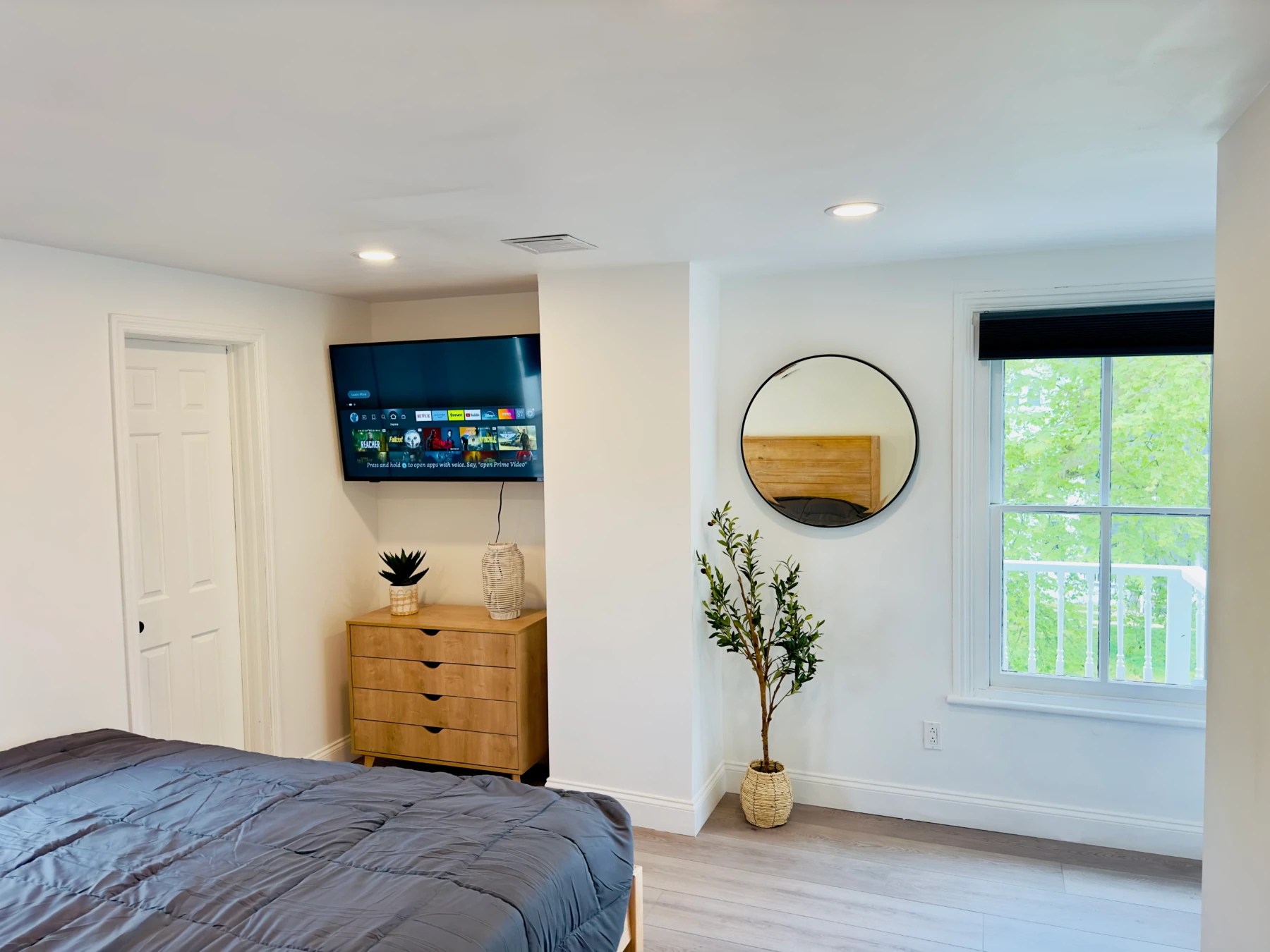
If you are simply visiting Cape May while you weigh a future purchase, Cape Belvedere puts you two minutes from Congress Hall and a block from the beach, a genuinely useful vantage point for scouting the historic district on foot before you commit to a neighborhood. Check availability and book directly here.