
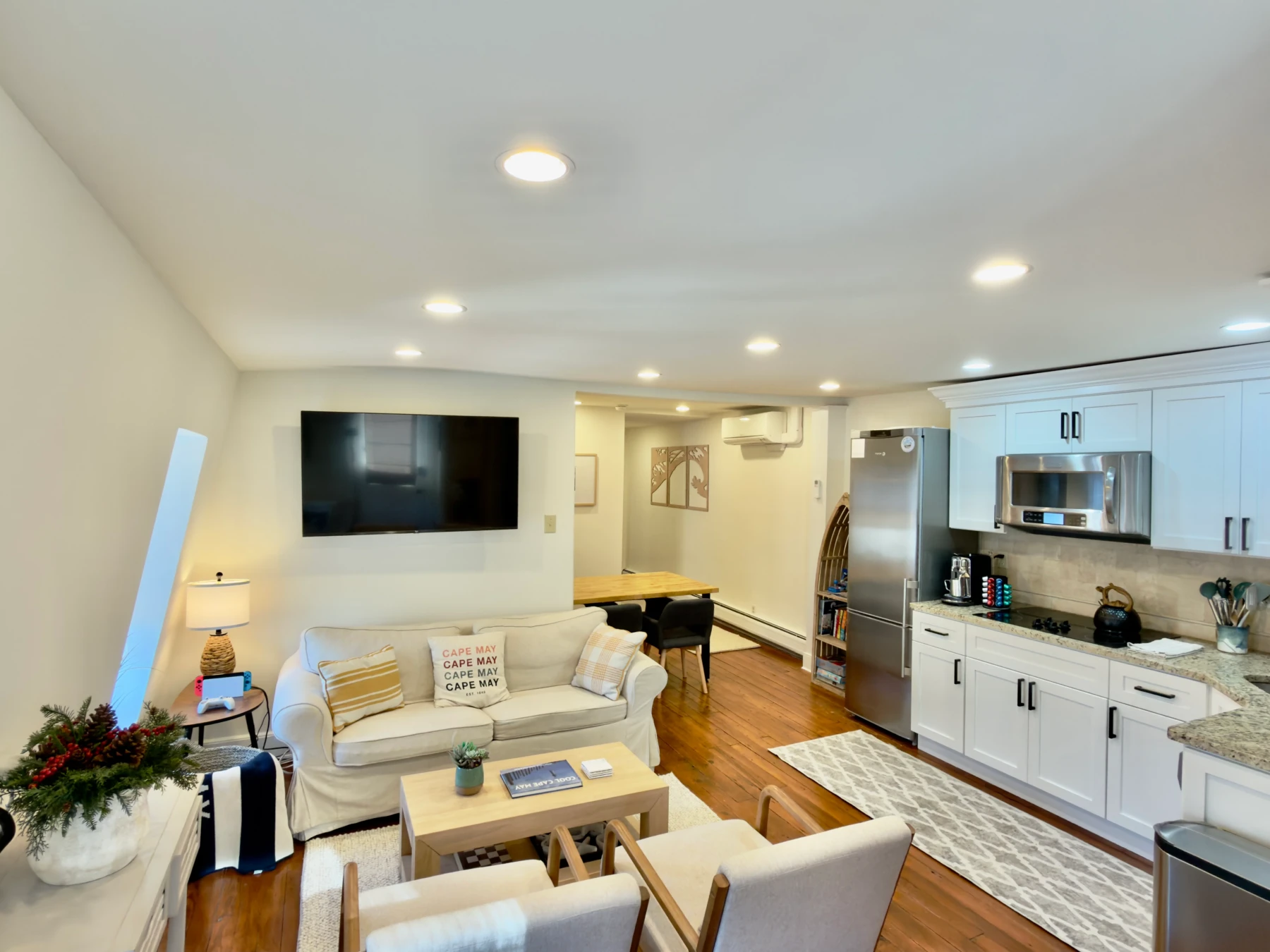
Rentals in Cape May refer to short-term vacation properties, condos, and historic homes available for weekly or nightly stays in Cape May, New Jersey, America’s oldest seaside resort and a federally designated National Historic Landmark since May 11, 1976. The market ranges from modest 1-bedroom condos priced around $1,000 per week to sprawling 7-bedroom Victorian estates at $19,000 per week, giving travelers an unusually wide spectrum of options. But the number most visitors focus on, the nightly or weekly rate, is rarely the full story.
- Cape May vacation rentals span from roughly $1,000 to $19,000 per week depending on size, location, and season, with peak summer weeks selling out months in advance.
- Cape May County welcomed 12.11 million visitors in 2026, generating $8.1 billion in direct spending, according to the Cape May County Tourism Economic Impact Presentation 2026. Demand for rentals is intense.
- Hidden costs including cleaning fees, security deposits, occupancy taxes, and pet fees are rarely disclosed upfront by listing-directory competitors. Budget 15 to 25% above the advertised rate.
- Off-street parking is genuinely scarce in the Historic District. Properties advertising a dedicated parking spot are offering a meaningful amenity, not filler.
- The Historic District, Poverty Beach, the Marina District, and West Cape May each offer a different renter experience. Choosing wrong affects walkability, noise, and nightly cost.
- Cape del Mar properties in Cape May include Cape Belvedere, Cape Wave, Cape Oar, Cape Whale, and Cape Surf, all in the Historic District and all bookable directly without OTA service fees.
At Cape del Mar, we manage a small portfolio of renovated, eco-friendly rentals spread across Cape May’s Historic District. Every property is within walking distance of the Washington Street Mall, the beach, and a dozen restaurants. That walkable location shapes everything we tell guests before they arrive, and it shapes what we cover below.
The two biggest mistakes renters make in Cape May: choosing a property based on the weekly rate alone, and booking too late for summer. Everything else, the neighborhood, the amenities, the parking situation, the hidden fees, tends to be figure-out-able. But those two errors cause real frustration. This guide covers both, plus the things the listing-directory sites never bother to explain.

What Types of Rentals Does Cape May Actually Offer?
Cape May vacation rentals refer to a broad category of short-term properties ranging from renovated 1-bedroom condos inside 19th-century Victorian buildings to multi-bedroom single-family homes with private pools and boat slips. The city’s National Historic Landmark designation means a significant share of the rental stock sits inside structures dating to the 1800s, which gives the market a distinct character compared to typical Jersey Shore beach towns.
Condos and apartments represent the most accessible entry point. Properties like Cape Whale, a 1-bedroom condo on the first floor of the historic Baronet Mansion on Beach Avenue, put you directly across the street from the ocean at a fraction of the weekly cost of a full Victorian house. For couples or a couple traveling with a young child, this category delivers location and comfort without requiring a large-group budget.
Single-family Victorian homes are what most people picture when they search for Cape May rentals. Properties like the 7-bedroom Victorian on Corgie Street sleeping 18 guests represent the upper end of this category, at prices ranging from $1,000 to $13,000 depending on week and configuration. The appeal is genuine: wraparound porches, period millwork, and the architectural density that makes a stroll through the Historic District feel unlike anywhere else on the East Coast.
Beachfront and marina properties form a premium subset. The Marina District offers condos with harbor views and, in some cases, boat slips. A 3-bedroom marina condo on Yacht Avenue, for example, runs $4,100 to $4,700 per week. These properties suit boaters and visitors who prioritize water access over walkability to downtown. The trade-off is that the Marina District sits further from the Washington Street Mall, which means most errands and dining require a short drive or a longer walk.
For a broader overview of how to evaluate your options before committing, the neighborhood-by-neighborhood guide to where to stay in Cape May breaks down each area by vibe, walkability, and best-fit traveler type.
What Are the Real Costs of a Cape May Vacation Rental?
The real cost of rentals in Cape May is typically 15 to 25% higher than the advertised nightly or weekly rate, once you account for cleaning fees, security deposits, state and local occupancy taxes, and, where applicable, pet fees. This is the single most underreported fact in the Cape May rental market. Competitor listing platforms publish the weekly rate prominently and disclose the full fee breakdown only at checkout, if at all.
Here is what you should budget for beyond the base rate:
- Cleaning fees: Common across all price points. On a $2,000 per week rental, a $200 to $350 cleaning fee is standard.
- Security deposit: Most private-owner rentals require a refundable deposit of $300 to $1,000, held against damages. Some OTA platforms convert this to a non-refundable damage waiver fee instead.
- New Jersey state sales tax on lodging: New Jersey applies sales tax to short-term rentals. Cape May County also levies a hotel occupancy tax; in 2022 that tax generated $19.4 million from lodging stays in the county. The combined rate varies but adds meaningfully to the total bill.
- OTA service fees: If you book through Airbnb or VRBO rather than directly with the property owner, expect a guest service fee of roughly 14 to 20% on top of the nightly rate. On a $3,000 per week rental, that fee alone can reach $420 to $600.
- Pet fees: Genuinely pet-friendly Cape May rentals are rare. When a property does accept dogs, expect a pet fee of $75 to $200 per stay, sometimes higher for larger dogs or longer visits. A few properties also charge a separate pet deposit.
Booking directly with the property owner, or with a direct-booking brand like Cape del Mar, eliminates the OTA service fee entirely. At Cape del Mar, direct bookings on Cape May properties such as Cape Surf and Cape Oar skip the platform markup while delivering the same amenities, organic toiletries, air purifiers, water filters, and stocked kitchens, you would find listed on OTA platforms.
| Fee Type | Typical Range | Notes |
|---|---|---|
| Cleaning fee | $150 to $400 | Varies by property size |
| Security deposit | $300 to $1,000 | Refundable if no damage |
| OTA guest service fee | 14 to 20% of base rate | Eliminated with direct booking |
| NJ state and local occupancy taxes | Several percentage points | Applied to most short-term stays |
| Pet fee | $75 to $200 per stay | Where dogs are accepted |
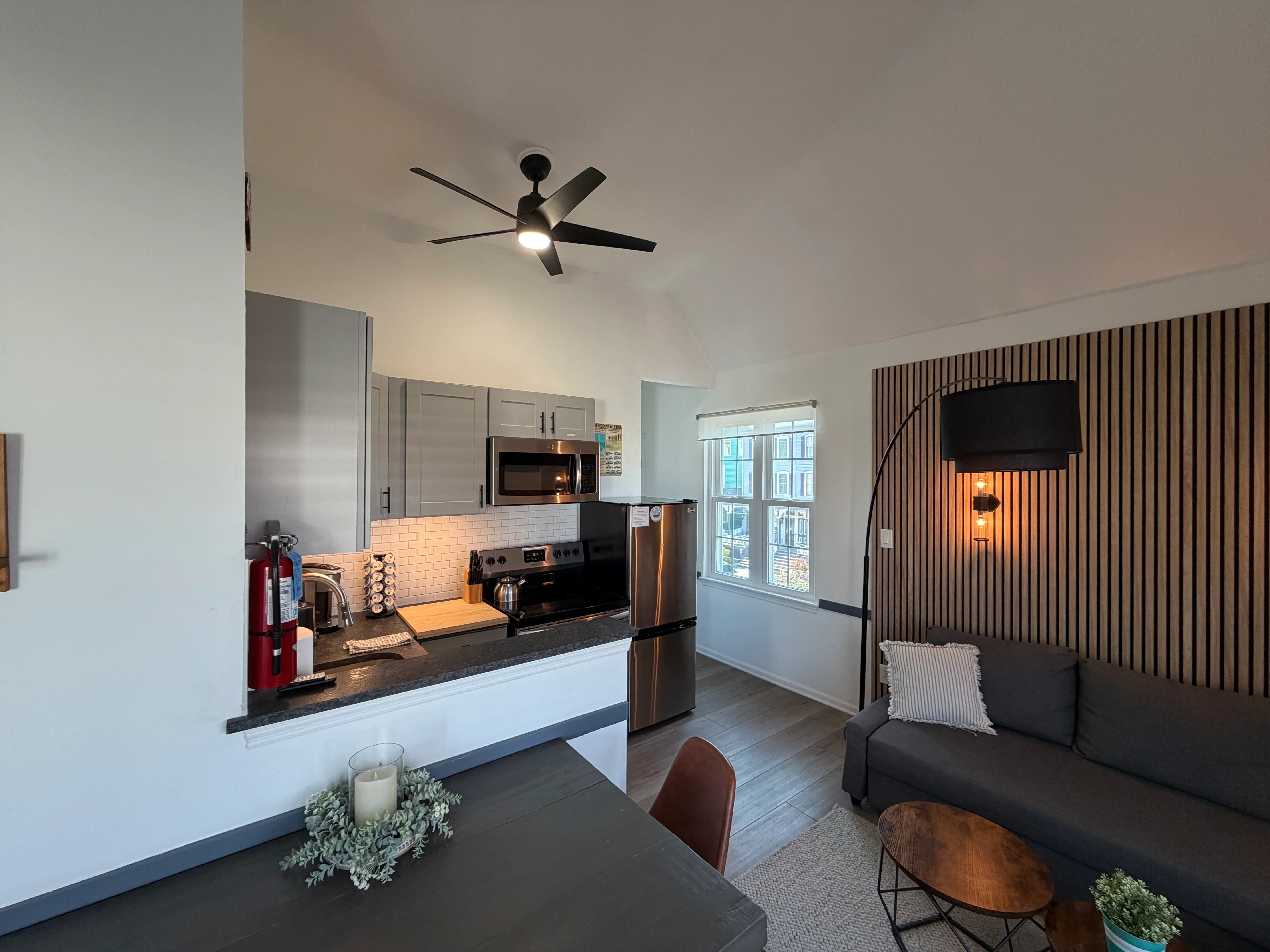
Which Cape May Neighborhood Should You Rent In?
The neighborhood you choose for Cape May rentals shapes your entire trip more than any single amenity. Four areas matter most for renters: the Historic District, Poverty Beach, the Marina District, and West Cape May. Each delivers a meaningfully different experience in terms of walkability, noise level, parking, and nightly cost.
The Historic District
The Historic District is the core of Cape May, covering most of the area bounded by the beachfront, Washington Street Mall, and the Victorian residential streets between them. For renters who want to park the car once and walk everywhere, restaurants, the beach, shops, the Cape May Lighthouse, and the whale watching departure point at Miss Chris Marina, this is the right neighborhood. The Washington Street Mall sits at the center of it all.
The trade-off is density. The Historic District’s streets fill with foot traffic and slow car traffic on summer weekends. Noise from nearby restaurants and late-evening crowds can carry, depending on which block you land on. Properties on Beach Avenue or one block back tend to be quieter at night than those right off the Mall. Cape del Mar’s Cape May properties, including Cape Belvedere, Cape Wave, and Cape Oar, all sit in the Historic District. Cape Belvedere is on the top floor of the Belvedere building, two minutes from Congress Hall and one block from the ocean. Cape Wave and Cape Oar are both one block from Washington Street Mall.
Poverty Beach
Poverty Beach, despite its name, is Cape May’s most prestigious and tranquil rental neighborhood. It occupies the southeastern tip of the city, beyond the main tourist corridor, and offers a noticeably quieter experience than the Historic District. Weekly rates here skew higher. A 7-bedroom estate on New York Avenue in this neighborhood runs $7,500 to $19,000 per week. The beach itself sees a fraction of the crowd that Poverty Beach’s name makes you expect, which is the point for renters who can afford the premium.
The Marina District
The Marina District suits boaters and travelers who want harbor views over ocean-front proximity. A 3-bedroom, 2-bath condo with a boat slip on Yacht Avenue runs roughly $4,100 to $4,700 per week. You are a short drive or longer walk from the Washington Street Mall, but the tradeoff is direct marina access and notably less pedestrian congestion. Parking is generally easier here than in the Historic District.
West Cape May
West Cape May sits just across the bridge from Cape May proper. Rents here tend to be lower, and the atmosphere is residential rather than resort-focused. Renters who want a quieter base and don’t mind a short drive or bike ride to the beach and restaurants find good value here. The West Cape May Christmas Parade route passes through this neighborhood seasonally, which is a reason some families specifically seek it out in December.
What Are the Parking Realities in Cape May?
Parking in Cape May’s Historic District is genuinely difficult from late June through Labor Day, and that difficulty is rarely disclosed in rental listings. When a Cape May vacation rental advertises off-street parking or a dedicated parking spot, that is a substantive amenity worth factoring into your decision, not marketing boilerplate.
The city operates metered street parking throughout the Historic District, and meters run for extended hours during peak season. Free on-street parking is available on residential blocks further from the beach, but finding a spot within easy walking distance of a beach-adjacent rental on a summer Saturday morning is unreliable at best. Several public parking lots serve the downtown area, but they fill quickly on peak weekends.
Practical advice: if you are renting in the Historic District in July or August, choose a property with off-street parking even if it costs slightly more per week. Park once on arrival and leave the car for the duration. Cape May’s walkability makes this entirely practical. The Washington Street Mall, most restaurants, the beach, and local shops are all reachable on foot or by rented bicycle.
If your rental does not include off-street parking, arrive on a weekday afternoon rather than a Friday evening. Departure congestion on Saturday and Sunday mornings frees up street parking briefly but the gaps fill fast.
All Cape del Mar properties in Cape May include at least one dedicated off-street parking space, which is a deliberate part of the portfolio’s positioning. Cape Belvedere includes dedicated off-street parking plus additional street parking. Cape Oar includes one dedicated off-street spot. If you want to understand what arriving and settling in looks like across different Cape May rental options, the complete Cape May travel guide covers logistics alongside dining and activity recommendations.
When Should You Book a Cape May Rental?
Booking timing for Cape May rentals follows a clear pattern: peak summer weeks, specifically the July 4th week, the two weeks surrounding it, and the week before and after Labor Day, routinely sell out 3 to 5 months in advance for desirable properties. According to the Cape May County Tourism Economic Impact Presentation 2026, Cape May County’s year-round population of approximately 94,610 swells to an estimated 763,940 in summer, creating extreme seasonal demand for rental units.
For summer rentals, the practical booking window is this:
- Prime July and early August weeks: Book by March or April at the latest. Popular properties in the Historic District are often spoken for by February.
- Memorial Day and Labor Day weekends: Book 2 to 3 months in advance. These weekends carry premium pricing and thin availability.
- Late August and early September: More flexible. Booking 6 to 8 weeks out is often feasible, and prices begin to soften after Labor Day.
- Shoulder season (October, November, April, May): 2 to 4 weeks of lead time is usually sufficient. Fall is an especially good time to visit Cape May without summer’s crowds or pricing. The Cape May Jazz Festival, which historically runs in November and April, draws visitors who book specifically around those dates.
One underused strategy: monitor for last-minute cancellations during peak weeks. Quality properties sometimes open up within 10 to 14 days of the check-in date. If your travel dates are flexible and your group can move quickly, this approach occasionally yields good availability on properties that were otherwise sold out for months.
About 67% of Cape May County visitors have been returning for more than 10 years, according to Cape May County Chamber of Commerce data. That repeat-guest loyalty means many renters rebook the same property for the following summer before they even check out. If you find a rental you love, ask about rebooking directly at checkout.
Which Cape May Rentals Are Genuinely Pet-Friendly?
Pet-friendly rentals in Cape May are available but far less common than the general listings landscape implies. Many properties technically list as pet-accepting while burying restrictions that effectively limit what that means: no pets over 25 pounds, no pets on furniture, no pets left unattended, additional pet deposits on top of pet fees. Genuinely welcoming pet-friendly accommodation is a specific subset of the market.
Among Cape del Mar’s Cape May properties, Cape Whale explicitly welcomes well-behaved pets. The property sits in the historic Baronet Mansion on Beach Avenue, directly across the street from the ocean, with a shared porch and coin-operated laundry available from April through October. The one courtesy guideline is that pets stay off the furniture including the bed. Cape Surf, the second Baronet Mansion property, is also pet-friendly under similar guidelines.
For dog owners visiting Cape May, beach access rules matter as much as the rental’s pet policy. City beaches generally prohibit dogs during peak season hours. Higbee Beach, a Wildlife Management Area at the northern tip of Cape May, allows dogs on a seasonal basis governed by NJ Department of Fish and Wildlife regulations. The complete pet-friendly Cape May guide covers beach rules, dog-welcoming restaurants, and what to expect from the city’s leash policies in detail.
If you need more space and a fenced yard for a larger dog, the right answer is not a Cape May property at all. Cape del Mar’s Cape Pelican in Cape Coral, Florida accommodates pets and features a fenced lanai with a private heated saltwater pool, 4 bedrooms for up to 10 guests, and a games room. It is the most family- and pet-suitable property in the portfolio for travelers prioritizing outdoor space over walkable city access.

What Do Cape May Rental Amenities Actually Look Like?
Cape May vacation rental amenities vary widely by property age, price point, and operator. The market ranges from minimally equipped cottages that ask renters to bring their own beach gear and linens to fully equipped properties where you arrive with only a suitcase. Knowing what to verify before booking saves significant frustration on arrival day.
The Cape del Mar portfolio is built around a specific amenity standard that distinguishes direct-booking properties from typical listing-platform rentals. Across all Cape May properties, this includes organic shampoo, conditioner, and body wash, air purifiers and water filters in every unit, eco-friendly cleaning products, linens and towels provided, high-end coffee makers with coffee supplied, and kitchens stocked with cooking essentials including olive oil, salt, and pepper. You will not find plastic-wrapped soap bars or an empty refrigerator at check-in.
Here is how Cape del Mar’s Cape May properties compare on the amenities that matter most for trip planning:
| Property | Bedrooms/Baths | Max Guests | Beach Tags | Parking | Pet Friendly | Key Differentiator |
|---|---|---|---|---|---|---|
| Cape Belvedere | 2 bed / 2 bath | 8 | Yes (seasonal) | Off-street + street | No | Top-floor Atlantic views, cupola lounge, steps from Congress Hall |
| Cape Wave | 2 bed / 2 bath | 4 | Yes | Yes | No | Rooftop deck, Victorian 1860 building, one block from the Mall |
| Cape Oar | 1 bed / 1 bath | 4 | Yes (seasonal) | Off-street | No | Private patio, wheelchair accessible, 800 sq ft, 1860 Victorian |
| Cape Whale | 1 bed / 1 bath | 2 | Yes | 1 spot | Yes | Across the street from the beach, Baronet Mansion, king bed |
| Cape Surf | 1 bed / 1 bath | 2 | Yes (2 included) | 1 spot | Yes | Guest favorite, beach chairs and umbrella included, Baronet Mansion |
Cape Belvedere stands out for couples or small groups who prioritize views and position. The top-floor cupola with panoramic views and lounge chairs is genuinely unusual for Cape May rentals at this price point, and Congress Hall’s restaurants, shops, and summer programming are two minutes on foot. Check availability at Cape Belvedere if ocean views from a private perch are the priority for your trip.
Cape Wave suits families or two-couple groups who want the Victorian character of Cape May with two proper bedrooms and two bathrooms in approximately 700 square feet. The rooftop deck is a genuine rarity in the Historic District. The building dates to 1860 and the 5-minute walk to the beach and one-block distance from Washington Street Mall make this property about as central as Cape May gets.
Is a Cape May Rental Better Than a Hotel?
A Cape May vacation rental is generally a better choice than a hotel for stays of 3 nights or longer, for groups of 3 or more travelers, and for anyone who values a stocked kitchen, private outdoor space, or the character of staying inside a historic building rather than a purpose-built hospitality property. Hotels make more sense for 1 to 2 night stays where you will eat every meal out and want daily housekeeping without coordination.
Cape May’s hotel stock is genuinely strong. Congress Hall, the Victorian landmark at 200 Congress Place, is an institution. Peter Shields Inn at 1301 Beach Avenue offers a Zagat-rated restaurant and a refined inn experience. The Merion Inn at 106 Decatur Street, operating in an 1885 building, combines nightly dining and live music with lodging. These are real options worth considering for short trips or anniversary weekends where a full-service experience matters.
But for a family of 4 or 6 needing two bedrooms and a kitchen, or a couple staying 5 to 7 nights who wants to cook breakfast on the porch and not pay for restaurant meals twice a day, a well-equipped rental wins on practicality and value. A 2-bedroom Cape May rental at $2,500 to $4,000 per week works out to $350 to $570 per night, roughly comparable to two hotel rooms at a quality Cape May property, but with a full kitchen, washer/dryer, and private outdoor space included.
According to the Cape May County Tourism Economic Impact Presentation 2026, overnight visitors to Cape May County spend on average $365 per person per day. A rental with a functioning kitchen meaningfully reduces the food and beverage portion of that daily spend, which matters across a week-long trip.
Frequently Asked Questions About Cape May Rentals
How far in advance should I book a Cape May rental for summer?
Peak summer weeks in Cape May, particularly the July 4th week and the weeks immediately surrounding Labor Day, typically sell out 3 to 5 months in advance for well-located properties. For July, booking by March or early April is the safest window. For late August and early September, 6 to 8 weeks of lead time is often workable. Shoulder season rentals in October, November, and May are generally available within 2 to 4 weeks of arrival.
Are Cape del Mar properties really within walking distance of the beach and Washington Street Mall?
Yes. Cape Whale and Cape Surf are in the Baronet Mansion on Beach Avenue, directly across the street from the ocean. Cape Oar and Cape Wave are one block from the Washington Street Mall. Cape Belvedere is two minutes from Congress Hall and one block from the water. All five Cape May properties operate without a car for the duration of a typical stay.
What does it actually mean to book directly instead of using Airbnb or VRBO?
Booking directly with the property owner or a direct-booking platform like Cape del Mar bypasses the OTA guest service fee, which typically adds 14 to 20% on top of the nightly rate. On a $3,000-per-week rental, that fee can reach $420 to $600. Direct booking also puts you in immediate contact with the host, and often surfaces amenity details, stocked kitchens, organic toiletries, eco supplies, that OTA listings condense into a brief bullet list.
Which Cape del Mar properties are pet-friendly?
Cape Whale and Cape Surf welcome well-behaved pets, with the courtesy guideline that pets stay off furniture. Cape Belvedere, Cape Wave, and Cape Oar are not advertised as pet-friendly, and bringing a pet to those properties without prior host confirmation would be a booking violation. For Cape Coral travel with a dog, Cape Pelican features a fenced lanai and explicitly accepts pets.
Do Cape del Mar Cape May properties include beach tags?
Yes. Cape Whale, Cape Surf, Cape Oar, and Cape Belvedere all include complimentary beach passes during the season, generally Memorial Day through mid-September. Cape Wave includes beach tags and essentials as well. Beach tags in Cape May are required for access to city beaches during the summer season. Confirm the tag policy with the specific listing when booking outside the typical seasonal window.
What is the parking situation for rentals in the Cape May Historic District?
Parking in Cape May’s Historic District is scarce during peak summer, and metered street parking runs for extended hours. Any rental advertising dedicated off-street parking is offering a genuine advantage. All Cape del Mar Cape May properties include at least one off-street parking spot, which allows guests to park on arrival and leave the car for the rest of the stay. The Historic District is walkable enough that this is entirely practical for a typical 5 to 7 night visit.
What eco-friendly features do Cape del Mar rentals include?
Cape del Mar properties across the Cape May portfolio include air purifiers, water filters, organic shampoo, conditioner, and body wash, eco-friendly cleaning products, and kitchens stocked with cooking essentials. Linens and towels are provided so guests do not need to bring or purchase disposables. The standard mirrors what you would expect at a boutique eco-conscious hotel, not a standard vacation rental.
Planning a Great Cape May Rental Trip in 2026
Cape May rewards the traveler who spends 20 minutes thinking clearly about which neighborhood to rent in, which week to book, and what the full cost actually looks like before clicking confirm. The baseline advice holds in 2026: book summer weeks early, budget 15 to 25% above the listed rate for fees and taxes, prioritize off-street parking if you are renting in the Historic District, and book directly when you can to skip the OTA markup.
The city itself is worth exploring beyond the four blocks around Washington Street Mall. Cape May offers more than 25 distinct activities for families in 2026, from the Cape May Point State Park trails to whale watching cruises departing from Miss Chris Marina to the Victorian architecture tours run by Cape May MAC. Shoulder season, particularly October and November, delivers the Historic District at its most atmospheric with thinner crowds and a calmer version of the same streets that host 763,940 summer visitors.
If you are planning your first Cape May trip or your 10th, the decisions that determine whether the trip feels effortless or frustrating are made before you pack. Choose the right neighborhood for how you actually travel. Understand the fee structure before you budget. Book the parking situation you need. And if the Cape May Jazz Festival, historically held in November and April, aligns with your schedule, plan around it. It is one of the most underappreciated reasons to visit Cape May outside of summer.
If Atlantic views, Congress Hall two minutes on foot, and a top-floor cupola for watching the sun set over the water sounds like the right kind of Cape May base, Cape Belvedere delivers exactly that. Browse the full Cape del Mar portfolio and book directly at capedelmar.com to skip the OTA service fee and get in direct contact with the hosts before your trip.