
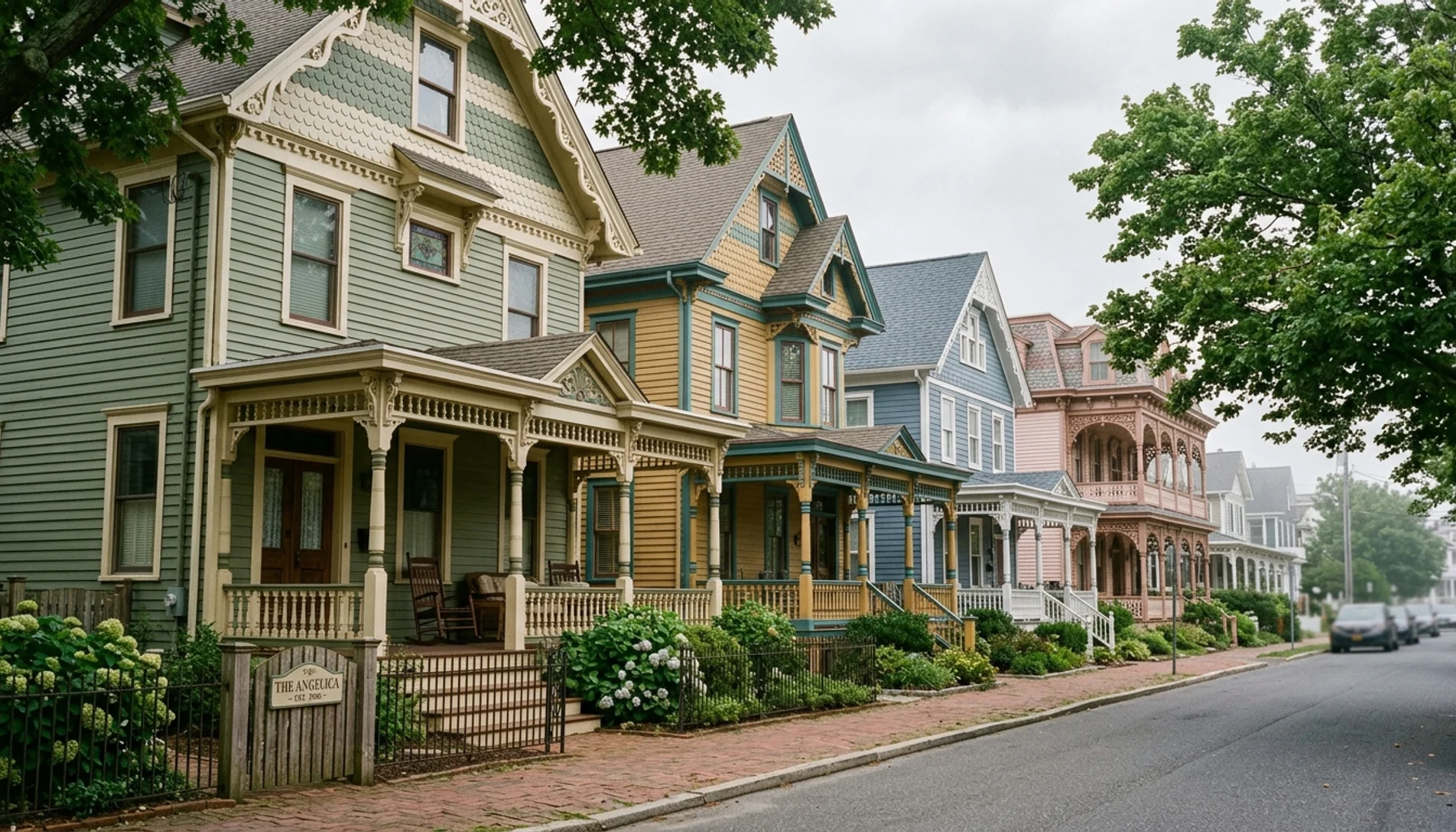
Cape May is called America’s oldest seaside resort because it was the first destination in the United States to attract vacationers specifically for leisure and sea bathing, beginning in earnest in the late 1700s and fully establishing its resort identity by the early 1800s. By 1850, Cape May had become the premier summer destination for wealthy travelers from Philadelphia, Baltimore, and Washington, D.C., drawing multiple sitting U.S. presidents and shaping the template for what a seaside resort could be. No other American coastal town can credibly claim an earlier, continuous history of purpose-built leisure tourism.
- Cape May began attracting summer visitors as early as 1766, making it the oldest documented seaside resort destination in the United States.
- Congress Hall, established in 1816 as a boarding house, became the country’s most celebrated resort hotel by mid-century and anchored Cape May’s national reputation.
- Cape May’s historic district was officially designated a National Historic Landmark on May 11, 1976, preserving one of the largest collections of Victorian architecture in the U.S.
- At least seven U.S. presidents vacationed in Cape May, including Franklin Pierce, James Buchanan, Ulysses S. Grant, and Benjamin Harrison.
- In 2026, Cape May County welcomed more than 12 million visitors, generating $8.1 billion in direct tourism spending, according to Cape May County government data.
- Today, Cape May offers year-round appeal beyond summer, including the Cape May Jazz Festival, Victorian Week, and one of the best birding corridors in North America.
Few American towns carry their history as visibly as Cape May, New Jersey. The Victorian facades lining Beach Avenue are not a reconstruction or a theme park gesture. They are the actual built fabric of a resort culture that dates back more than two centuries, surviving fire, storms, and the rise of competing destinations to remain genuinely, stubbornly itself. At Cape del Mar, we manage properties inside this National Historic Landmark district, which gives us a close appreciation for what makes Cape May different from every other Jersey Shore town.
Understanding why Cape May holds the title of America’s oldest seaside resort is not just a trivia exercise. It explains why the streets look the way they do, why certain hotels command the reverence they do, and why a weekend here feels unlike a weekend anywhere else on the East Coast. This guide traces that history from the 1700s to today, and answers the questions travelers most often ask.

Where Is the Oldest Seaside Resort in the US?
The oldest seaside resort in the United States is Cape May, New Jersey, located at the southernmost tip of the Garden State where the Delaware Bay meets the Atlantic Ocean. The city sits roughly 160 miles southwest of New York City and about 90 miles southeast of Philadelphia. Its position at the tip of a peninsula means the ocean is literally visible from almost every block of the historic district.
Cape May Island, as it was known in its earliest days, first appeared in European records when Dutch explorer Cornelis Mey sailed the Delaware Bay in 1620 and gave the cape his name. English colonists settled the area later in the 17th century, establishing it as a whaling and fishing community. Travelers from Philadelphia began making their way to the coast at the end of the 1700s, drawn by the belief, common at the time, that sea air and salt water bathing had restorative health benefits.
By 1766, documented accounts confirm that summer visitors were arriving in Cape May for recreational purposes, making it the earliest verifiable instance of leisure tourism at an American coastal destination. That start date is more than 50 years before competing resort destinations on the Atlantic seaboard established themselves as vacation towns. The combination of early documentation, continuous operation as a resort, and preserved physical evidence gives Cape May its unchallenged claim.
For context on planning a trip around the destination’s full range, the ultimate guide to Cape May covers what to do, where to eat, and where to stay across every season.
What Was the First Beach Resort in America?
Congress Hall in Cape May, New Jersey, is widely recognized as the first major purpose-built beach resort in America. Originally opened in 1816 as a simple boarding house by Thomas Hughes, Congress Hall grew rapidly into the most celebrated resort hotel in the country. Its location two minutes from the beach and its proximity to the Washington Street Mall area made it the social center of Cape May for elite travelers from the Eastern Seaboard.
The original structure was a wooden building modest by later standards, but its reputation spread quickly. By the 1850s, Congress Hall had expanded into a sprawling resort complex capable of hosting hundreds of guests at a time. According to the Congress Hall historical record, the hotel began attracting national political figures almost from the start. U.S. senators, cabinet members, and eventually presidents made it a regular summer destination.
Congress Hall burned and was rebuilt twice before arriving at its current form, a sweeping yellow building with a broad front porch facing Perry Street and the beach beyond. The building standing today reflects a rebuild from 1879 and a comprehensive restoration completed in the early 2000s that returned it to its grand proportions while adding modern conveniences. The Congress Hall Brown Room is among its most celebrated dining and event spaces.
Cape Belvedere, Cape del Mar’s top-floor condo in the historic Belvedere building, sits two minutes from Congress Hall on foot. Guests staying at Cape Belvedere can walk to the hotel’s historic front porch in under five minutes, which puts the entire Congress Hall story in immediate physical context.
What Is the Oldest Resort Town in the United States?
Cape May, New Jersey, is the oldest resort town in the United States. The distinction refers not simply to age but to the sustained, purpose-built development of an entire municipality around leisure tourism. Unlike other coastal towns that evolved from fishing or trading communities into tourist destinations over many decades, Cape May made the transition from working settlement to resort destination earlier and more deliberately than any comparable American town.
The Cape May tourism record traces this transformation through several phases. The first phase, roughly 1766 through 1800, involved informal visits by Philadelphia residents who rented rooms in private homes. The second phase, 1800 through 1850, saw the construction of purpose-built hotels including Congress Hall, the transformation of the beachfront into a structured promenade, and the arrival of steamship service that opened Cape May to visitors from a much wider geographic area. The third phase, 1850 through 1878, was the Victorian building boom that gave Cape May its current architectural character.
That boom ended abruptly in November 1878, when a fire destroyed 30 blocks of the downtown. The rebuilding that followed in the 1880s produced the tightly concentrated collection of Queen Anne, Italianate, and Gothic Revival houses that Cape May is now famous for. Because the rebuilding happened in one compressed decade rather than across multiple eras, the architectural consistency is remarkable. The Mid-Atlantic Center for the Arts and Humanities estimates Cape May contains more than 600 Victorian-era buildings, one of the largest surviving concentrations in North America.
The neighborhood-by-neighborhood guide to where to stay in Cape May explains how different parts of the historic district feel and which areas suit different types of visitors.
What Famous People Stayed at Congress Hall?
Congress Hall hosted at least seven U.S. presidents during its peak years as America’s foremost seaside resort. Franklin Pierce arrived in the 1850s, followed by James Buchanan, who used Cape May as an informal summer White House. Ulysses S. Grant visited during his presidency and was reportedly such an enthusiastic regular that Cape May’s reputation as a presidential retreat was cemented. Chester Arthur, Benjamin Harrison, and James Buchanan all made extended summer stays. Abraham Lincoln is documented as having considered Cape May for a wartime rest but did not complete the trip.
Beyond presidents, Cape May in the Victorian era attracted industrialists, legislators, and cultural figures who shaped American life in the 19th century. John Philip Sousa, the composer known as “The March King,” performed and spent time in Cape May. Henry Ford is documented as a visitor. The social calendar at Congress Hall during the 1860s and 1870s was serious enough that newspapers in Philadelphia and New York ran regular dispatches about who was arriving and departing.
This concentration of prominent guests was not accidental. Cape May’s geographic position made it the closest Atlantic beach to Washington, D.C. and Philadelphia, the two most politically active cities in the country through much of the 19th century. The steamship lines from Philadelphia reduced the journey to a matter of hours, and Congress Hall’s size and reputation ensured that it could accommodate the kind of entertaining these figures expected.
Today, the Cape May MAC trolley tours cover this presidential history in detail, stopping at Congress Hall and several other sites connected to the resort’s most famous guests.
How Did the Victorian Architecture Survive and What Does It Tell Us?
Cape May’s Victorian architecture survived largely because of a combination of economic decline and eventual historic preservation. After the 1878 fire, the rebuilt Victorian district thrived for about two decades, then fell into a long slow decline as competing resort destinations with newer infrastructure drew wealthy travelers away. Atlantic City, with its railroads and larger hotels, captured much of the elite summer market by the 1890s. Cape May became quieter, less fashionable, and consequently less developed.
That relative stagnation, frustrating at the time, turned out to be architecturally protective. Towns that boomed through the 20th century demolished Victorian buildings to make way for larger commercial structures. Cape May, without that economic pressure, retained its building stock largely intact. By the time historic preservation became a national priority in the 1960s and 1970s, Cape May had one of the most complete collections of Victorian-era resort architecture anywhere in the United States.
The National Historic Landmark designation came on May 11, 1976, covering Cape May’s entire historic district. This federal designation, administered by the National Park Service, imposed strong protections on the district’s character and triggered a wave of restoration investment that continues today. Properties within the landmark boundary are subject to design review standards that maintain the Victorian scale and detailing, which is why the streetscapes look cohesive rather than fragmented by incompatible modern additions.
Walking through the district, you can identify several distinct Victorian substyles. The Queen Anne houses, with their asymmetrical facades, turret towers, and decorative shingles, are the most visually exuberant. The Italianate cottages, recognizable by their bracketed eaves and round-arched windows, are more restrained. Gothic Revival examples appear throughout the residential streets, identifiable by their steep pointed gables and decorative vergeboards. Cape May’s Cape May MAC offers detailed walking tour maps that identify the style of each significant building.
What Made Cape May the Premier American Resort Before the Civil War?
Cape May became the premier American seaside resort before the Civil War because of three converging advantages: geography, transportation infrastructure, and targeted marketing to the American elite. No other Atlantic beach was as accessible from the major population centers of the mid-Atlantic region, and no other beach town invested as deliberately in the infrastructure and social programming that wealthy travelers expected.
The steamship service from Philadelphia, which began regular runs to Cape May in the early 1800s, was the critical logistical breakthrough. Before reliable steamship service, the journey from Philadelphia to Cape May by road took the better part of a day over rough terrain. Steamships cut the trip to roughly three hours and made Cape May a realistic destination for a two-week summer holiday rather than a major expedition. By 1850, multiple competing lines were running scheduled service, and the Cape May waterfront had developed the hotels, bathhouses, and promenades to receive the volume of guests they were delivering.
Congress Hall’s deliberate cultivation of political figures added a layer of social cachet that no other resort destination matched. When President Franklin Pierce arrived for a summer stay, newspapers covered it extensively. That coverage made Cape May the destination where America’s political and commercial elite visibly gathered, and visibility was what determined resort prestige in the 19th century.
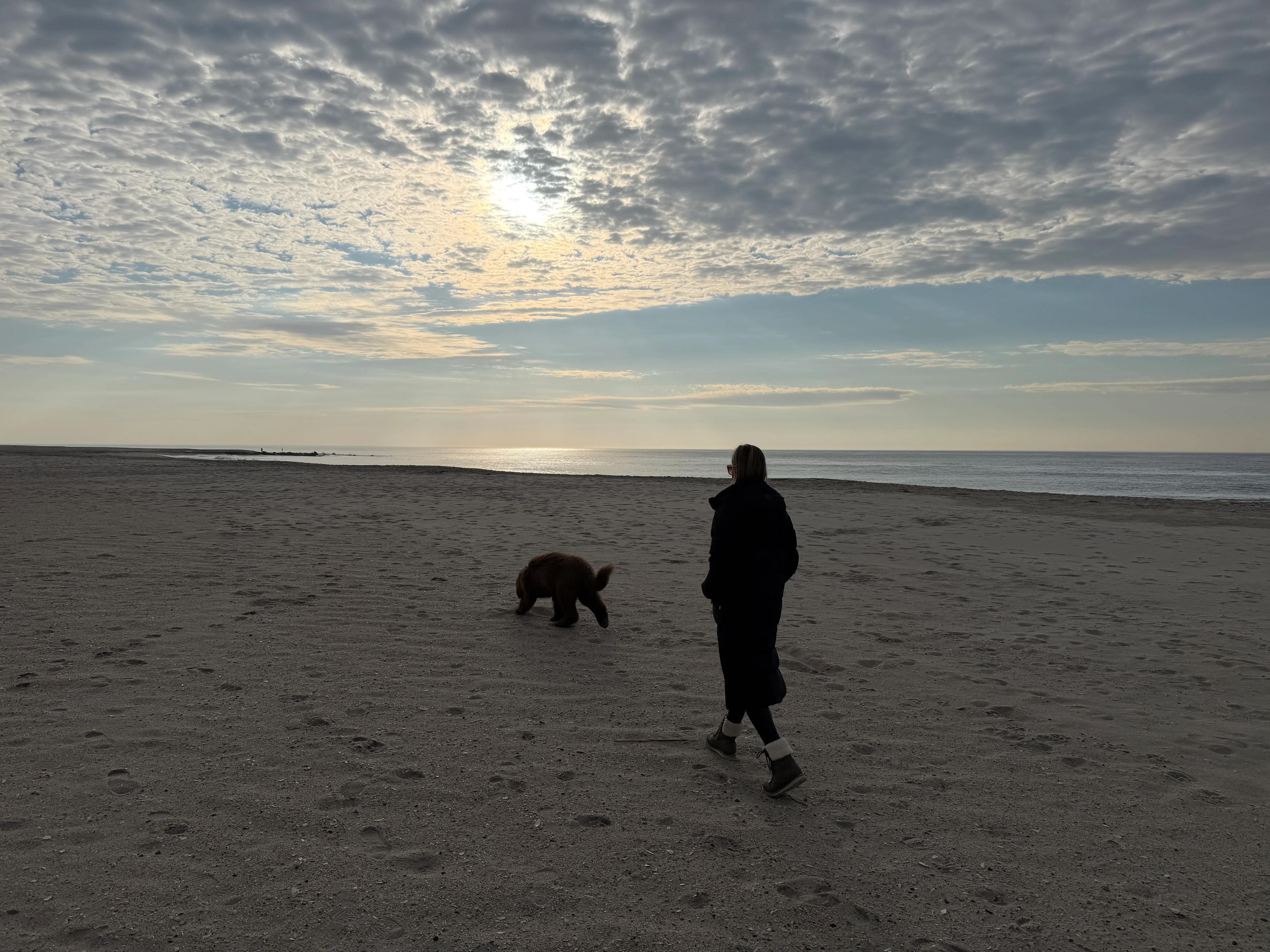
The resort also benefited from Cape May’s long ocean swimming season, typically running from late June through early September, with water temperatures consistently warmer than comparable destinations further north. The beach itself, a long, gently sloping strand with a gradual break, was considered safe and appropriate for the mixed-gender bathing that was fashionable at the time. Our Cape May beach guide explains how these same beaches remain among the most family-friendly on the Jersey Shore today.
What Do Visitors Still Experience Today That Connects to That Original Resort Identity?
Visitors to Cape May in 2026 experience a direct, tangible connection to the resort’s origins in several ways that go beyond museum exhibits. The Congress Hall building still operates as a hotel on the same footprint where Thomas Hughes opened his boarding house in 1816. You can eat dinner in a room where 19th-century politicians once spent their summer evenings. That continuity of use, across more than two centuries, is rare in American travel.
The beach promenade along Beach Avenue retains the same pedestrian-first character it had in the Victorian era, when evening walks on the promenade were a central social ritual of resort life. On summer evenings, the activity on that promenade, families walking, couples watching the sun set toward the Delaware Bay, children on rental bikes, looks structurally similar to illustrations of the same street from the 1870s. The scale has not changed because the historic district protections have kept the buildings low and the street widths consistent.
Horse-drawn carriage tours still operate in the historic district. The Cape May Carriage Company has been running since 1982 and follows routes past the most significant Victorian buildings. In the 19th century, carriage rides were a standard resort activity; today the same experience functions as both transportation and living history.
The dining culture has deepened considerably since the Victorian era. Restaurants like Tisha’s Fine Dining on Washington Street, open for more than 30 years, and Peter Shields Inn at 1301 Beach Avenue, consistently Zagat-rated, represent the kind of destination-quality dining that Cape May’s resort identity demands. The Cape May restaurant guide by budget and occasion covers the current dining landscape in detail.
Cape May also functions as one of the great birding destinations in North America. The peninsula’s position at a continental flyway bottleneck means that autumn hawk migration and spring songbird migration produce concentrations of species that attract serious birders from across the country. National Geographic has ranked Cape May among the top 10 birding destinations worldwide. The Cape May Bird Observatory anchors this activity with educational programs and guided walks available through most of the year.
How Did the 1878 Fire Shape the Cape May We See Today?
The 1878 fire in Cape May is the single event most responsible for the visual character of the city as it exists today. The fire, which started on the evening of November 9, 1878, destroyed more than 30 blocks of the central resort district, including several of the largest hotels and hundreds of residences. The loss was catastrophic by the standards of the time, and for a period it seemed possible that Cape May might not recover its position as a premier resort.
The rebuilding that followed happened with remarkable speed and cohesion. Property owners, motivated by competition from Atlantic City and the threat of losing their seasonal income, rebuilt quickly using the latest architectural fashions of the late 1870s and 1880s. Those fashions happened to be the peak years of American Victorian domestic architecture, specifically the Queen Anne and Stick styles that were proliferating in pattern books and architectural magazines throughout the country.
Because so much of Cape May was rebuilt in the same compressed period of roughly 1879 through 1895, the resulting streetscapes have an architectural consistency that makes the district feel unified rather than piecemeal. A block built almost entirely in the 1880s reads as a coherent whole in a way that a block developed across different decades simply cannot. That visual coherence is a direct product of the disaster and the concentrated rebuilding that followed.
Specific pro tips for visitors who want to understand the architecture deeply: start on Hughes Street, which has some of the densest concentration of Stick Style cottages. Walk east to Columbia Avenue for Queen Anne examples with the most elaborate porch detailing. The Cape May MAC sells detailed architectural maps that identify each building’s year of construction and style classification, which transforms an ordinary walk into something considerably more rewarding.
Is Cape May Worth Visiting Outside of Summer?
Cape May is genuinely worth visiting in fall and spring, and for some travelers, particularly couples and those who find peak-summer beach crowds exhausting, the shoulder seasons are the better choice. September in Cape May typically brings temperatures in the low to mid 70s, water warm enough to swim comfortably, and crowds that thin noticeably after Labor Day. The Victorian district is easier to explore, restaurant reservations are more available, and the light in September and October has a quality that professional photographers specifically seek out.
The Cape May Jazz Festival, historically held in November and April, draws musicians and audiences from across the region to Congress Hall and other venues in the historic district. The festival’s autumn edition, typically scheduled across a long weekend in early November, fills Cape May during what would otherwise be a slow stretch. Cape May MAC’s Victorian Week, typically held in mid-October, offers tours, house open houses, and architecture-focused programming that does not exist in summer.
Spring visits in May and early June offer the added draw of the songbird migration, when Cape May’s status as a continental flyway bottleneck produces remarkable concentrations of warblers, shorebirds, and raptors. The 25 best things to do in Cape May for families in 2026 includes seasonal specifics for every month of the year.
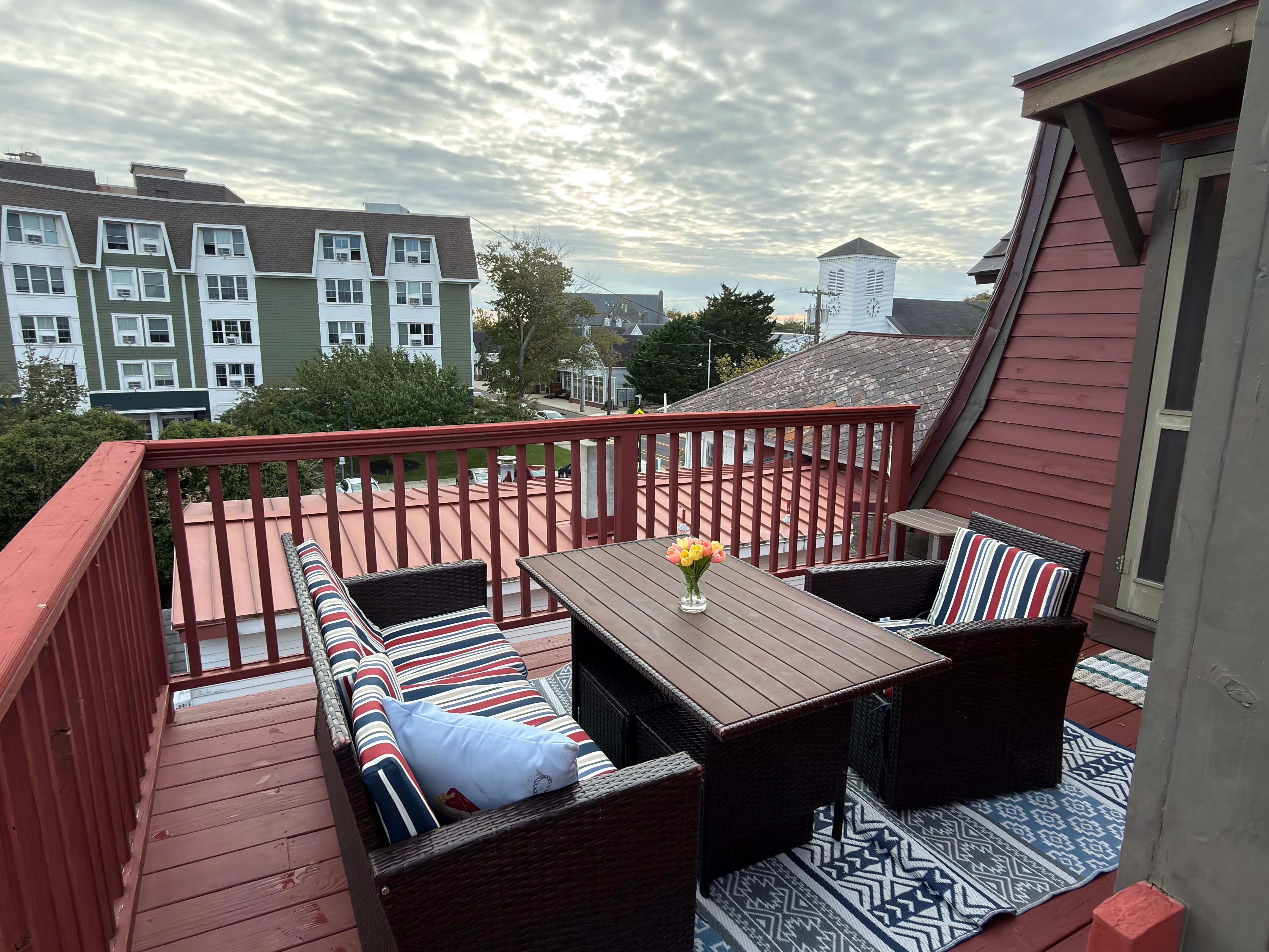
For couples particularly, consider that Cape del Mar’s Cape Belvedere condo has a signature cupola with panoramic Atlantic views that is arguably most beautiful in October, when the summer haze clears and the light shifts toward the warm, low-angle gold of early fall. The two-bedroom layout, with its master suite and open-plan living area, suits a long weekend designed around walking, dining, and genuinely resting.
Frequently Asked Questions About Cape May’s History as America’s Oldest Seaside Resort
When did Cape May become a resort destination?
Cape May began attracting summer visitors for recreational purposes as early as 1766, making it the first documented American coastal destination used specifically for leisure. By the early 1800s, the construction of hotels including Congress Hall in 1816 formally established Cape May as a purpose-built resort. The destination reached peak national prominence between 1840 and 1880, when it drew sitting U.S. presidents and the wealthy elite of the Eastern Seaboard.
What presidents vacationed in Cape May?
At least seven U.S. presidents are documented as having vacationed in Cape May, primarily at or near Congress Hall. The most frequently cited are Franklin Pierce, James Buchanan, Ulysses S. Grant, Chester Arthur, and Benjamin Harrison. Grant was reportedly one of the most enthusiastic regulars. This concentration of presidential visits during the mid-to-late 19th century reinforced Cape May’s status as the country’s most prestigious resort destination of that era.
When was Cape May designated a National Historic Landmark?
Cape May’s historic district was designated a National Historic Landmark on May 11, 1976, by the National Park Service. The designation recognized the district’s extraordinary collection of Victorian-era architecture, including more than 600 surviving buildings from the 1860s through the 1890s. This federal designation imposes design review protections that have preserved the district’s architectural character and supported decades of restoration investment.
Are Cape del Mar properties inside the historic district?
Yes. Cape del Mar manages five properties within Cape May’s National Historic Landmark district. Cape Whale and Cape Surf are located inside the historic Baronet Mansion on Beach Avenue, directly across the street from the ocean. Cape Oar is inside an 1860 Victorian house one block from Washington Street Mall. Cape Belvedere occupies the top floor of the historic Belvedere building, two minutes from Congress Hall. Cape Wave is a renovated apartment in a Victorian house also dating to 1860, five minutes from the beach.
Why does Cape May have so many Victorian buildings?
Cape May’s concentrated collection of Victorian architecture exists because most of the downtown was destroyed in a fire on November 9, 1878, and rebuilt almost entirely within the following 15 years. That compressed rebuilding period coincided with the peak years of American Queen Anne, Stick, and Italianate architecture, producing streetscapes of unusual cohesion. A subsequent period of economic slowdown in the early 20th century meant that fewer buildings were demolished to make way for modern replacements, leaving the Victorian fabric unusually intact.
What is the best time of year to visit Cape May?
Peak summer, specifically July and August, offers the warmest ocean temperatures and the full range of beach activities, but also the largest crowds and the highest rental rates. September and early October offer warm weather with significantly smaller crowds and are particularly good for couples and those interested in architecture, birding, or the Cape May Jazz Festival. May and early June offer spring birding migration and uncrowded beaches. January through March is the quietest period, best suited to travelers who specifically want an off-season retreat.
How do I book a historic district vacation rental directly in Cape May?
Cape del Mar offers direct booking for all of its Cape May properties, bypassing OTA service fees that typically add 14 to 20% to the base nightly rate. You can browse all available properties and check dates at capedelmar.com/listing. Each property page includes the full amenity list, photos, capacity, and a direct booking calendar. Booking direct also puts you in immediate contact with the hosts for any questions before or during your stay.
Conclusion: Two Centuries of Resort Excellence and What That Means for Your Trip
Cape May is called America’s oldest seaside resort because the evidence is clear: visitors arrived for leisure in 1766, Congress Hall opened in 1816, presidents began summering there by mid-century, and the Victorian building boom that followed a catastrophic 1878 fire produced an architectural record that has survived to the present day. The National Historic Landmark designation of May 11, 1976, formalized what Cape May’s physical fabric already demonstrated. No other American coastal town has an earlier, continuous, documented resort history.
What that history means practically for your trip is that Cape May offers something most beach destinations cannot: genuine depth. You can spend a morning at the beach, an afternoon walking streets that have been a resort since before the United States was 50 years old, an evening at The Merion Inn for cocktails and live music in an 1885 building, and come back the next day and find a different layer of the same story. That combination, serious beach access plus serious architectural and cultural substance, is what keeps Cape May relevant in 2026 despite two centuries of competition.
Cape May County welcomed more than 12 million visitors in 2026 and generated $8.1 billion in direct tourism spending, according to Cape May County government data. The destination is not a secret. But staying inside the historic district, close to Congress Hall and the Washington Street Mall, within walking distance of the beach, makes the experience qualitatively different from staying at the periphery. Location inside the Landmark district is not an incidental detail. It is the difference between visiting Cape May’s history and actually being inside it.

If you want to stay directly inside America’s oldest seaside resort rather than just visiting it, Cape Belvedere puts you on the top floor of the historic Belvedere building, two minutes from Congress Hall, with Atlantic views from a private cupola that makes the resort’s two-century history feel immediate rather than distant. Browse all Cape del Mar Cape May properties and book directly at capedelmar.com/listing.